
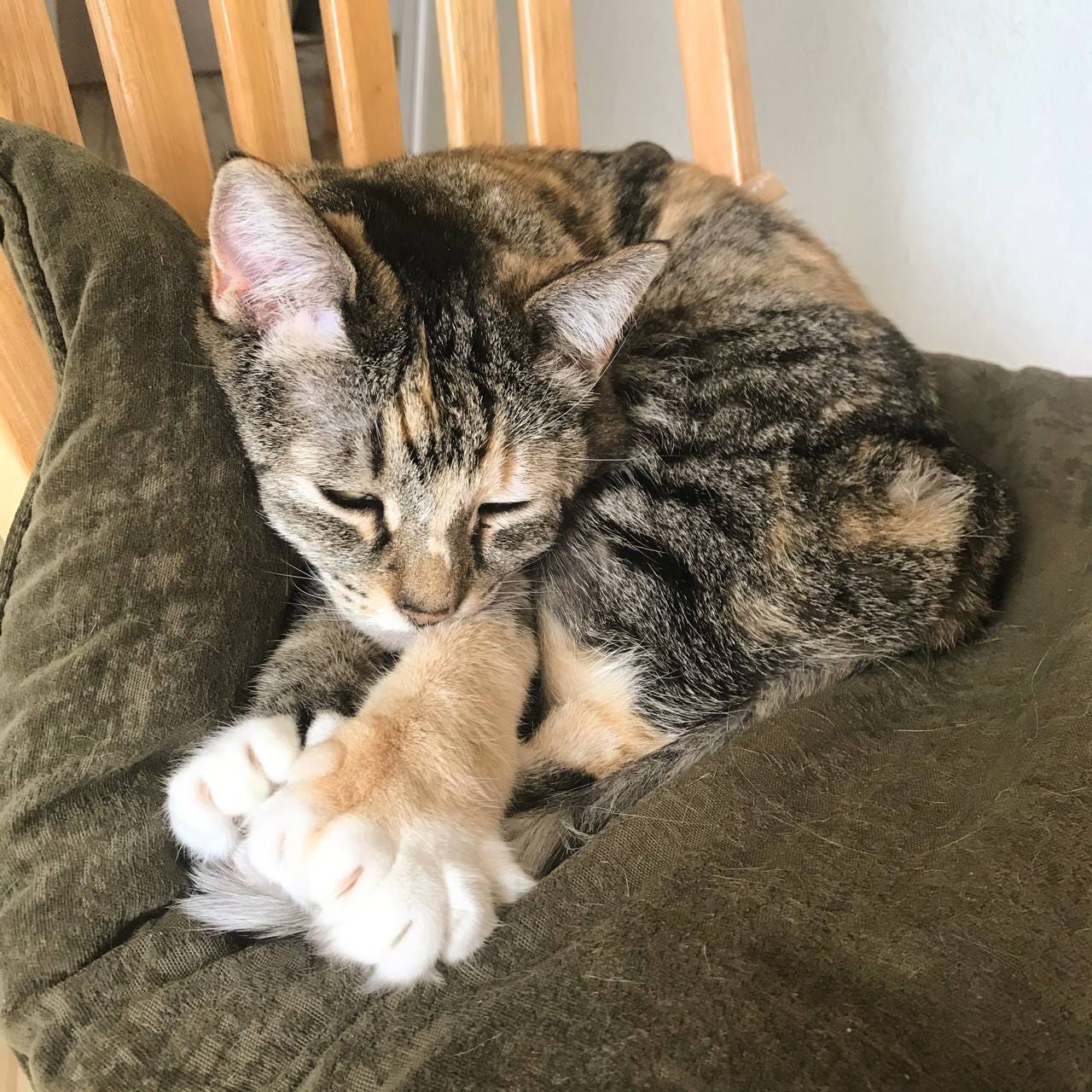
I like to tell people that I’ve overcome insomnia. What I have not overcome is Dasher, our adorable 24-toed cat, who has developed a habit of singing the song of her people in the wee hours.
She does this in the stairwell, which makes sense because it has the best acoustics.
So even after being evicted, insomnia likes to come back for visits. It opens the door without knocking, waves to its friend menopause (it’s a crowded house here lately), and then kicks back, waiting for Dash to start performing her favorite solo from Aida.
Sometimes I beat them all and fall back to sleep. Other times, my brain starts opening all the tabs, alternating between praying about the price of gas to pondering the cost of misunderstandings, and all things between. Grandma takes up more and more tabs lately (filed under Memories, Changes, and Grief) as her dementia has progressed. Which means she is regressing, and it feels like the exact opposite of progress.
I lay there in the dark, thinking on conversations and concerns. Another tab opens, reminding me of Barbara O’Neill’s teaching on sleep where she warns that the lack of it is related to dementia.
Irony and pressure are terrible sedatives, you know.
The next morning I stumbled on a post about biphasic sleep, a concept I first heard about years ago because insomnia and I are old frenemies. It means sleeping in two phases, often called “first sleep” and “second sleep,” separated by a two-ish hour waking period in the middle of the night, whether or not your cat is attempting opera. It was common (some say standard) before the Industrial Revolution, and now that you know about it, you’ll see it mentioned in everything from history books to Dickens novels.
In theory, I’d love to lean into it and utilize those extra couple hours in fruitful ways. I’ve done it before when our schedule allowed and it’s a much better alternative than staring at the ceiling and fretting about the rapidly diminishing hours of possible sleep left.
But often our schedule doesn’t allow for it, like last night (er, this morning) when I went back to bed around 6 am and then wanted to sleep in until tomorrow.
Maybe some day it’ll work, though. Our schedule changed significantly four times in the last year, and at this point what’s left is more of a loose structure wrapped around a few big commitments, and held together with prayer, coffee, and a Jeep that is happy to zip back and forth across the MatSu as long as we keep filling its tank.
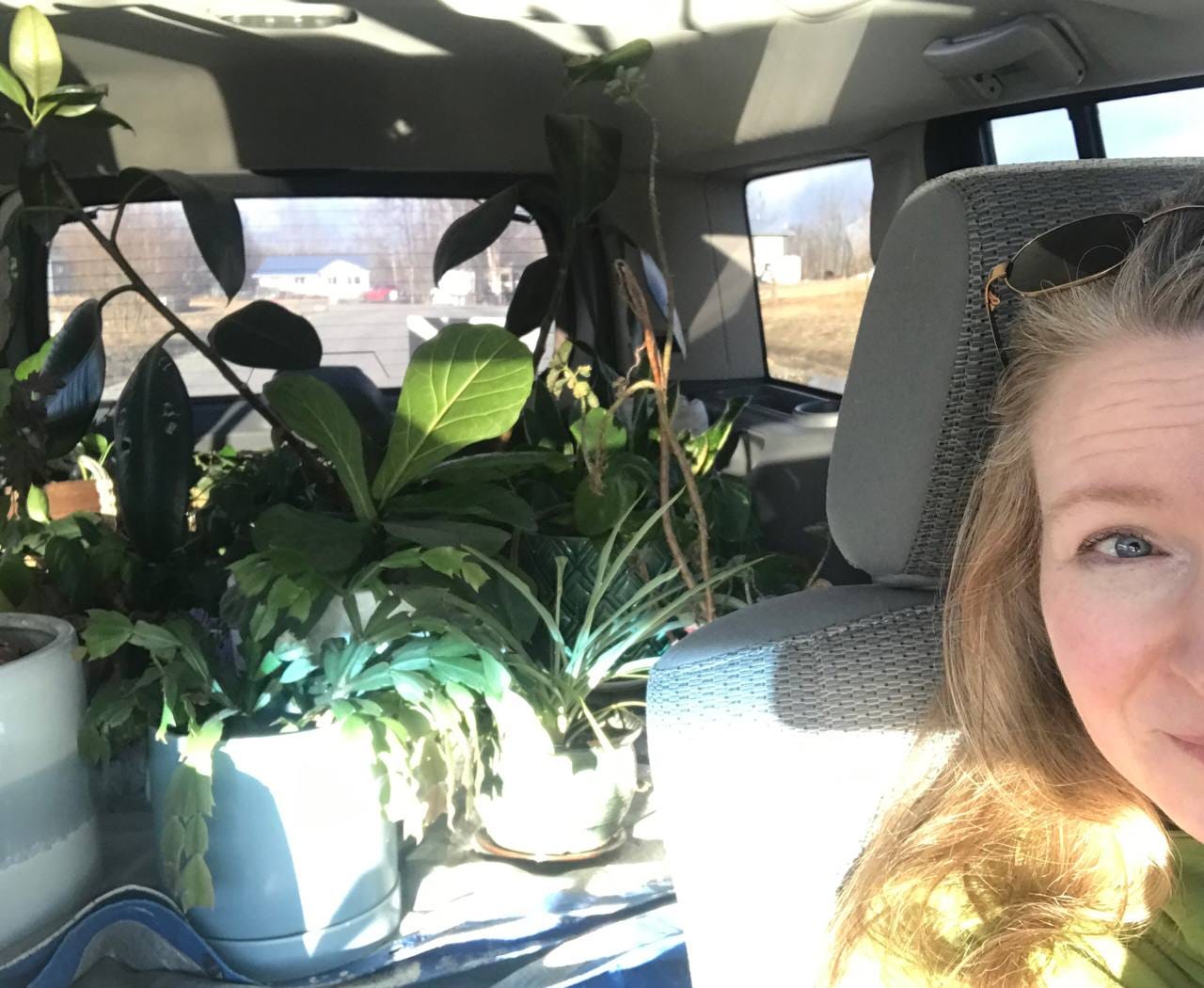
On the way home one evening last week, I passed our friends’ shop and saw our red-haired son at work, backing into a bay. He didn’t notice me but my heart stretched from its tether a little as I drove past. It is these small moments of recognition that anchor us, making a broad, wide Valley into a small town we belong in.
Now that she’s moved, it’s 21 minutes to Grandma’s new home on weekdays but only 18 on Sunday afternoons. So far, she does not understand the change, and every day she seems confused anew about why she’s there. She does not have those small moments of recognition yet, or anymore; her anchor was lifted up and she’s been moored in an unfamiliar place.
“I am so far away from my home…it must be forty miles.” She calculates highway time and neighborhood roads. Sometimes she thinks she’s in Anchorage.
“It’s only 20 minutes, Grandma. You’re right in the middle of all of us.” She looks at me in disbelief, like I answered in a foreign language.
“All I can do is look out this window. There’s no activity out there.”
But there is, though she can’t see it. A house is being built right next door and equipment has been running every day. When I walked up to her new front door, I distinctly heard one of the construction workers articulate the same expletive she shocked us with last week.
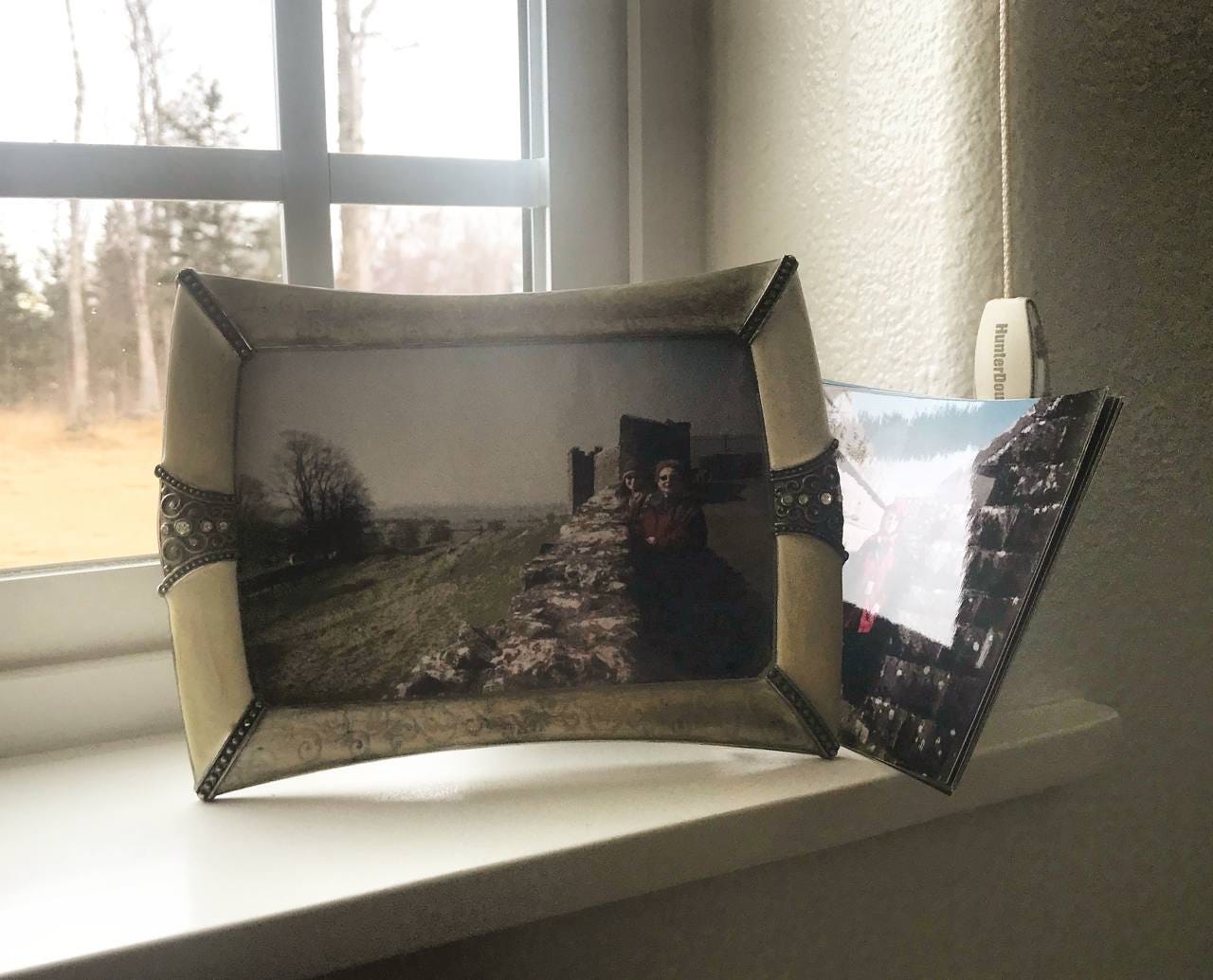
Four times so far I’ve had the same heartbreaking conversation with her, trying to explain, wondering how to answer so many of her concerns. I need to be home. I was active there, and here I do nothing. I haven’t seen a soul all day; I think I’ve only had one small meal and it’s horrible hospital food. No one has come to see me, I’ve just been left here, alone. And who is going to take care of my cat?
People visit almost every day. The staff is kind, with her all the time, giving her one-on-one attention. It is a home, not a hospital, and the food – three meals plus snacks – is homemade and amazing. She was mostly chair-bound at her house and slept much of the day, but now she is awake more, even playing the piano. And her cat died a month ago.
Before, she was tired but mostly content; now she is awake more, and feels like she’s in exile. It is a horrible disease that demands caregivers to constantly choose between comforting, condescending lies and heartbreaking truth.
So there is a difference between reality and perception, and I do not know how to help her bridge that gap.
But she’s talking again, more than she has been. When she’s not focused on the grief, she still tells repetitive stories from her childhood.
Last month, back at her house, she told us again about working at a store when she was a kid:
“Somebody would come in for something that was only a dollar or two. They might give you a twenty dollar bill, or they might even give you a hundred, and you had to be able to make the change for whatever it was they gave you. I learned.”
My daughter and my cousin sat on the couch to her left, and I crocheted granny squares in the rocking chair to her right. I hit the Record button on my phone so I can go back and hear her voice when I need it.
“I was pretty good with the dollars, and I could make the change.”
The kids were on the floor, at the table, across the room, all doing schoolwork.
“Our floor walker was an older lady and I think she kind of liked me. She was the one who trained me, and then she trained me to train others. So I had a pretty good little job there in that store. I got along pretty well with all of them…I learned to make change, learned how to handle hundred dollar bills. You could carry a certain amount on yourself in a money belt to make change with.”
This is the challenge we all face when we find ourselves in a place we never would have chosen, with bills that are too big for us, with the situation that is out of our control: Will we make the change? Will we get along with others, and navigate with grace and trust? Or will we cling to denial, and keep getting our heart broken when reality confronts us with every new day?
Also: What can we carry on ourselves to help us (and others) make change?
“I worked there for a number of years and I really enjoyed it. I got several raises there along the way. I didn’t have a way to go home, but usually the Greyhound bus ran and I could get off in time to get to the bus station and get on the Greyhound; I rode ten miles home.”
She often talks about the journey: the bus, her mom driving her back and forth to work, and about her first bike.
“In the winter time I worked in the store, and sometimes I worked up on the farm, but mostly I learned to work in the stores and rode that Greyhound bus home every night. They’d ring that bell and he knew right where I lived, and he’d let me off right where the gate was. God was good to me. I was very grateful.”
This right here is the key in all our changes: Gratitude, which is based in trust.
In this hard space – in debt, in betrayal, in regret, in the ICU, in grief, or in a place where no one speaks our language – can we trust God and rejoice anyway? Not because the awful stuff is His will (it’s not) but because He is able to bring good from these hard things?
He likes us, and He is training us. Not just for ourselves, but so we can also train others.
He knows where we are, where we need to be, and how to get us there.
We would not have chosen this, but God is busy with us, at work in us and for us, so He must be doing things we could not or would not have done on our own.
Grandma was long-winded that day and her memories kept coming.
“Then one year I got terribly sick and had quite a bit of time in the hospital. I don’t remember what it was I had…whatever it was, eventually I got over it.”
“Was it scarletina?” I asked. “Scarlet fever?” Grandma didn’t answer; her hearing aid was on the other side. I looked at my cousin. “She told me about it in 2020, because she had been quarantined when she was young.”
Ohh, he nodded. Grandma was quiet for a minute, slowing down.
“But God was good to me,” she finally said. “I got over it, eventually.”
Friend, hear me: God is good to us whether we get over it or not. We are better to ourselves, though, if we do.
At that point, that day, she was talked out. Shortly after, she wanted us to leave – at first with a subtle hints, then later with anxiety, thinking she needed to start making dinner and get her kitchen cleaned up. But I had already cleaned her kitchen, dinner was taken care of, and she hasn’t made a meal in I don’t know how long.
And she could not be left alone, so we had to stay with her in her restlessness.
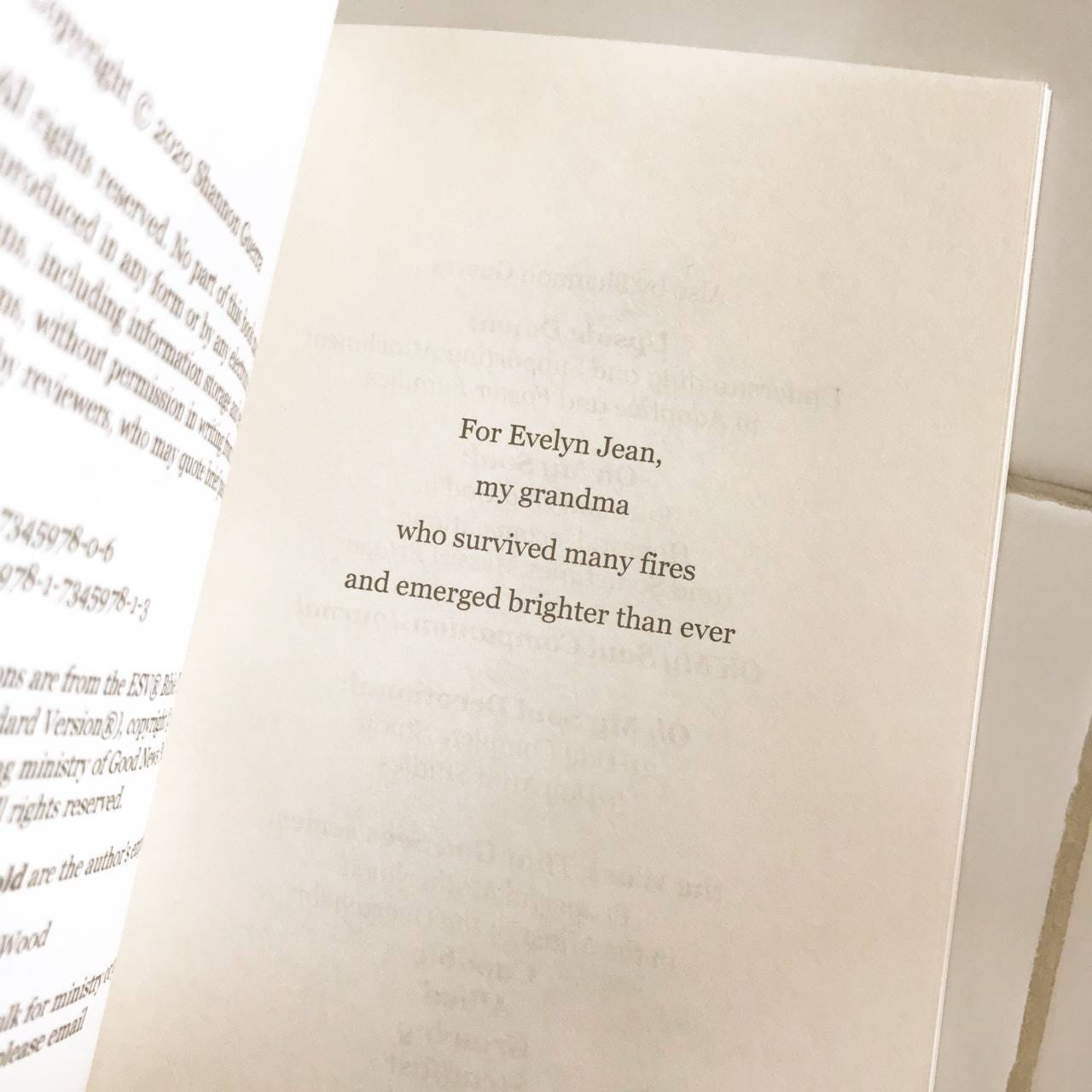
She has made change before, so many times. This time it’s much bigger than just a small shift in schedules or overcoming insomnia or learning a new job, but I want her to remember that she can do this, too.
Whenever we are uprooted or navigating some other big change, we tend to feel like our struggle is a sign of failure. But that is an agreement we make with the enemy, not God. It is a spiral of self-fulfilling discouragement: We focus on the negative, and that negative becomes our new reality.
But how can we deal with whatever life gives us? How do we survive the place we didn’t choose?
Here’s the truth, if we can accept it: The struggle and feeling of ineptitude is progress. Feeling bad about our abilities and our current situation – as long as that feeling is temporary and we don’t stay there – is a sign of growth.
We don’t grow in the ease of the comfort zone; we grow in the struggle. The feelings of learning to do this specific task or navigate this particular season are temporary. They are not our permanent identity.
We must reframe our assessment: I currently feel terrible at this rather than “I’m just bad at this and I’ll never be good at it.” I don’t feel happy here, rather than “Happiness doesn’t exist here.”
We go through this in every big change: Having more kids, learning a language, reading classics, acquiring a new skill, developing new routines, systems, or habits. We are face to face with our own imperfections and weakness, and must let go of our illusions.
We must release the idolatry of our own control, the myopia of mastering our own tiny domain where everything is in the order we established.
When we do that, we make room for the wild of the Kingdom.
But if we are still not wanting to make change in this hard place, the Lord is never just asking us to get over it. We often want that for ourselves, or for each other, because grief is inconvenient. But He is staying with us – never dismissing us, never blowing us off, never rushing us to gloss over pain and pretend we’re happy when we’ve been completely unmoored.
He sits with us in our bewilderment, much more patient with us than we are with ourselves, or each other.
As I sit with Grandma in her grief and confusion, even though I have no answers for her and feel almost as confused as she is, I know I am growing in this. It is hard and I hate it; I hate watching her regress and accuse and be less than who I’ve always known her to be. But this is training. If you’ve paid any attention to basic demographics, you know our generation is just beginning to see what may be an avalanche of care needed in the years to come.
As Grandma looks out the window at all the things she cannot see, she is growing, too. Even when the progress is regress and none of it feels good, she is rising above, alert in ways she hasn’t been for months. Even in her grief, she is so sweet to the staff at the new home and they love her. Even in her anger, she is digging deep into memories and logic and reasoning in ways that I thought went dormant months ago.
We stretch our tent pegs to allow God to show us that in our weakness He is strong. In our inability, He is able, and making us able, too.
It is how we overcome, how we beat them all.
Therefore, since we are receiving a kingdom that cannot be shaken, let us show gratitude, by which we may offer to God an acceptable worship with reverence and awe, for indeed our God is a consuming fire.
— Hebrews 12:28-29
He has not abandoned us, dropped us off in an unfamiliar place to be alone and die.
He has not removed us from our home.
He is preparing us for it, and taking us there.
Subscribe here for free to receive these posts right to your inbox. Curious about what we do? You can read more about our ministry here.