time well spent

I was up early – too hot, couldn’t sleep – so I finally got up to get a head start while everyone else was still in bed. I threw the office windows open and watched commuters pour down the highway from Houston, Big Lake, and Willow.

I’m never up this early, and I immediately questioned my judgment when the cats assumed my sole purpose in getting up was to feed them, howling for food loud enough to wake the neighbors. I hobbled downstairs, got their dishes, put old Gusser in the bathroom with his food and gave the other cats their food, went back upstairs, and turned on the computer.

time well spent

The summary of my productivity went like this: Open the document, change several sentences, consult the thesaurus for five different words, and say encouraging things to myself like, Wow, that’s a crappy segue.

Probably, I should’ve just stayed in bed.

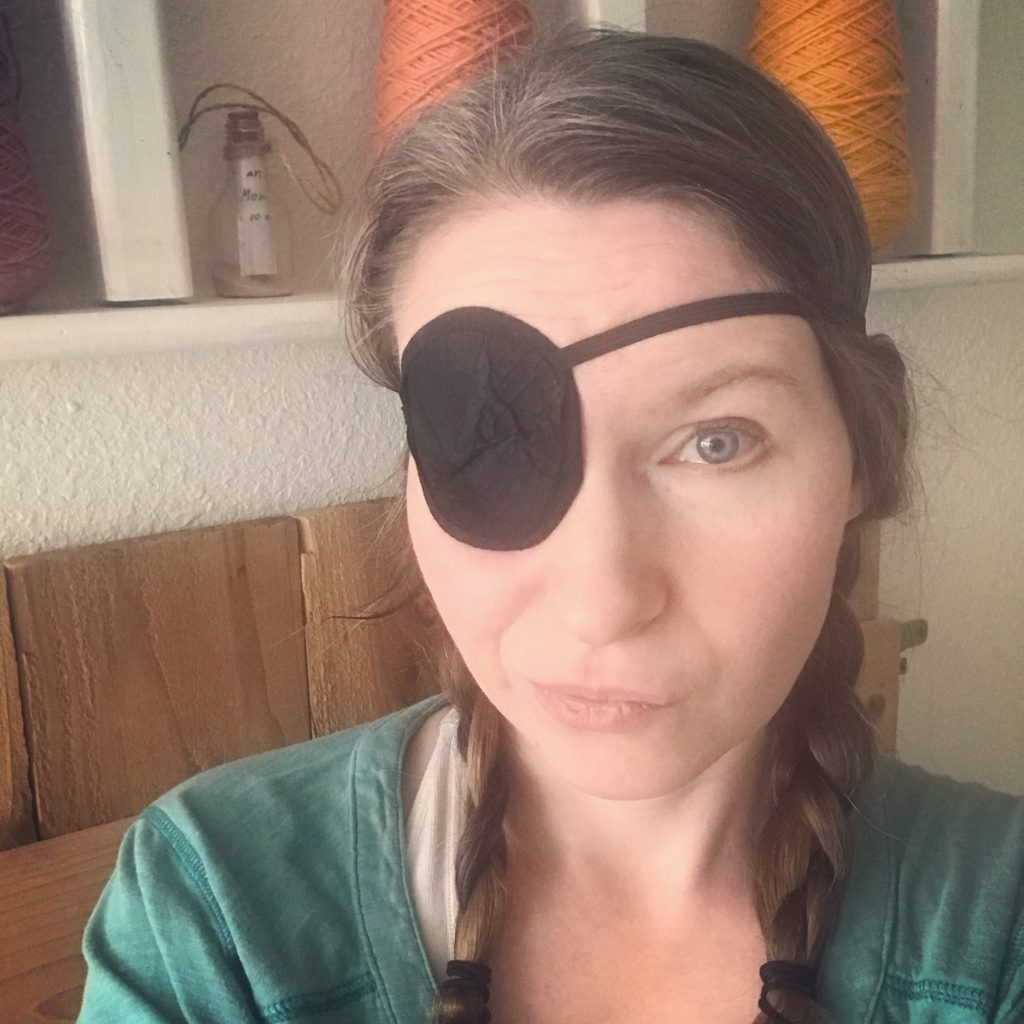
It doesn’t help that I now have to wear house shoes, because I am fortier than I used to be. My arches started to fall during my pregnancy with Kavanagh, which aggravated a nerve injury in my foot and had me limping and occasionally losing balance. So now I clomp-clomp though the house in old, scrubbed tennis shoes and we call them my “house shoes” – a phrase I can’t even hear in my head without giving it a southern accent and picturing a polyester duster from the 70s.

You might know already that Alaskans don’t wear shoes in houses. Shoes are only worn in the house in those brief intervals of trying to run out the door, or having to deal with something urgent before even getting our shoes off when we get home. Or, as Iree pointed out, when we’re walking through glass and other debris from a 7.1 earthquake. So wearing shoes in the house feels inherently stressful, and I’m not used to it yet.

The week started rough, like we held time in a sieve and it poured out faster as the to-do list got longer. By the end of the day I was sucking wind and at six minutes after the hard-and-fast time we’d agreed upon for clocking out, I finally hit the shutdown button and closed the laptop.

It has to be enough, I thought. But it didn’t feel like it was. Does it ever?

On Tuesday I tried to make up for Monday. Here’s an example of how that went:

Go to Paypal to update account. Get error message with instructions to call Paypal.

Call Paypal, attempt to update over the phone’s automated system, which almost never works.

It doesn’t. Wait to speak to representative. Estimated wait time is 27-33 minutes. No problem, finding busywork for half an hour while listening to muzak is one of my very favorite things, like jury duty.

At 31 minutes of waiting, the call disconnects. YOU ARE KIDDING ME.

Call back. Estimated wait time is now only 17-22 minutes. This remarkable improvement is brought to us by a propensity to hang up on customers.

Someone picks up, hallelujah.

The representative’s ability to speak English is matched by her listening skills. I wish that was a compliment, but after interrupting me four times while asking what the problem is, it’s not.

Finally she reads from the same script I’ve heard from three other companies over the last month: “I have good news for you today, I can fix this for you.” But she can’t, because after putting me on hold two more times she informs me that my account is now under review and inaccessible by either of us. (Apparently Paypal’s security is so penetrative, it no longer recognizes you if you start wearing house shoes.)

“No worries,” she reassures me from her script. “You can access your account and try again in 48 hours.” Well, yippee. I have good news for you. I can fix this for you. No worries. I don’t think those things mean what she thinks those things mean.

“Can I help you with anything else?” she asks. Um, no thank you, I don’t think I can stand any more help today, I’m good, thankyouverymuch.

That was Tuesday.

Wednesday, five kids and I pile into the Stagecoach and drive over the river and through the Butte, to Grandma’s house we go. After the last two days it seemed like the wrong time to take the day off, but we’d already scheduled this and wouldn’t miss it for anything.

It was Kavanagh’s first trip there, probably his longest car ride so far. The wind was flying and whipping up waves of dirt and river silt in the intersections, and tiny tornadoes eddied along the road in front of us.

Two pictures of Grandpa sit on a shelf by her couch. One was taken a few years before he died; the other was black and white and faded, and he was young and handsome, six-foot-four, the guy Grandma fell in love with – sitting on a tree stump, filling his pipe, legs stretched out in front of him.

They’d known each other for about a week when it was taken. Grandma said he came by her mother’s store and she and all her younger siblings were there, probably driving her mother crazy. So they decided to take the kids all out for a walk to get them out of her hair. They went to a nearby pasture and he sat on that stump and filled his pipe, and she snapped his picture with the camera she took pretty much everywhere.

I asked her how old she was then. Now, she’s 87, though you wouldn’t know it from looking at her or hearing her voice. I grew up with her singing hymns around the house and leading worship at church, and her voice is usually still strong and beautiful – but it wasn’t when she answered my question.

“Twenty,” she said.

She was quiet for a minute, and then added, “I’d give anything to go back in time to that week.” Another pause. “Precious individual,” she said. “I miss him.”

They were married less than a year later, shortly before her twenty-first birthday. Had five boys: my uncle, my dad, and my other uncle within five years of each other, and thought they were done. But we’ve both had two surprises. We were both in our forties for the last one.

And Grandma wears house shoes, too.

growing through it: the fullness that comes after waiting

Well, friends, with the dry air and spring temps, there’s a new game here at the Lighthouse. It requires two people, or at the very least, an ornery human and an unsuspecting cat.

Here’s how you play: Create a charge by running your hands back and forth on the couch (or just sit there long enough to accidentally create friction), then touch someone within reach. If you induce a loud zapping sound, some screaming, and cause the other player’s hair to stand on end, you win.

growing through it: the fullness that comes after waiting

In the spirit of science and brotherly affection, one of our kids actually got a few siblings to hold hands together to see if the current would fly through the chain and nearly electrocute the person on the end. I’m happy to report that this has been unsuccessful so far, but we’re having people over soon and I suspect they may inadvertently participate in the troubleshooting process.

I’ve been going through an old journal as research for the next book – speaking of painful, healing, hilarious, and wretched experiments – and in retrospect I’ve noticed that particular season of our lives was not all that different from taking someone’s hand and getting electrocuted.

And really, I struggle with how to write about the hard situations when they involve others. It’s come up in conversation a few times recently with friends (and a husband) who are also writers – this quandary of sharing our story when it overlaps with the stories of others. I’ve prayed about it and here’s what God answered:

Write about your past as though you were now close to the people who caused the pain. Write about it as though the sins were atoned for – because they are – and as though the relationships were restored – which they can be, through surrender on both sides. You are only responsible for your own surrender, but you’re not off the hook for praying for theirs. Writing about your past in this way leads you to write the truth in love with compassion and maturity, as you should.

So there’s that, and we’ll see how it goes. Anne Lamott also gives hilarious and accurate advice in Bird By Bird, but I can’t quote it here because if I did your content filter would block my website.

But in the summer of 2013 there’s a journal entry where I wrote out Isaiah 55 in its entirety and what He was speaking to me through each verse. And one of the things He said was, You will tell people to spend time with Me, searching Me, being honest with Me in their day-to-day dilemmas and drudgery.

Several months later I started writing some of the earliest content for what became Oh My Soul, which wasn’t even birthed until a full five years after those earliest posts.

For as the rain and the snow come down from heaven
and do not return there but water the earth,
making it bring forth and sprout,
giving seed to the sower and bread to the eater,
so shall my word be that goes out from my mouth;
it shall not return to me empty,
but it shall accomplish that which I purpose,
and shall succeed in the thing for which I sent it.

– Isaiah 55:10-11, ESV

Fullness takes time. The waiting is hard and there’s no substitute for steadfastness, for the grit it takes to hang on to His Word when nothing seems to reflect it in the reality you see.

There’s no substitute for the time it takes to grow through the process of living. In any given half-decade, we all go through loss – and gain – that we never could have anticipated, touching hands with many people. Some of them let go too soon and leave us grieving. Sometimes we’re the ones who let go after getting burned too many times. And other times, we hold on for dear life through all the mayhem – because these ones, they are our people.

If He had told us ahead of time the loss and gain we would experience in the last five years, we never would have believed Him. Sometimes keeping us in the dark is a mercy that helps us toward obedience. We are not simply unsuspecting victims; this unknowing is actively doing a work in us for good.

…Getting old is our secret weapon. Readers come to books for many reasons, but ultimately they’re looking for wisdom. That’s something writers can offer only after we’ve accrued it, like scar tissue, usually by surviving things we didn’t want to deal with—a process otherwise known as aging.

Barbara Kingsolver

And looking at it that way, I don’t really want to know what the next five years will hold. Just yesterday we lost someone we loved. And even though we knew it was coming, I’m not sure that grieving in advance makes it any easier, or if it just prolongs the process.

For you shall go out in joy
and be led forth in peace;
the mountains and the hills before you
shall break forth into singing,
and all the trees of the field shall clap their hands.

– Isaiah 55:12, ESV

Life requires troubleshooting and the unknowing is unnerving. But the fullness that rewards us at the end of waiting only comes from learning from life’s friction instead of just getting burned by it.

We get to choose if we want to be more mature at the end of our hard times or not. You can tell the difference if you hold yourself to the same standard you set for those who hurt you, or if you make excuses for yourself without offering grace to others.

You can go through it or you can grow through it – we can learn the hard way, or not all.

Weeks after this game started, I’m still getting zinged from the couch several times a day, and more often than not it’s completely unintentional.

At the end of the night, I’m sitting on the couch with Bingley, and neither of us have learned our lesson. I reach down and barely touch him before zap – he gives me a black look. The tip of his ear is practically smoking and my finger is numb.

Like I said, you can learn the hard way, or not at all.

And I could tell you what he was probably thinking, but I’m pretty sure that would activate your content filter, too.

work in progress: what happens when we fill the lake

Reagan is next to me, reviewing letter sounds. And not just that, but she’s also reviewing other important things, like how to pronounce “the” like thuh, not duh – and she plods through all of them in order: Thuh…E…says…ehh. Thuh…F…says…fff, and so on. It may be the first time in my life I’ve ever wished the English alphabet had less than 26 letters.

work in progress, part 1: what happens when we fill the lake

People often ask how we homeschool all these kids (“all these kids,” they say, as though we’ve collected them like so many postage stamps) and I hate to disappoint them, but the answer is pretty boring:

We don’t, really.

At least, not anymore. We put in our time with the older ones when they were younger, and now they mostly homeschool themselves; we just check and discuss their assignments and read with them a little. Life is all learning, of course, but as far as school goes, they’re pretty independent now.

So school-wise we direct our efforts to working with the Littles, as far as they will cooperate, which is…ah, how do I put this…extremely variable. And if you know us, you know that the category of “Littles” has less to do with age and more to do with ability and maturity. Our big kids are 18, 15, almost 13, and 9; our Littles are 13, 13, 3, and 2 months. Our 18-year-old recently moved out, and our little Kavanagh is just learning to take the world in. He’s growing like a weed; he smiles and laughs. Which might all be the same thing.

Last month I made filling the lake a priority again, and it’s working. I’m remembering that this is why we chose to write from home full time: I feel alive again when that’s what I’m actually doing, as opposed to the administrative, publishing parts that consume certain phases of it.

When we like what we’re doing, we forget that we’re working.

I like the movement of standing up to reach over the back of my laptop to grab a favorite style guide from my stack of writing books on the back of my desk. And I like having a row of finished works next to them, and different notebooks and journals scattered all over the place.

I like that one of the works-in-progress is not just a digital file like the one I’m currently typing on, but it’s a stack of research materials, a notebook, and Oh My Soul and its companion journal. Eric Liddell said he felt God’s pleasure when he ran; I feel God’s pleasure when I am in full nerd-mode with a pencil behind my ear, going through familiar books, rifling through pages and marking up passages, and typing as the words flow easy, fast, and furious.

And I even kind of like it – in a perverse, self-flagellating way – when I am in front of the laptop with no words, frustrated with the wrong words, and aggravated as all get out trying to pull a piece together before a deadline when the clock is ticking down (like right now, she thought nervously), because I know the thrill of accomplishment and relief when it’s done.

I don’t love it so much that I forget that I’m working, but I know that it’s worthwhile because whatever I’m doing is working. Purpose comes easier when we see the headway we’re making.

Like when Reagan pushes through and makes it to Thuh Z says zzz – it’s progress, and she is gaining. In the effort and aggravation, we see achievement and increase, and it’s worth it. You know, sort of like childbirth: Ta da, look, we did it. We made this.

The other day one of my kids asked me for harder books, but she didn’t say it that way. She said she wanted “books that would take longer than a day to read” and I had the happy task of going through the library with her to find a new stack that would keep her occupied. She didn’t want The Hunger Games, she wanted the challenge: The Scarlet Pimpernel, Mother Mason, My Antonía.

And this is when I love homeschooling and forget that it, too, is work: Learning, like teaching or writing or any other job, ceases to be work when we get lost in it.

Along those lines, this month I got to dig into the first chapters of Bleak House with my writing student. I almost wrote “dive” into it, but no, one does not dive into anything of Dickens. You wade in cautiously, stir a foot around the water to check for sharp objects, and, finding none, keep going deeper and deeper until you’re surrounded by 43 characters swimming around and splashing you in the face and pulling you under, and you like it. At least, I do.

And I might as well confess up front that I’m already reading Pickwick Papers with Iree and Nicholas Nickleby (one of my favorites) with the family as a read aloud. So, no, I didn’t pick Bleak House, but I’ve read it before and was thrilled that my student chose it.

Each of us read from our own copies. I leaned over to see where she was at, and she was a full page ahead of me, because I had gotten lost in sentences like,

Smoke lowering down from chimney-pots, making a soft black drizzle, with flakes of soot in it as big as full-grown snow-flakes—gone into mourning, one might imagine, for the death of the sun.

And I forgot I was supposed to be working.

So now I find myself in the middle of three, count ‘em, three Dickens novels, and perfectly happy about it. Vin thinks I might have issues. I think I might want to be a Dickens scholar when I grow up…and that, too, might be the same thing.