
The snow fell that day without punctuation: no commas, no periods, just a steady run-on sentence of accumulation. I love the snow when we’re home, and for the last several years, we’ve been home a lot. But not in this season.
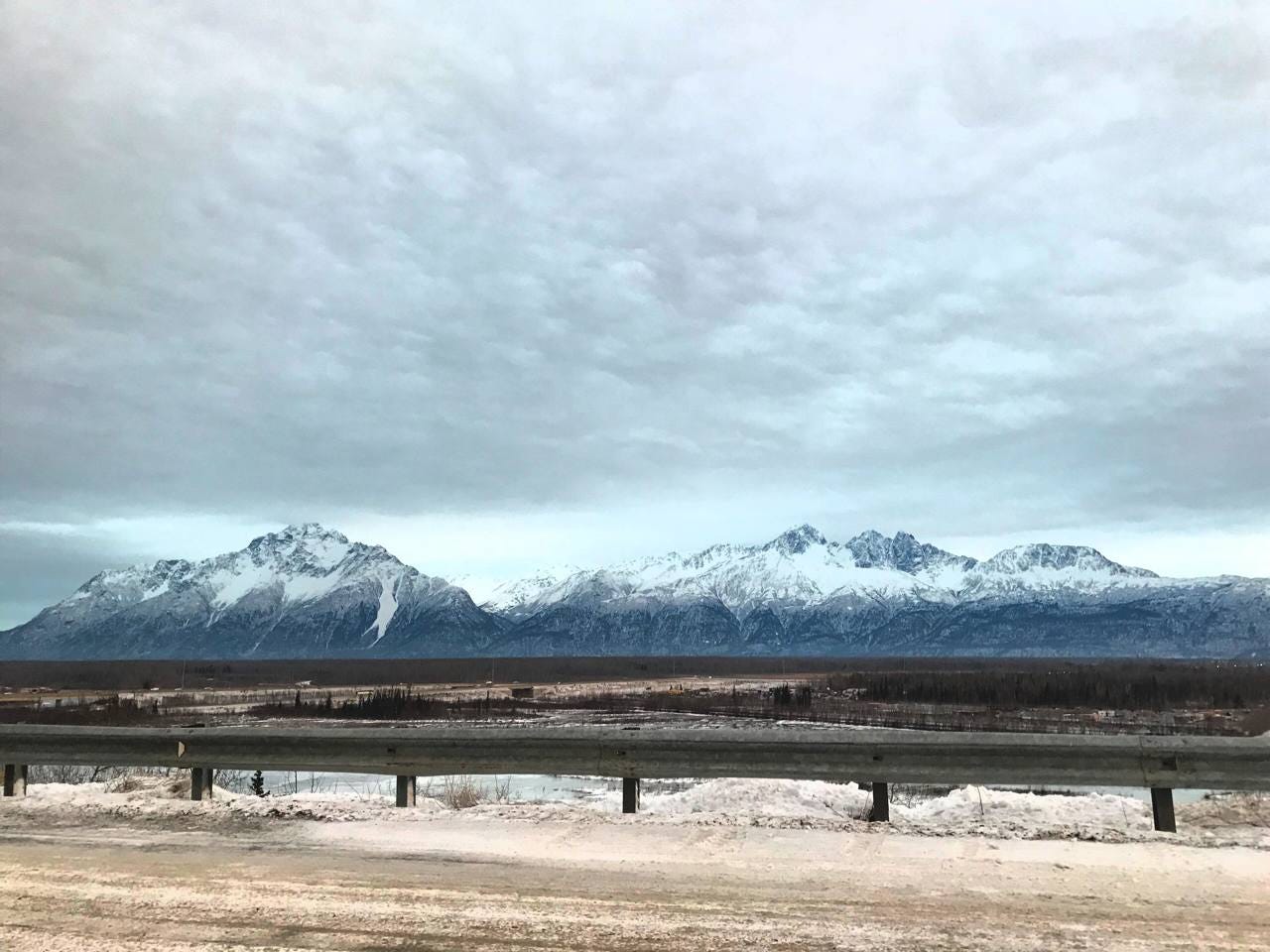
In this season, we drive to Palmer at least three times a week. And it’s not just all the commuting, but it’s also home repair and two of our kids learning to drive and health issues that need to resolve plus my grandma’s care and about four seven situations I can’t write publicly about and also it seems like the WORST time in the world to go back to school because I turn fifty this year for crying out loud and it’s not like either time or money have been just overflowing around here but this is what He’s called us to so there we are.
So my thoughts have been unpunctuated, too.
You probably have your own sentences like that.
When we have unpunctuated sentences without enough breathing room for even a comma, we have to wonder what the Lord is up to.
A website login asks, “What is four plus 13?” and you stall for half a second, thrown by the words mixed with numbers, wondering if this is still English or if you just need more coffee or if you finally lost it. It’s not stupidity or exhaustion or insanity; it’s the congestion of everything running through your thoughts, overwhelming the system.
We’re dealing with paradox and irony, things that do go to together even though they seem incongruent on the surface. The math adds up, but we need to pause and think about it differently because the questions aren’t what we expected.
We take a step back, and look at the big picture.
In these seasons, we have responsibilities on the front burner, concerns on the back burner, and other needs waiting on the counter for their turn. A faint sound of dripping that should probably be identified and dealt with. And sometimes, sirens in the distance.
Multiple things are happening simultaneously, but we’ve attempted to recognize priorities. We are also painfully aware of our own limitations, and our need for grace – for God to do (or help us do) the things we can’t naturally accomplish on our own.
Does this sound familiar?
Personally, I’m seeing a little progress because a few weeks ago I wrote, “I have written thousands and thousands of words, but they’ve just sat in my documents. I could not trust myself to publish without drawing blood,” but this week I finally had three days in a row of desk time and I was able to start making sense of things. It’s not that I haven’t been writing; it’s that I’ve been writing too much without enough time to make anything coherent among the overwhelm of scrappy thoughts in all the different situations. It’s such a mess to untangle.
I got sassy with the Lord yesterday and said, “If You’re still talking to me, couldn’t You just make it simple and give me a whole post all at once, instead of these bits and pieces of fourteen different articles and topics?”
Instead of striking me with lightning – or sending me to my room, which honestly I would’ve loved – He said, Because you’re not living out one article or topic. You’re in the middle of many situations, and I’m speaking to you through all of them.
Sit with Me, and we’ll sort them out together.
And then He sent me to my room, and we started sorting.
He showed me the juxtaposition of taking classes when it seems like there’s less time than ever, and of living on the far side of Wasilla when so much of our life is centered across the Valley. Both situations seem so inefficient, such bad timing.
But the classes have been my therapeutic distraction; I can pour myself into them because it’s surprisingly easier to grasp Old Testament theology and the Intertestamental Period than all the feelings swarming me. And our physical distance away from everything has enforced a boundary that keeps us (me) from overdoing anything else right now.
Sometimes our “inefficient” limitations protect us, because they make us focus, and create boundaries we wouldn’t have enforced on our own.
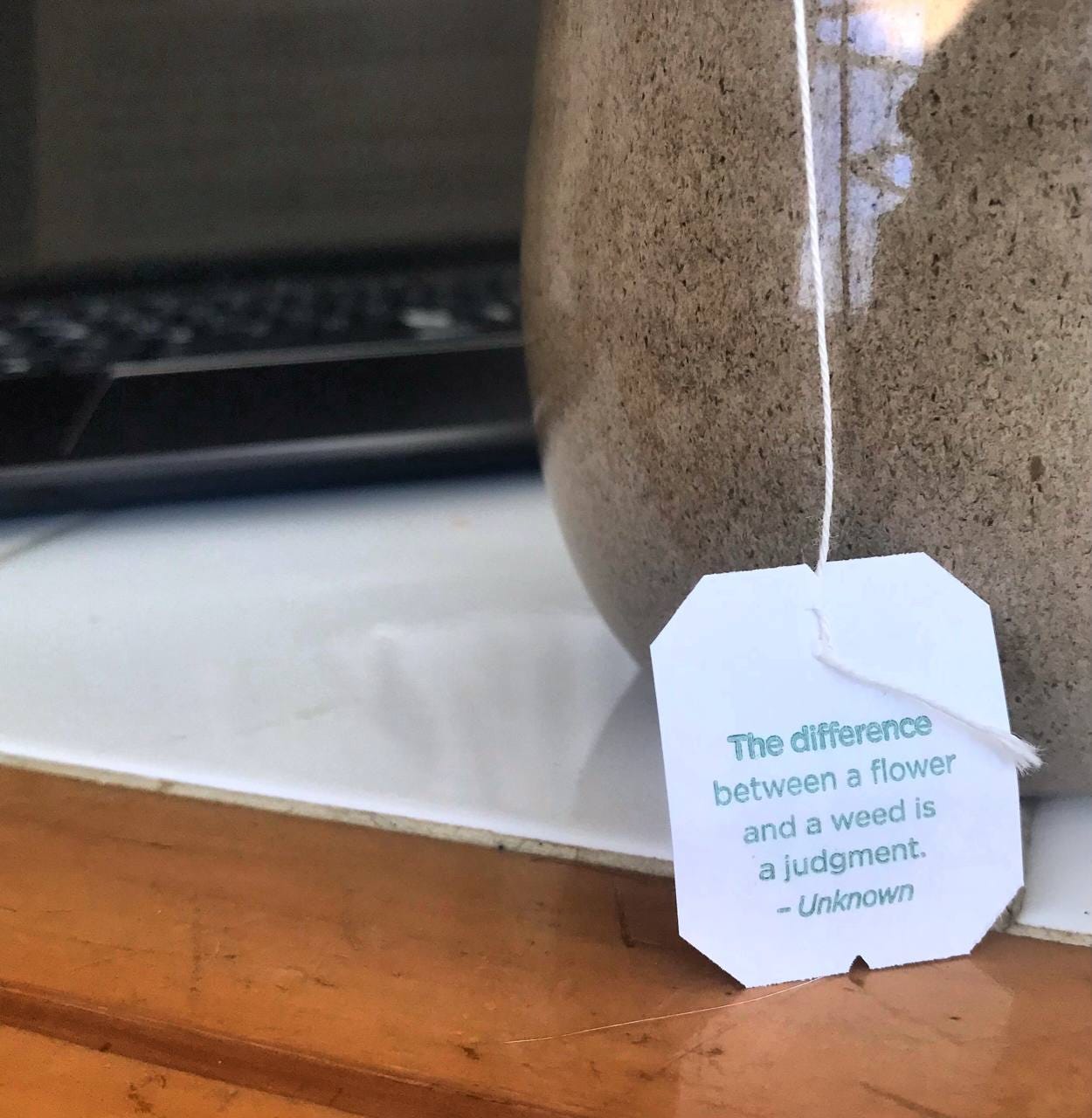
A while back we were in relationship with someone who was in crisis, and I was so frustrated that we weren’t able to do more for them. We did what we could, though. And after several months, it turned out that person still hadn’t done what they could to improve their own situation. Had we done more – had we done what we wished we could’ve in the beginning – we would’ve been stuck in a complicated enabling relationship, rather than setting the simple boundaries we were already limited by.
That was a good (but hard) lesson, and perspective I needed.
My internet search history lately has been saturated with stages of dementia, long term care, in-home care, insurance claims, real estate, housing markets, assisted living facilities, guardianship, cost of vehicles. The details are new but the pattern is familiar and I know life is being upended again.
Since I think I know some of what’s coming, part of me wants to hold tightly to the small, sacred routines for dear life. Another part of me has had no choice but to let go and accept things – especially the long grief of dementia, where there is no long term solution, no long term plan, no long term anything. Time is flying, and in so many ways, in so many moments, we have already lost her.
We already miss her, who she really is.
Until this year her mind has been like a summer sky with small white clouds occasionally moving across and blotting out the light of the sun. Each year the sky has become cloudier; there have been fewer periods of sunlight. This summer the sunlight in the sky of my mother’s mind, when it shines at all, glimmers through cloud.
– Madeleine L’Engle, The Summer of the Great-Grandmother
Here, it is steady snowfall, a run-on sentence of the accumulated questions whose answers are no longer remembered.
When I realized I was crying every day, I tried to make sense of the grief. We are used to change, and we have been losing her for so long, so it’s not exactly the speed or overwhelm of the world spinning too fast. Those are hard, but they are at least a familiar kind of hard.
It’s more like the world suddenly stops – she forgets Kav’s name, or she looks at me vacantly and I wonder if she’s already gone – and the momentum stops, everything stops.
We don’t notice oxygen until we can’t breathe. We don’t notice the speed of the earth turning until the axis wobbles, and I feel nausea as the fluid within me reels.
Later at the computer, I am trying to type through tears and think, I do not have time for this, there is so much to do.
If I do not sit here and grieve, though, nothing else will happen. This is the slow work, the deep work, that has to be done. If I don’t do it here, now, I won’t be able to do what needs done later, at her house, with the family, cleaning her stovetop, kneeling at her chair, holding her hand, drinking tea out of my dad’s mug.
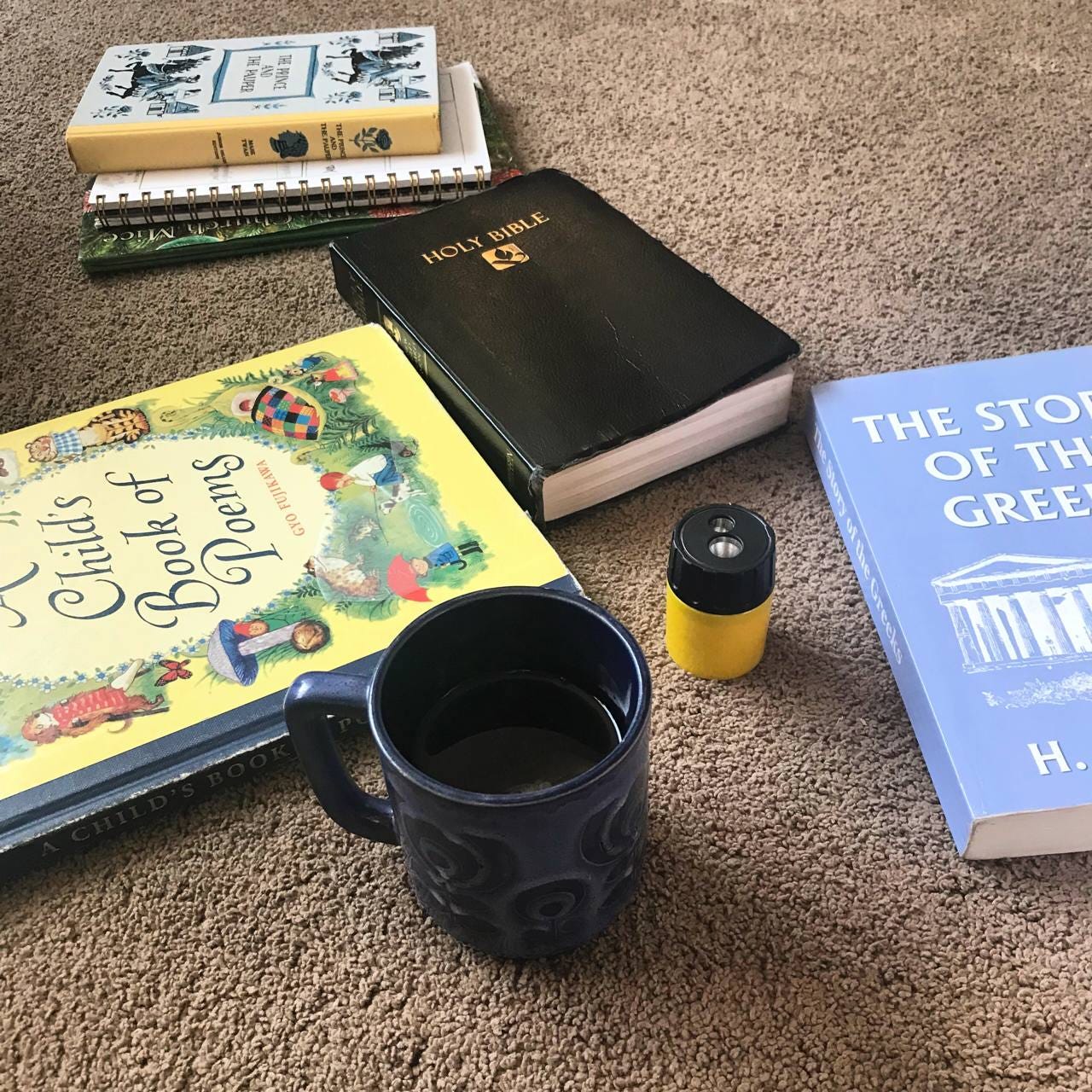
This is the place and time to process, and there is no checking it off the list because it just keeps coming, and I hate that.
A couple years ago I wrote about a different grief, when kids grow up and move out. Reading it hits differently right now:
We miss their presence when they leave. But also, as they’ve been longing to leave – which we remember and relate to and rejoice in with them – we realize that we’ve already been missing them because part of them has been gone for a long time. They’ve changed and emotionally moved on already in many ways. The grief has been sneaking up on us, slipping in and surprising us at random intervals for over a year now.
During those recent weeks when I couldn’t make heads or tails of things, I went to the memorial service of a pastor from our previous church. He had led our team of intercessors, and every Tuesday morning we prayed around the table together. His wisdom bled into several of my writings.
He was in his eighties when he died, twelve years younger than my grandma. I could not help sitting through his service with her on my mind.
Even though the denominations are different, in many ways that church took me back to my roots because the atmosphere was so similar to Grandma’s church that I grew up in. We sang hymns in both places, including the one that opened Dr. Don’s memorial:
What a friend we have in Jesus, all our sins and griefs to bear.
What a privilege to carry everything to God in prayer.
O what peace we often forfeit, O what needless pain we bear,
all because we do not carry everything to God in prayer.– Joseph Scriven, 1855
Person after person came up to honor this man, and they were still going when I had to leave early for another event at our church that evening. A couple people mentioned this quote of his:
The definition of true humility is to be known for who you really are.
– Dr. Don Brendtro
Doesn’t that change how we see authenticity, relationships, boundaries, and humility?
We feel helpless and without words sometimes, stuck in our own limitations and bound by the time it takes all the tears to flow out of us. But God is working in all of our weakness, making us who we really are, and teaching us to be honest about it with those around us.

We’ve had enough of society telling us to fake it until we make it. We are building a Kingdom of people who live humbly and honestly, even when life is a mess of griefs and burdens.
We are not performing; we are becoming.
There are reasons for the irony of our seasons. Protection is in place, timing is at play. And even though I’m scouring real estate listings more often than some people check their social media feeds (cough), I understand why the answer is still “Wait, not yet.” God has a curriculum for our lives, and we do not plan it.
Remember the long way that the Lord your God has led you these forty years in the wilderness, in order to humble you, testing you to know what was in your heart, whether or not you would keep his commandments.
He humbled you by letting you hunger, then by feeding you with manna, with which neither you nor your ancestors were acquainted, in order to make you understand that one does not live by bread alone but by every word that comes from the mouth of the Lord.
– Deuteronomy 8:2-3
I have seen Him move us in perfect timing, when that perfect timing took years longer than I wanted. He moved us to the perfect place, when that perfect place was rejected by us at first because it didn’t fit what we thought we wanted and needed.
He gave it to us anyway, and we are aching a little at the prospect of leaving it, whenever that time comes.
Sometimes He is preparing us in ways that look like the opposite of preparation. Sometimes He is protecting us (and others) through our inability, our lack of proximity, or other boundaries we never would’ve enforced on our own.
That doesn’t mean we’re not called to those abilities or proximities, or that we won’t get there eventually.
It means He’s taking us the long way, and it’s for our good.