the right fit

the right fit: how He molds a family of sore thumbs into His image (Copperlight Wood)

It is January and we are in a new year. Christmas came and went at our house, leaving behind new sleds and snowgear, and everything fits perfectly. In the yard, four inches of fresh snow is just waiting to be violently trampled by our six kids.

There is frantic donning of snowgear and the garage door slams repeatedly as they race outside, each hauling a plastic disk that promises to send them down the hill at warp speed.

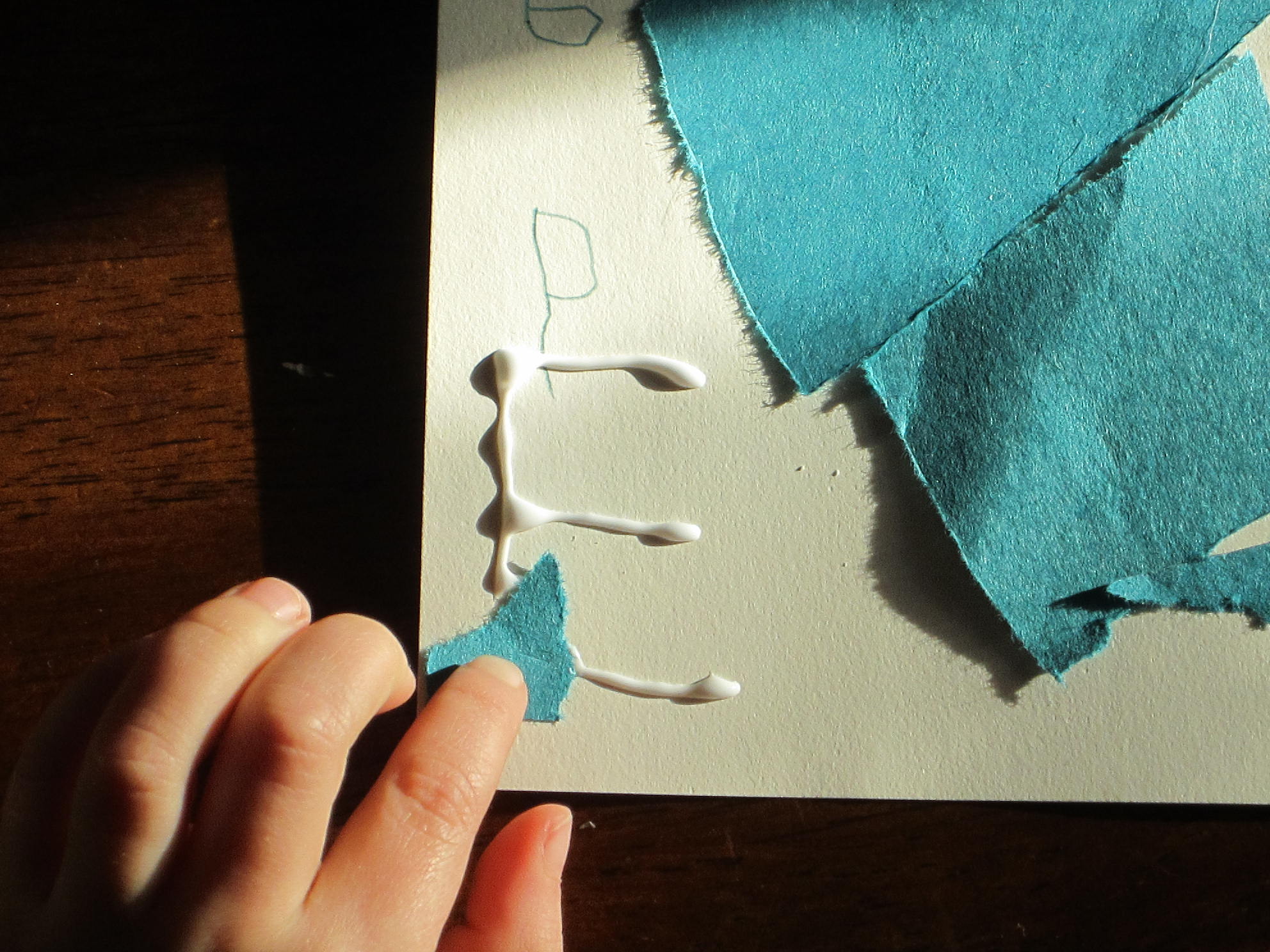
IMG_4000

Except for one kid. Our youngest child is sobbing and wailing in depths of despair that would make Anne Shirley proud.

This mitten won’t fit on this hand! And this mitten is on this hand” – she thrusts it at me as evidence – “but the OTHER mitten won’t fit on my OTHER hand because ITS thumb is on THIS side!!”

We can hear the bigger kids outside, laughing, yelling, breaking a path down the sledding hill. But she is left behind, left out…and her shiny red sled surely pouts in sympathy from the lonely garage where it waits for her.

She flings both her arms out to show me. “LOOK!” Her four-year-old vocabulary is limited, but what she really means is Hey! This infidel mitten dares to defy me! Behold!

I’m beholding. The thumbs do look…funny. The mitten she’s wearing also looks funny.

Because she has it on the wrong hand. Upside down.

I take that mitten off and hold both of them in front of her so she can see what’s wrong.

“This is how you had them,” I tell her. “Now, watch this.”

I slowly flip the mitten over and switch them to the correct hands…and they fit. No sticky-outy thumbs or anything, and all is right with the world.

She’s four, and learning. But she’s not alone.

We all try to put things on in the wrong places, and then fly into despair when it doesn’t fit right.

Moms, especially, learn that the discipline, training, and schooling that worked for their first kid usually won’t be a perfect fit for the next child. Due to God’s flair for comedy, every succeeding offspring is usually the opposite of their older brother or sister. It’s a mathematical phenomenon.


Kids are designed with the irritating trait of resisting to mold perfectly to the likeness of others. They won’t be made into their older siblings, and they won’t be made into us – their parents. We may share many traits and features with them, but they were created to mold perfectly to the image of the One who made them…and He doesn’t fit into any box we can come up with.

We have differing personalities and short tempers. We have special needs and often incompetent, pat answers. We are kept on our toes and on our knees.

Consider it pure joy, my brothers and sisters, whenever you face trials of many kinds, because you know that the testing of your faith produces perseverance. Let perseverance finish its work so that you may be mature and complete, not lacking anything.

-James 1:2-4

Some days we are all thumbs, and they’re sticking out in the wrong directions all over the place: This kid won’t respond to this consequence and this teaching style doesn’t work for this kid and this other kid sticks himself out like a sore thumb that is pushing my buttons…and he’s doing it on purpose.

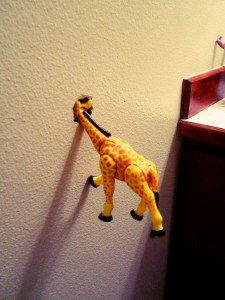
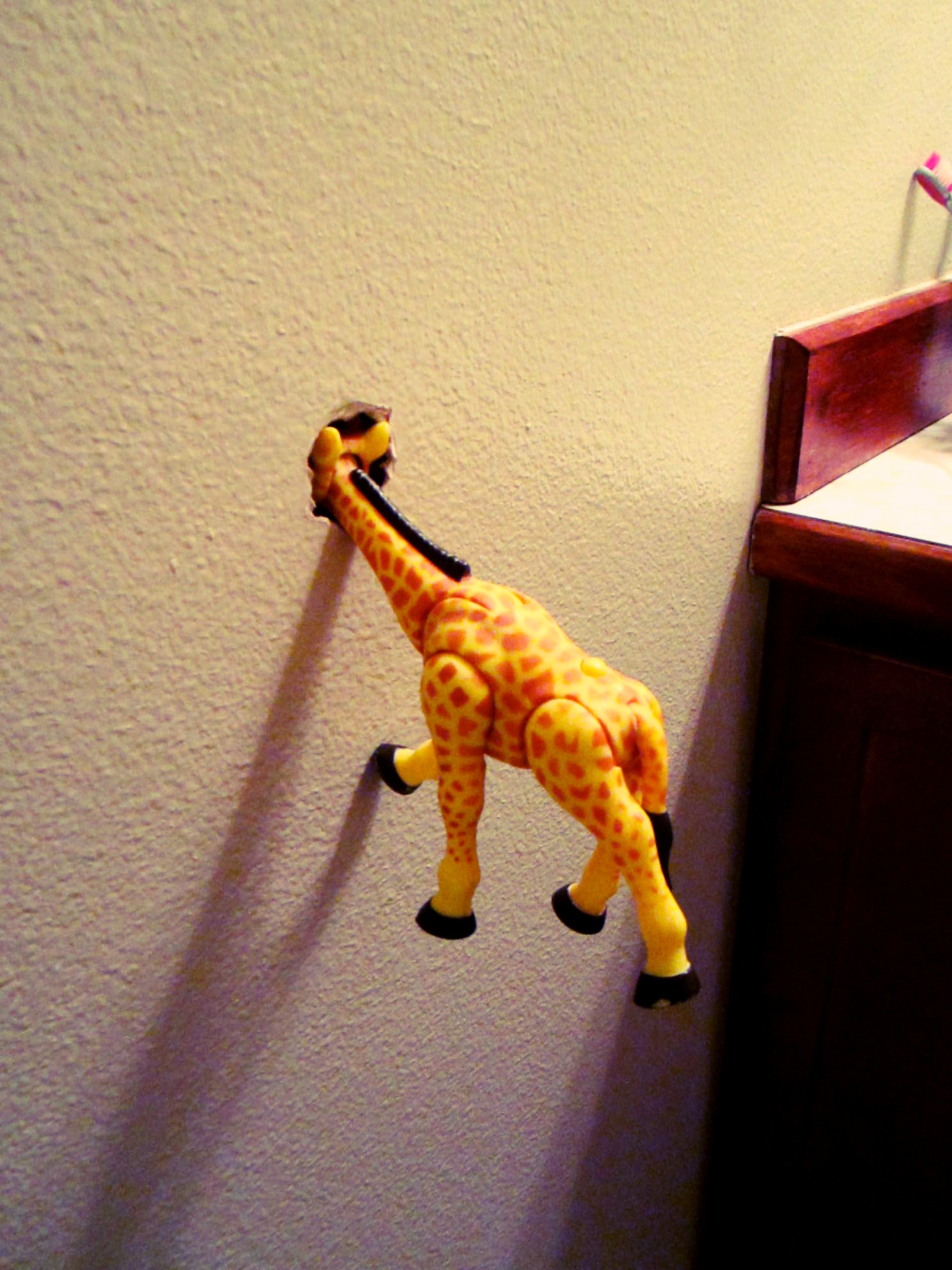
IMG_4027

We are stretched and grown beyond our parenting wisdom, and we cry for more.

If any of you lacks wisdom, you should ask God, who gives generously to all without finding fault, and it will be given to you.

– James 1:5

So, we pray because we lack wisdom for the particular crisis at hand…but also, we pray because we have the wisdom in the first place to know that He must intervene in our lives.

Because honestly, what we’re really saying is, Hey! These infidel children dare to defy me! Behold!

We thrust the situation and these children and all of the sore thumbs at Him, and He gently shows us how to put things upright again. He shows us how He made us all to fit together.

Instead, we will speak the truth in love, growing in every way more and more like Christ, who is the head of his body, the church. He makes the whole body fit together perfectly. As each part does its own special work, it helps the other parts grow, so that the whole body is healthy and growing and full of love.

– Ephesians 4:15-16

As we pray with wisdom, for wisdom, for our kids and all of our differences, He does more than just show us how He is making our kids into His image. He makes us more into His image, too.

He says, This is how you had them. Now…watch this.

And He shows us how we are made to fit together perfectly. 

a love that grows


a love that grows: a letter from an adoptive mama to her daughter (Copperlight Wood)

Dear Reagan,

You turned eight years old today. You had little idea what it meant, and you didn’t know what you wanted for cake or presents. You knew you got extra hugs and smiles today.

You came to us full of fear and hurts and hunger and unknowns. I would lean in, you would lean away. You were wary, untrusting, hesitant.

a love that grows: a letter from an adoptive mama to her daughter (Copperlight Wood)

You were afraid of stairs, of playdoh, of not being fed. You panicked at the smell of food that was not right in front of you. You were afraid of us, especially of me.

You walked with a lurch and flapped your arms when you were excited. You still flap a little, but so much less. You would eat orange peels, apple cores, and watermelon rinds. Crumbs on the floor and food on someone else’s plate was fair game if you got to it before we did. You ate a few crayons. You only tried eating an eraser once. 

You can wait for food now. You know that there’s a process to making it that you had never seen before. You know it will come to you as soon as it’s ready.

You play now. You love to play with buttons and cars, and you look at books quietly on the couch every day. You like…cookbooks.

a love that grows: a letter from an adoptive mama to her daughter (Copperlight Wood)

Now you can run. You dress yourself, you make your bed, you fold clothes, and you even refuse food to push us away sometimes…but at least that means that you obviously aren’t afraid of us starving you anymore.

a love that grows: a letter from an adoptive mama to her daughter (Copperlight Wood)

You used to be hot and cold, swinging from one extreme to the other in your affection and rejection of us. You would cling aggressively one day, and shove us away the next. Now you are…well, definitely not lukewarm. You’ve leveled out to warm and cool. It’s progress, and we’ll take it.

a love that grows: a letter from an adoptive mama to her daughter (Copperlight Wood)

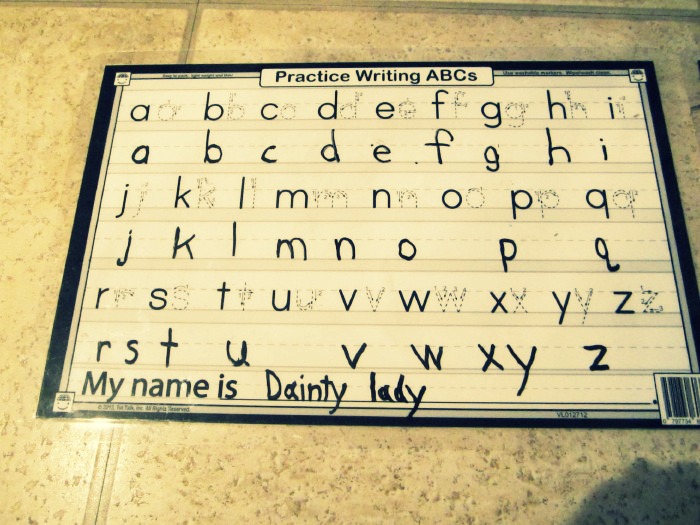
You are learning to speak. You are learning to give and maintain eye contact to those who love you. You are learning letters, colors, shapes, and you can count to eight. You know how much four is. You know that you were seven yesterday, and that you are now eight. Whatever that means.

a love that grows: a letter from an adoptive mama to her daughter (Copperlight Wood)

But you don’t know that we prayed for you when you were a toddler. I’m so sorry it took us so long to find you. You don’t know that we saw you, found you, and chose you when you were five. That we waited and prayed and cried for you until we got to meet you when you were six, and that we brought you home months later when you were pushing seven. 

You don’t know very much about the years before that. We don’t, either.

a love that grows: a letter from an adoptive mama to her daughter (Copperlight Wood)

We have a few pictures of you as a toddler, but they are undated. We can only guess how old you were in them. We have paperwork that mentions inaccurate diagnoses that are both more and less severe than the truth of what you are healing through.

a love that grows: a letter from an adoptive mama to her daughter (Copperlight Wood)

You almost never flinch anymore when I reach toward you. In the middle of the night, when you’re asleep and I tuck you in one more time before I go to bed, your arm doesn’t fly up in fear anymore to cover your face and head. I’m so sorry you ever had to do that, and that you ever felt like you had to do that here.

You are healing. You are growing and learning and we are seeing more and more of the real you, and you shine.

You are brave. You are strong. You are gentle and curious and tender and joyful.

You are growing in wisdom and stature, just as the One who redeemed you did when He was young.

a love that grows: a letter from an adoptive mama to her daughter (Copperlight Wood)

You have a mighty future. We are so honored to be in it.

With a love that grows and prays for your mountains to move,

Mama


in the dark

in the dark: it takes risk to learn (Copperlight Wood)

There’s this little area of our kitchen that I’m going to tell you about. I could show you a picture, but it’s just too gruesome and would probably traumatize you. So I’ll  describe it because I’m sure your own kitchen is spotless and you’ve never even thought of the possibility of this remotely existing in your house.

It’s the space between the stovetop and the counter. On both sides of the stove, there is this little bitty crack, just a millimeter or two wide. You know the spot?

Imagine every ingredient that ever existed in our kitchen, in varying amounts from mere crumbs to several tablespoons, being forcibly crammed into it. And then left to ferment. Oh, yes.

I take the sponge and wipe over it daily, which is excellent for cleaning the surface around it but probably only serves to send more debris into the abyss. The only way to clean it out is to go in there.

NOOOO!!! (insert freaky violin music) You can’t make me!!

Maybe we can talk Vince into it, instead.

There’s another area of our house I’m going to tell you about. We have a small bathroom, and it’s equipped with a light switch and perfectly good light bulbs. There is a little girl sitting on the floor of the bathroom, in the dark, refusing to…wait for it…turn on the light.

Weren’t we doing this two weeks ago with something else?

Children in orphanages have been conditioned to get more attention from caregivers when they appear helpless: the more independent children in an institutional environment are, the less attention they receive. Some post-institutionalized children have deeply internalized this behavior and manage to appeal to a wide audience with demonstrated helplessness.

This behavior has also been observed in abused children, who would rather have negative reinforcement than no attention at all.

– Boris Gindis, Ph.D.

She doesn’t have to sit in the dark. She has everything she needs to stand up and turn on the switch and move on with her day. It’s learned helplessness combined with a medley of other attachment issues. If she could pretend she didn’t know how to breathe, I think she might try it.

Jesus. What the heck?! Why does she do this?

Imagine every ingredient of neglect and abuse that ever existed in the first six and a half years of her life, being forcibly crammed into her. And left to ferment.

Oh.

You have to go in there with her. Join her in the dark place and shine light into it.

I open the cracked door, and she squints. I squat down in front of her, and she flinches. She’s been here over a year and still she flinches. Not as often, but she still does it. She knows she’s disobeying and she remembers being hit for it.

It would take less than 1 second for me to flip the switch on for her and then we could move on, but that would only serve to wipe more debris into the abyss. People did that for over six years, and clearly it did not help her, though I’m sure it seemed more convenient at the time, every time.

I can’t even walk her through the motions. She knows what the motions are. She must actually decide to make the move herself.

Many of these children actually have the needed skills or knowledge, but are resistant to any attempt to encourage them to act independently…

It can be open defiance or hidden sabotage, but it is rooted in their overwhelming need to be always in control, to be on known and manageable “turf.” This is an obstacle in their learning: to be a good learner means to take risks, to step into unknown territory, to be sure of one’s own ability to cope, and to be prepared to accept help.

– Boris Gindis, Ph.D.

I hold her for a while and then leave her to sit on the bathroom floor so I can make dinner.

Spaghetti and meatballs. Homemade sauce from scratch, piece of cake.

Hey Love, He says. Remember when you were in college, and didn’t even know how to make coffee?

Yeah. I couldn’t make anything that didn’t come out of a box or a can. Are You rubbing it in?

Remember when you were too intimidated to try making bread? Remember when knitting seemed too difficult?

I have no idea where He’s going here, but I’m paying attention.

Remember when you’d never read Jane Austen, and then you struggled though Sense and Sensibility? Remember when you knitted that first baby sweater? And do you remember a few months ago, when you tackled HTML and WordPress and fought until 3 am to convert this whole thing over? 

falling off a cliff, bored

“To be a good learner means to take risks, to step into unknown territory, to be sure of one’s own ability to cope, and to be prepared to accept help…”

keyboard

It took me another hour to figure out how to fix the keyboard.

You stopped being afraid of the unknown and the newness. You got tired of sitting in the dark.

I feel like I’ve spent most of my life overcoming unknowns. Ridiculous intimidations. Big and small fears, both real and non-existent. 

Yes, you have.

That’s why I chose you to be her mother.

wait and listen from Copperlight Wood


*This is day seventeen of the Wait and Listen series. The other posts are here.