right of way: giving God room to move

We’re on the highway, driving out of town to a standard six-month checkup. We’ve passed the glittering fall days that are all steel and gold with leaves scattering the sidewalks; now we’re onto the bare days, with smudged white skies and naked trees. They are empty, waiting. Most of the grass is bleached straw, but the grass around the new streetlights is still fresh and green, like the oregano that grows up against our house. It clings to warmth and stays steadfast long after the mint and plantain are withered to nothing.

right of way: giving God room to move

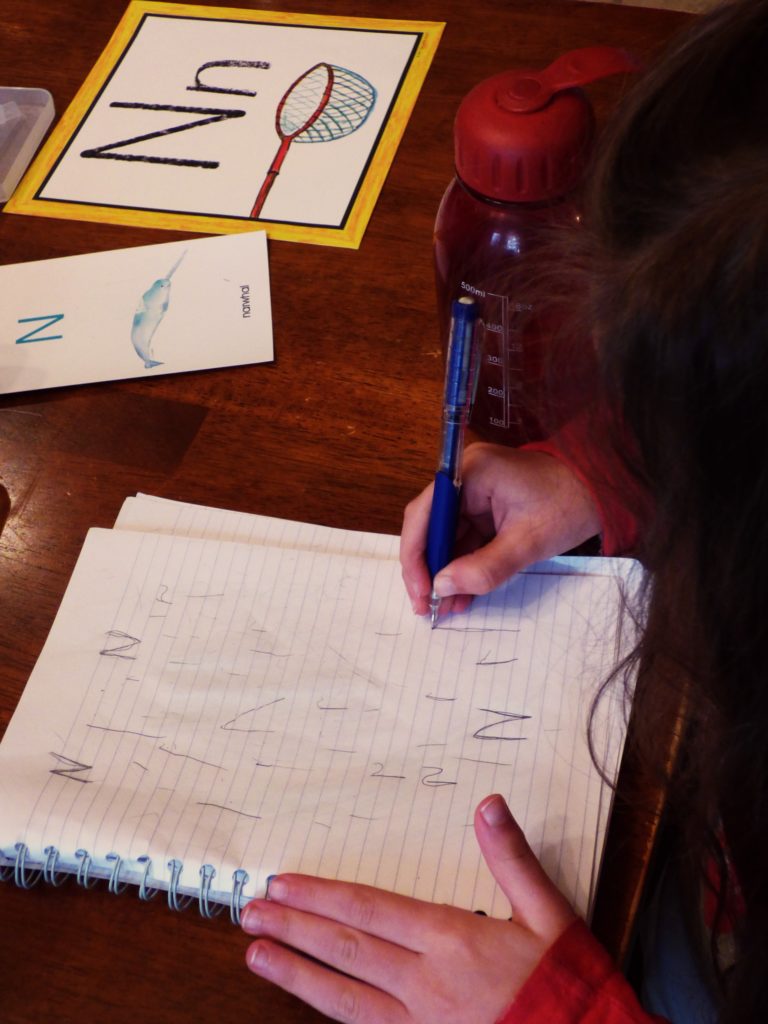
We’ve done this trip many times – we’re almost into three years of these vision appointments. But this time our daughter can read, and yet out of one eye she cannot see that the capital Y on the screen in front of her is a Y and not an O.  The letter changes to an S, and she says it’s an O. The doctor changes the sizes and arrangement of the letters, and the mood of this casual, standard appointment shifts to something weightier.

Remember what I’ve been telling you, Love, He says.

What He’s been telling me is to thank Him in all things, even the hard things. Especially the hard things, those things that are a result of the Fall and not of Him at all. And He is teaching me that when I thank Him for those things, it isn’t as though I’m saying, “Yes, this is so good, I’m glad (fill in the blank) has happened,” as we would thank Him for, say, a windfall of cash or some unexpected victory.

It is a different kind of thankfulness. It feels like sacrifice.

P1010129

When we thank Him for the hard things, we’re saying, I trust You. I know You’re bigger than this, and as I trust and thank You in this, I am moving out of Your way and creating a wide path for You to move in power in this situation and use it for our great good.

We are, in essence, giving God the right of way, and giving the enemy the middle finger.

The doctor changes to the letter to a P and asks her what she sees. “O,” she says.

She’s a good reader and she knows her letters, but she can’t see these. For the first time, he recommends therapy – twice a week, an hour long each time.

I know it’s not a big deal. Weekly appointments are not supposed to be a big deal. But it is a blow to a schedule already overwhelmed, and I am overwhelmed, and I don’t know how we’re going to do this. I’ve been praying for breakthrough, not burden.

It’s not cancer, it’s not famine, it’s not anyone attacking our village. It’s just a new diagnosis and something else to add to the appointment book twice a week, and we are grateful that therapy is an option. I know it’s a first world problem. But we are first world people and I want my daughter to see. Thank you, God.

I ask the doctor if the appointments could be only once a week. If we could do more at home. If there’s any way we could avoid two appointments a week, anything to lighten this.

No, he says. Without therapy twice a week, he doesn’t think they can help her.

“I know this will be a challenge with your other responsibilities.”  He knows we have six other kids, he knows some of them have special needs. And I am not going to cry in this chair, looking at this doctor and holding this baby and watching this daughter put her glasses back on. Thank you, God.

He explains that insurance doesn’t always cover the appointments, and that she needs them for six to nine months. He tells me what they cost if we need to pay out of pocket – almost the same as our mortgage payment. Thank you, God.

I’ve never understood how praise could be a sacrifice, but I’m feeling it now.

The one who offers thanksgiving as his sacrifice glorifies me;
to one who orders his way rightly
I will show the salvation of God!

– Psalm 50:23

He says that if she can’t do therapy, the other option is surgery – which sometimes helps, and sometimes makes things worse. He doesn’t know that we’ve already had two surgeries in the last six months and another scheduled for the beginning of next year. And I am not going to cry in this office, holding this prescription and picking up my jacket and patting this baby. Thank you, God.

Vince is waiting in the parking lot with the Stagecoach and the rest of the kids. I give him the rundown and he suggests we get coffee. He is good at keeping things in perspective, and there are few adversities that caffeine and sugar can’t help. But, I don’t know, I kind of just want to go home and rave incoherently while tearing my schedule book into confetti.

 Rejoice always, pray without ceasing, give thanks in all circumstances; for this is the will of God in Christ Jesus for you. Do not quench the Spirit.

– 1 Thessalonians 5:16-19

Notice the order? He tells us to not quench the Spirit right after he tells us to give thanks in everything. If not giving thanks smothers what the Spirit would do in our life, giving thanks makes room for Him to light a fire under our sacrifice and sanctify our situation.

We cling to warmth, trusting Him to keep us steadfast when we are tempted to wither. He blows the chaff away, like so many leaves in the fall.

God is in the midst of her; she shall not be moved;
God will help her when morning dawns.

– Psalm 46:5

P1010026

We are coasting into downtown Wasilla when Vin broaches the subject of coffee again. “If I can get over into the far right lane, we should stop at Kaladis.”

I looked at the traffic and assumed a somber Victorian accent. “We will leave it in the Lord’s hands.”

The little red car moved out of the way, and our Stagecoach merged into the lane.

“Thus saith the Lord,” he said, “Thou shalt have espresso.”

I nodded. “It is the Lord’s will.” Thank you, God.

________
This is an excerpt from ABIDE volume 5: Obedience to Move Forward. Victory is always on the other side of obedience.

fermata: where we hold and rest

It’s not for lack of material that I haven’t been writing here. In one afternoon, an entire jar of pickles shattered on the dining room floor, a shower was out of commission with a clogged drain, and I broke four dishes simultaneously during a skirmish in my ongoing war against fruit flies. Boom. Go big or go home.

It’s days like this that drain us, though, and for the last few weeks I’ve sat at the computer almost every night, but nothing came out right — too dry and stale, too flat and foggy. The hurricane is exhausting.

fermata: where we hold and rest (Copperlight Wood)

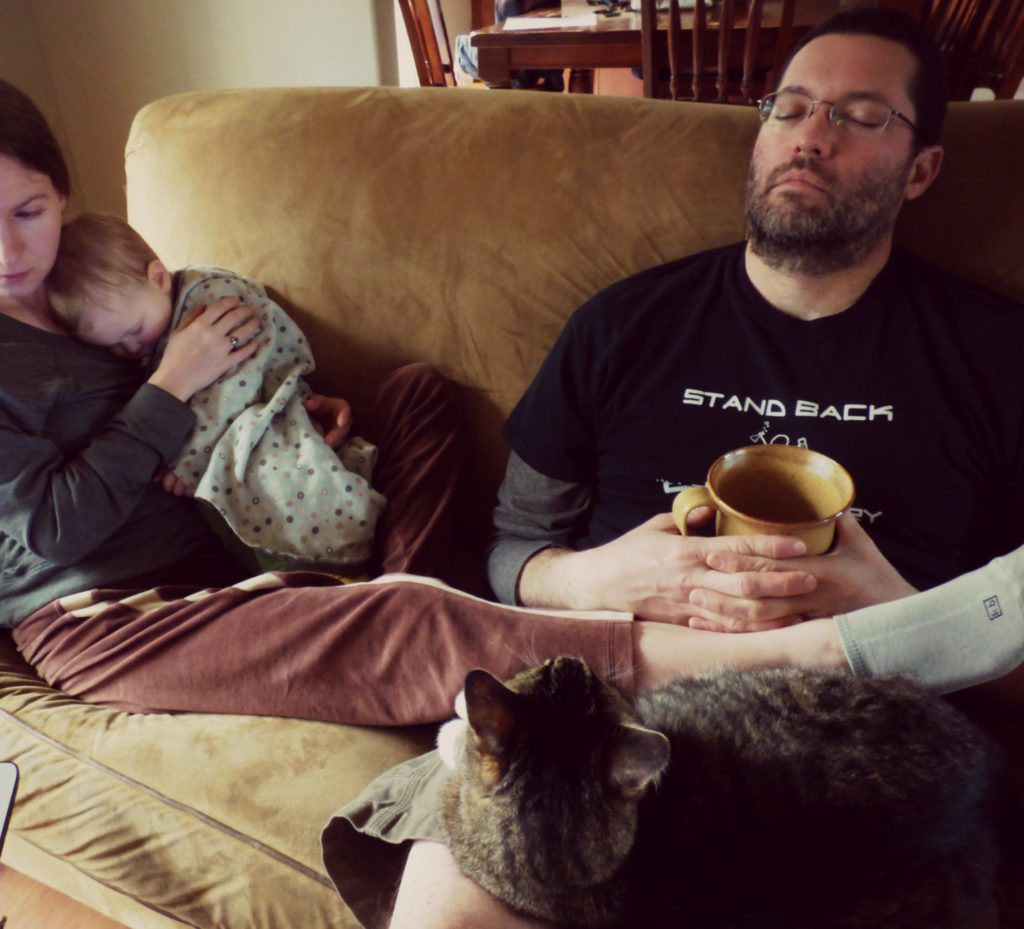
So my steady routine of night owl productivity is on hold until our little bed-buddy is a steadier sleeper. He stays a few hours in his crib and then wakes up needing to nurse and moves in with us. A queen size bed easily fits two adults and a cat or two, but the addition of an 8-week-old’s wingspan can also be accommodated as long as one parent doesn’t mind sleeping with part of their body hanging off the edge of the mattress.

P1020301

I really don’t mind. These are the tiny days, when a clean dishtowel serves as a blanket. But the house feels small, too, and the view from the couch rarely changes.

…to get away from the disturbances and influence of men, planned or unplanned, and to find a place where one is open to influence only from the sky, the wind, the clouds coming up from the valley or closing in from the mountain peaks, the sparkle of snow in the sun, the marvel of light filtering through trees, or the sound of a waterfall splashing on rocks, or birds singing before sunrise, or the crickets’ special song at twilight – this is to give one the possibility for some original thinking, for getting a few fresh ideas, for feeling inspired to some form of creativity.

– Edith Schaeffer, The Hidden Art of Homemaking

So we went where we always go. I never get tired of this place.

P1020227

P1020204

There were paragliders. I had to look that up because I didn’t know the difference between hang gliding and parasailing – one is a motorized contraption, the other involves being towed by a boat tauntingly out of shark’s reach; neither are what we saw at Hatcher Pass.

P1020205

P1020228

But I didn’t know that then. They reminded me of something else, something familiar that I hadn’t seen in a long while.

P1020203

They’re fermatas, Love, He said.

A fermata is the symbol in music that tells you to hold, to pause. He knew I wouldn’t have to look it up.

This is the time to rest and linger – don’t rush through these days, looking more at your to-do list than you look at your kids’ eyes.

P1020264

P1020303

P1020286

These tiny days, taking turns holding Finnegan, taking turns cleaning messes, taking turns making meals. The days are fast and slow, intermittent lulls in a windstorm, and we are depending on each other to keep the storm outside – we have to constantly push it back out after it wheedles its way in, via bickering, misbehavior, old wounds, fresh grievances. We sweep out bitterness as persistently and repeatedly as we do to dirt and leaves in the fall, a continual process of keeping hearts and house clean. The storm is kept out only with extreme diligence.

I shall always be grateful to that storm in Cornwall that drove us inward on ourselves. The quality of light being almost the same at ten in the morning as it was at ten at night, we lost all count of time. The soporific swaying of the wagon, the utter stillness of the moor broken intermittently by sounds of wind and rain, the glimpses of a shifting, shadowed landscape gave us the feeling of having embarked upon a long voyage.

– Joan Bodger, How the Heather Looks

I’ve been thinking on this for weeks as I sit in dullness, trying to produce something here that just wouldn’t come. It won’t be pushed, no matter how behind I feel.

We need productive time away. We need productive time together. We need time to not produce anything at all – this may be the most productive time of all, giving us the perspective and simplicity we need to handle the chaos as it comes.

I asked Vince about it. “Do you know what a fermata is?”

“No. Is it Greek pastry? Mediterranean pasta?” These are the answers he gives while cooking dinner.

“No, it’s a pause in music.”  But it’s more. This fermata is the place to hold, Love – and you need to hold for longer than you normally would. The song will pick up again soon enough.

It is a restless baby, squirming and overtired, who finally lays his head on your shoulder. It is a restless mama, overtired and fussy, letting go of the dishes and deadlines, just to listen to her Father.

He rests, and I rest. This is the place to hold and linger.

in pieces: why we need to remember we are the Beloved

It happened when a six-year-old was crawling on the kitchen counter to get a cup out of the cabinet. She slipped and dropped the cup, which landed on several other dishes next to the sink, including Vince’s favorite mug…the handle of which immediately broke into three pieces. Did I mention it was handmade pottery?

in pieces: why we need to remember we are the Beloved

She knew it was her fault – an accident, a sad loss, but not a huge deal in the grand scheme of things. But when it came to apologizing, something flipped.

“I didn’t break it!” she insisted. Technically, this was (sort of) true…the cup she dropped is what did the breaking. And yet she was the one who dropped it.

We went round and round with the logic of this, but the real battle wasn’t logic. The real battle was two-fold, part of which was admitting the truth — because if we admit the truth we must also admit responsibility for our part in it. The other part was fear clouding her identity, and she forgot that she is more valuable to us than a broken dish.

Sometimes we need to be reminded that we’re the Beloved so we can be secure enough to face the truth.

It’s imperative that we teach this to our kids. If we don’t, we’ll end up raising a generation of middle-aged juveniles who would rather be willfully out of touch with reality than admit their own mistakes. And we really don’t need any more of those.

Avoiding truth and responsibility are both rooted in fear, and given enough time they distill into narcissism. We think of narcissism as something that values self over others to an extreme measure, but the truth is that it’s the essence of insecurity.

And our culture is full of it. We diminish our own value out of insecurity, and then entirely eliminate the value of others in self-defense. Like a bully who picks on the weak to hide his own fear, the nation that justifies slaughter and harvesting of body parts for scientific advancement is a nation steeped in its own self-loathing.

We don’t need to look to ISIS for atrocity. We have evidence of the most barbaric acts on video, in our country, against our most vulnerable, for profit, with the backing of an inflated government and a culture drunk on its own narcissism and insecurity.

It’s not that these videos show how wrong abortion is – abortion is wrong whether it is done for profit or not, whether it happens in the third trimester or not, whether the baby is wanted or not. What these videos reveal is how debased we are as a culture that it takes something this barbaric to wake us up to the evil of it.

If we deny what is so clearly shown here, we are willfully out of touch with reality – because if we admit the truth, we must also admit that we are responsible.

Our culture is responsible. Our silence is responsible. Our turning away, not wanting to be made uncomfortable, is responsible.

And I want to say, I’m sorry. We have dropped it, we have caused breaking, we have allowed a culture to grow up around us that divides the unborn into pieces for profit, and doesn’t even care if the heart is still beating or not.

I’m sorry. I’m sorry.

While no life is perfect, every life is beautiful and has purpose beyond being relegated to a bunch of line items for Planned Parenthood.

Sometimes we need to be reminded that we are the Beloved. You, reading this. Me, typing this.

This one, with this face.

face

photo source

He was only six months younger than this one, with this face.

P1020161

We see a culture rising up out of this that knows what it is to take responsibility. We see generations who are willing to look reality in the face and say No more of this, not on our watch. We see families and churches stepping in to do more than say they are pro-life but are also showing that they are pro-child – adopting, fostering, providing, and praying. We have a culture that is moving from the relative comfort of shaking their heads in disgust over headlines to stepping into the front lines to stand up for children, born and unborn.

When we know we are the Beloved, we’re not afraid of the truth. Insecurity is no match for people who know they are image-bearers. And those who recognize their own value are those who also value the lives of others – not as a commodity for personal gain, but a person with inherent value — because they are also the Beloved.