save the day: how grief brings priorities into focus

Tuesday began earlier than normal with a shattering crash somewhere just outside our room, followed by the sound of a guilty cat jumping to the floor.

Throw back the covers, stumble to the scene, find glass and feathers everywhere. The boys had saved a handful of chicken feathers last fall and put them in a cup, and there they had remained for eight months until Dash decided that this precise moment – when we were in a dead sleep an hour before we normally get up – was the ideal opportunity to test gravity.

So there it went.

save the day: how grief brings priorities into focus ||Shannon Guerra

Thirty minutes later the mess was cleaned up and we were down by one glass and an hour of sleep, but on the upside we were half an hour ahead of schedule.

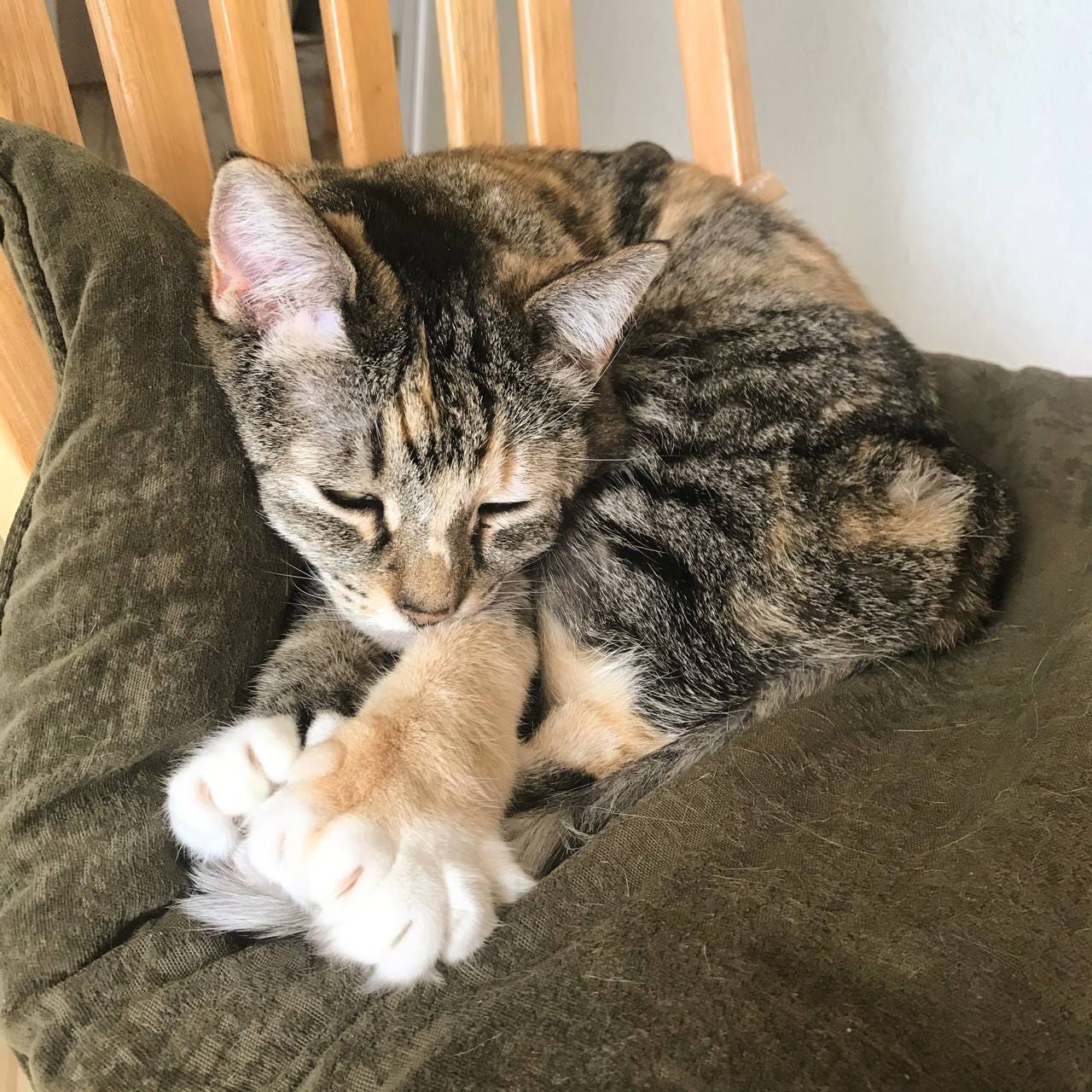
Commence chores, breakfast, and coffee on the couch with Dash, who was unrepentant and shameless about starting the morning with a bang. She slept in Vin’s lap with a clear conscience, if she even has one. And like every morning, we plotted out the day, the week, and the tasks ahead.

It’s the middle of June and none of our hens have gone broody yet, which is a matter of serious prayer because no new chicks means precious few eggs this fall and winter. But Molly, our best mama, was in a nesting box yesterday afternoon and last night, so we’re hoping she’ll rally to the cause again and save the day.

“Finn, go check and see if Molls in still in the box.” Those Orpingtons are the best: friendly, fluffy, calm, gorgeous. He and Kav both run out there, and a minute later, Kav runs back.

“Mom, you need to go to the coop. Finn needs you.”

The coffee is suddenly cold in my mouth, and I realize Molly might not have been staying in the box because she was broody. Mug down, shoes on, out the door, across the yard.

She was stiff and gone, but Finn didn’t understand…and then he did. A second later Kav did too, and both boys were crying, clutching our beautiful gold hen, tears falling on her feathers.

Deep breath. Eyes squeezed tight, arms around the boys. What a day; we haven’t even finished breakfast yet.

It feels like the agenda has changed. But really, it’s just become clearer because suddenly the important things are set in bold and the peripherals have faded to the distance.

What is important today? Hugs and eye contact. Finding gratitude and remembering joy. Nurturing hearts with conversations out of nowhere, because feelings and revelations and memories don’t have conveniently scheduled slots. Prayer, tea, and rest, and time to stare out the window. We need that stillness to feel our breath go in, and breath go out, and to notice the light stick of our eyelids that have settled for blinking when they really needed to cry.

And I say, “It is my grief
that the right hand of the Most High has changed.”

I will call to mind the deeds of the Lord;
I will remember your wonders of old.
I will meditate on all your work
and muse on your mighty deeds.

– Psalm 77:10-12

We go gently. Grief, whether it’s labeled mourning, injustice, overwhelm, PMS, regret, setback, or attack, requires tenderness and caution. No sudden moves; we need to pray, abide, and recalibrate so we don’t make a knee-jerk move that operates out of the spirit of stupid.

We can push through like it doesn’t matter, but life works better when we give ourselves (and others) permission to go slow and take the time we need to figure out what the next right thing is. We also need to give permission for grief to happen at all, because it’s so easy for us to discount it. It’s just a chicken. It’s just eggs. It’s just…fill in the blank.

All the tasks and chores and relationships clamor for attention and the emotions are not helping, because everything looks more daunting and hopeless than it really is.

No Molly. No broody hen yet. We’re already not getting enough eggs for the number of hens we have…this is where the worst case scenarios start to play through our minds. Gravity starts spiraling our thoughts downward, and we must check the fall with truth.

But you do see! Indeed, you note trouble and grief,
that you may take it into your hands;
the helpless commit themselves to you;
you have been the helper of the orphan.

– Psalm 10:14

So we shrink the to do list. The most important things go to the top, and even those have to be broken down into smaller, simpler, stupid-easy steps. Write the post. But start with journaling. And don’t make it anything complex, just write what you see out the window.

Out the window, I hear the high pitched, repetitive thud of the shovel. Vin and the boys are in the woods down the hill, finding a place for Molly. I can hear one of the boys crying again, and I hate this part of raising animals. Every time this happens, I reconsider our life choices and think about just focusing on gardening, because no one ever mourns for zucchinis.

The evening is easier because everyone has something to do: the vacuum is going, dinner is cooking, and the younger boys are distracted with a game. Vin is downstairs butchering an injured quail and an older chicken who, unlike Molly, had not earned her retirement through personality, brooding chicks, or even bothering to lay eggs for the last few months and thus has long been destined for freezer camp, except that the boys had been protesting on her behalf. But now, Molly’s death eclipsed the grief over that hen and made the loss negligible. So there she went.

Hard things still need to be done, but grief puts them in perspective and sometimes, oddly, makes them easier. A shaking can bring unity and focus, and motivate us to take care of what we’ve been neglecting. Suddenly we can’t gloss over them in our everyday distractions. In that way, grief is a little like a fast – it brings perspective and growth we never would’ve bothered with in our regularly scheduled programming.

So here we uphold our culture and remember the most important things because we hold hearts gently when we recognize why our own heart is hurting. And those hearts are what is most important.

It doesn’t work that way if pain is a competition or we feel unseen and unrecognized. If self pity is in the way, our myopic focus blurs everything else.

But when we realize we’re in this together, we can be tender with the fragility of others because our hearts are hurting in alignment. We’re on the same side, and we recognize each other’s vulnerability in light of our own. And then we all come through stronger, freer, braver, more tightly woven.

It takes time, though. There is still so much to be done. I’m tempted to run back to the to do list, to check off the items, to brush past the people and rush through the things. Do we have that time?

Yes, we have to remind ourselves: This grief is taking us through things we’ve put off, waking us up earlier than we wanted to, and repositioning our perspective to see more the way He does. In that light, we’re ahead of schedule.

We save the day by slowing down, and really seeing what’s around us.

The next morning is better. No smashing excitement, no sudden loss; just everyday life of dishes and laundry and oatmeal. Three’s a crowd in our kitchen so you can imagine what kind of collisions ensue when five of us are pouring cream into coffee, reaching for the cinnamon and raisins, and running back to grab spoons. The family who crams into the same ten square feet together stays together, right? Isn’t that what the needlepoint samplers tell us?

We look each other in the eye, bump into each other, attend to needs, and clean up shattered messes. We have all the time in the world for this. It’s how we live smarter, not harder, and save the day.


Thanks so much for reading, sharing, and promoting Kingdom culture with us. To support this work and get posts like this straight to your inbox, subscribe here.

stewardship of days

Last month, that weird illness I mentioned a few posts ago blew through the Valley here and hit about two thirds of our family. So once we recovered from those fevers and aches and exhaustion, it seemed like the perfect time to expose the boys to the chicken pox and get that over with, too.

(Haha, cringe…but really, if you know, you know: It’s not sickness, it’s immunity.)

stewardship of days: how we advance a culture of wholeness & healing

It was mild and they had great attitudes about it. But any illness can throw sleep schedules off, and for the first couple days we were up at all hours, and also sleeping at all hours: One morning up and doing at seven, another night still too awake to fall asleep before one.

So I stayed up long after Vin turned off his light, and read about General Washington’s attack on Trenton. You know, the famous one that proved Americans were lethal even at Christmastime: the crossing of the Delaware in the middle of the night, and the silent advance to catch the enemy off guard while they were still sleeping off their revelries.

Out in front, a company of Virginians led the way, men whose instructions were explicit. There could be no sound, no alarm given to whatever Hessian outposts might lie in their path.

– Jeff Shaara, The Glorious Cause

I quietly turned pages in the dim light. It was 1776 and I marched along with the bandaged feet in the snow, watching for enemy scouts, absolutely loving the gutsy strategy of our country’s forefathers.

Suddenly from his side of the bed, Vin snored loudly. I gave his pillow a push.

“Shh! We’re about to attack Trenton and you’re going to wake the Hessians!”

He mumbled an apology and rolled over, and I kept reading. He made this march years ago, but it’s new to me as I’ve been delving more and more into history. It’s been a fun switch, because as I’ve grabbed more of his history books, he’s been reading more of my psychology books, and that’s not something we planned; it just…somehow happened…which means the Holy Spirit is up to something.

I’ve also been reading Ezekiel, and he, too, is dealing with the sick and the scattered and the need to purge enemies from the land in a fight for freedom:

You have not strengthened the weak; you have not healed the sick; you have not bound up the injured; you have not brought back the strays; you have not sought the lost, but with force and harshness you have ruled them. So they were scattered because there was no shepherd, and scattered they became food for all the wild animals.

My sheep were scattered; they wandered over all the mountains and on every high hill; my sheep were scattered over all the face of the earth, with no one to search or seek for them.

– Ezekiel 34:4-6

What this looks like might be different in my community than yours, but often it looks like dark pockets of deep dysfunction. It goes far beyond immaturity and lack of education or church attendance. It looks like foolishness flaunted and depravity glorified, like whole swaths of people who need forgiven because they do not know what they do. They can’t see where they’re going and they don’t even know they are blind because the darkness is so familiar, and light is so foreign.

Also, in some of these same pockets, it looks like doctrine that’s only talked about on Sundays in voice tones that aren’t used the rest of the week. It looks like hidden magazines in the bottoms of closets, and religious books on display. It looks like awkward conversations with those who speak the name of Jesus freely and correctly because that Name usually only rolls off the tongue in all the wrong ways, and reverence on Tuesday feels out of place.

I don’t mean all that as one who looks down and condemns, but as one who looks back and remembers.


I was in junior high when I had the chicken pox. My most vivid memory of it, aside from the itching and fever, was reading (and rereading, multiple times) a book that had been newly released for my age group containing vivid depictions of bullying and suicide, complete with how-to instructions.

I think I got it from school; at least one adult in my life had read it and approved. And this was normal. If you, too, grew up in the secular 80s, you know how normalized certain things were that had no business being normal for kids.

So now we’re middle aged, with our own kids growing up in a culture that (still) needs shepherding.

And here’s the question that keeps me up at night lately: How do we strengthen the weak, and create an atmosphere of wholeness and healing? How do we remove the enemy from the land, bind up the injured, bring back the strays, and seek out the lost?

And really, this: How do we help the lost want to be found? Because if you know them, you know some who say they don’t want to be.

The more he thought about it, the more he saw that what they needed was the presence among them of holy men who would teach the ignorant, nurse the sick, comfort the sorrowful, and put the fear of hell fire into sinners like himself….

They taught the children, nursed the sick, converted the sinners, and praised God night and day.

– Elizabeth Goudge, Gentian Hill

That’s another book I’m reading. It’s so good, about a small community living on the coast during a different war. The enemy is near, trying to invade their land, so they prepare, and watch, and drill.

And here we focus more on God’s nearness, but also, the more we’re in His presence, the more we have eyes to see the infiltration of the enemy. We steward our days differently when we know what we’re fighting for, and what we’re fighting against. Because we do not fight against flesh and blood, but often it’s flesh and blood that fights against us.

Somehow we need to love them toward healing while protecting the hearts involved, but also go after the real enemy who seeks to destroy us all.

So we advance silently, walking with their bandaged feet, remembering our own wounds that made us limp in the dark, too.


Strengthening the weak and healing the sick isn’t always about late night baths and checking temperatures. Sometimes it’s about doing the unexpected, learning something outside our wheelhouse, and making a preemptive attack before the enemy gets a chance to put his pants on.

And this is why the boys had chicken pox; it had been thirteen years since the last time we’d heard of a local case close enough to take advantage of it.

“It’s not because we want you to be sick,” I told the boys. “It’s because we want your body to have a chance to fight it.”

But as I spoke, I heard God telling me the same thing about some hard situations. I didn’t want you to be hurt; I want you to be protected, and trained up to withstand attacks.

And that looks like creating an atmosphere where healing thrives, where immunity is strong, where humility is revered, where attempts at entertaining sin and sickness are immediately confronted with the disinfectant of truth in love, and shown the door.

Yes, we allowed sickness in a small measure, but we also did all the things to quickly show it the door and create strong immunity: garlic, oregano oil, baths, tea, rest. (Also, um, tons of Super Mario…because, Gen X parents, yo.) Easiest chicken pox ever; the boys might be a little sad they can’t do it again.

And to create a culture of wholeness and healing, we have to do all the things here, too, to keep the enemy out: worship, pray, confess, repent, study, learn, and grow. We discuss hard issues and process them together. We cover with grace as much as possible and confront only when absolutely necessary. (But also, we listen to country music and dance in the kitchen and, um, play a lot of Super Mario lately.)

We are shepherding and stewarding. So it also looks like deciding what we do with our time, and deciding what’s not worth that time, and deciding how to work smarter and not harder by doing things at the right times and not the wrong ones.

For example, when you only have a few minutes before you need to get a kid out of the bath, it’s probably not the best time to peruse the internet for solace and spiritual enlightenment, but there I was one evening, doing it anyway.

I scrolled to a 1-minute video that a friend shared, and a somber voice slowly intoned, “Dear Lord, I’m sorry for my impatience–”

…and I immediately clicked the X to close it.

Oh, the irony: No time for that, too busy, no thanks. Sad but true.

But also, I wasn’t just being impatient; I was prioritizing. An atmosphere of healing does not thrive in unjust condemnation, or inauthentic confession, or in watching gloomy videos when what we really need is a few funny cat memes before wrapping kids in towels and getting them to bed.


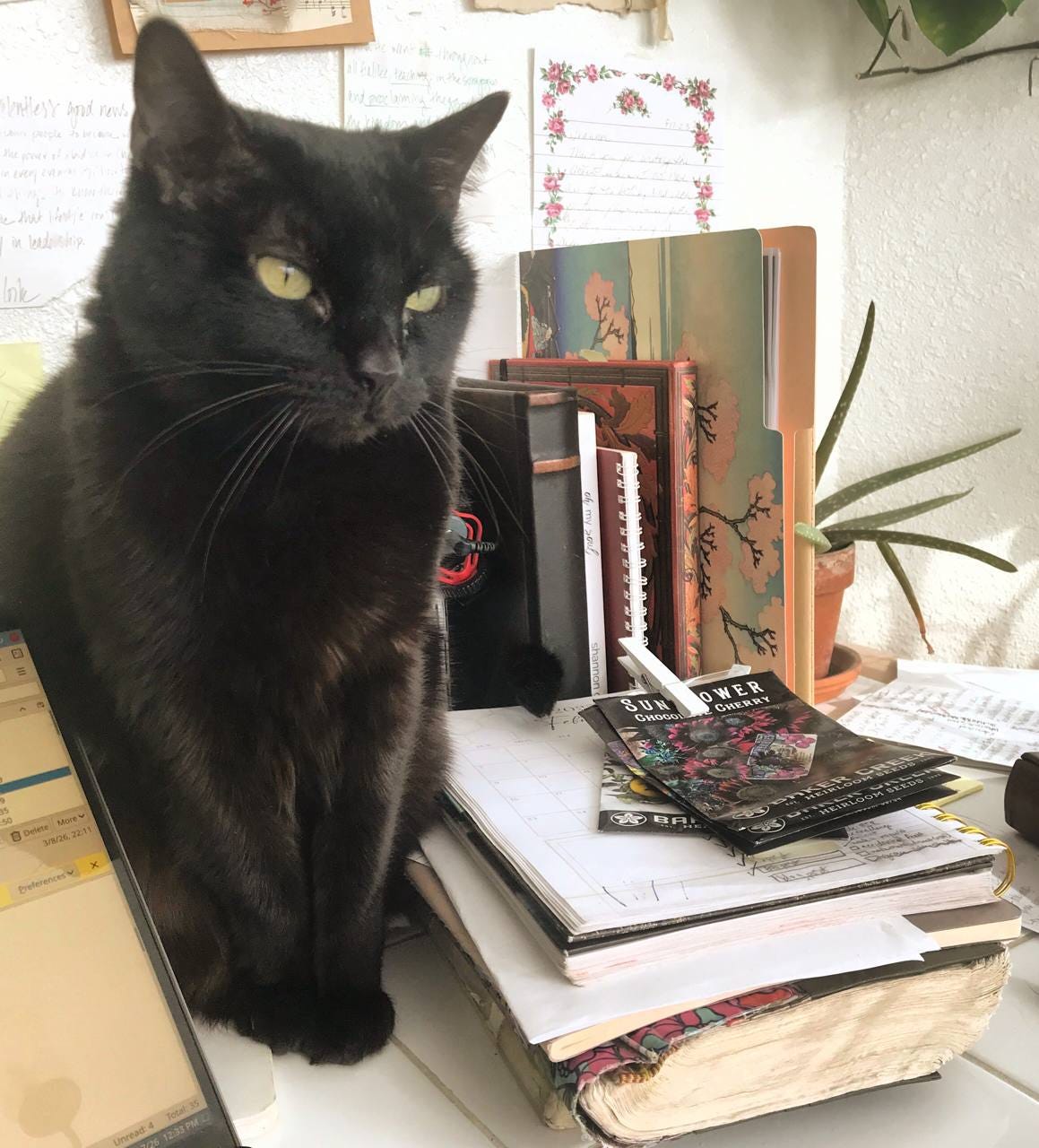
During the day, I still fight Bingley for desk space because he wants to lay across my arms while I write – which works while I’m typing (sort of) but not at all when I’m writing by hand.

When I don’t have words for anything else, I usually journal. And when that’s done and I still don’t have words for the project in progress, the last resort is to get up and do something else. This is why writers snack too much and end the day with dirty dishes and mugs all over the desk, like a college student perpetually in finals week.

Aside from all those dishes, though, were piles of papers that have accumulated for months – lists, notes for projects, cards and letters from a friend who’s much better at correspondence than I am. I need a file for those.

So I went to the shelf where the file folders are, and found one that looked empty, and behold…more papers.

Sigh. Story of my life.

These papers were more of the same. An old bookmark, old notes, another card from a friend. But also, look at this: these quotes I copied on scrap paper in painful handwriting years ago – and instead of writing the title of the book (which would’ve been helpful) I wrote the page number instead. I must’ve thought I’d remember the title, and clearly didn’t.

But it, too, has words for us here (and if you know the book they’re from, please tell me because I’ve scoured our shelves and the internet, and haven’t found it yet):

…cleanse our hearts of any unworthy motives…Let this become Your house of worship, of teaching, of ministering to human hearts, of meeting needs, of caring for little children. Let joy reign here and good fellowship.

Let this place be as a light on a lampstand, a beacon on a hill, shining out for all to see.

Again, the Spirit is up to something, making sure I’m paying attention, helping us find what we didn’t know to look for: Our hearts need cleansed, our spaces need dedicated, our purpose needs to be clear and remembered.

None of those are easy things. The simplest of them can bring us to our knees as we realize God has promoted us to the level of our incompetence so we recognize we can’t do anything without Him.

But we are present with this here, right now — you reading this, me typing this — and that is how we steward all the moments in our days, because stewardship is caring for what’s right in front of us, within reach, not distracted with other obligations and possibilities and needs.

It is my attention to my family, and my heart, and my attitude toward others, and all these relationships in the spheres around me. It is my efforts put toward the projects on this laptop, and that stack of books, and this student, and that client. It is this home, and this day, and the lesson I need to drive the kids to, and the hour I will spend there, working and waiting.

It is a million things, but it can’t be a to-do list or religious compulsion. It has to look like connection, and awareness, and Kingdom culture, instead.

We’re not showy about it, we don’t need to wake the Hessians. We take care of maintenance so we’re ready when a need arises; we have to steward well so we have wide margins that allow for freedom and power. Because the Spirit is up to something, creating an atmosphere of healing, wholeness, restoration, and strength. We make our silent advance — not in attacking, but in liberating — as we follow His promptings throughout the march.


P.S. Want these emails straight to your inbox? Subscribe here. Thanks so much for supporting this work; your subscription helps us share wholeness far and wide.

P.P.S. Remember when we talked about the Holy of Holies, and how we each hold the Temple within us, so caring for the Body becomes a sacred thing? I created a short study out of that, and it’s a free download. You may print and share as many as you need (it’s 11 pages) with your family, friends, kids, small group, etc. Right here:

grit: how we wait & keep His way

I sat at one end of the couch, and our six-year-old with his pink cheeks was at the other. Our nine-year-old had the other couch, and both were banked by coffee tables littered with half-empty beverages.

Up too early with two feverish boys, trying to keep myself healthy and hydrated on only four hours of sleep, I remembered how just in the last post I said my mind was ambitious but my body said no, take a nap. And I wondered if this day would be the same but for different reasons.

grit: how we wait & keep His way | Shannon Guerra

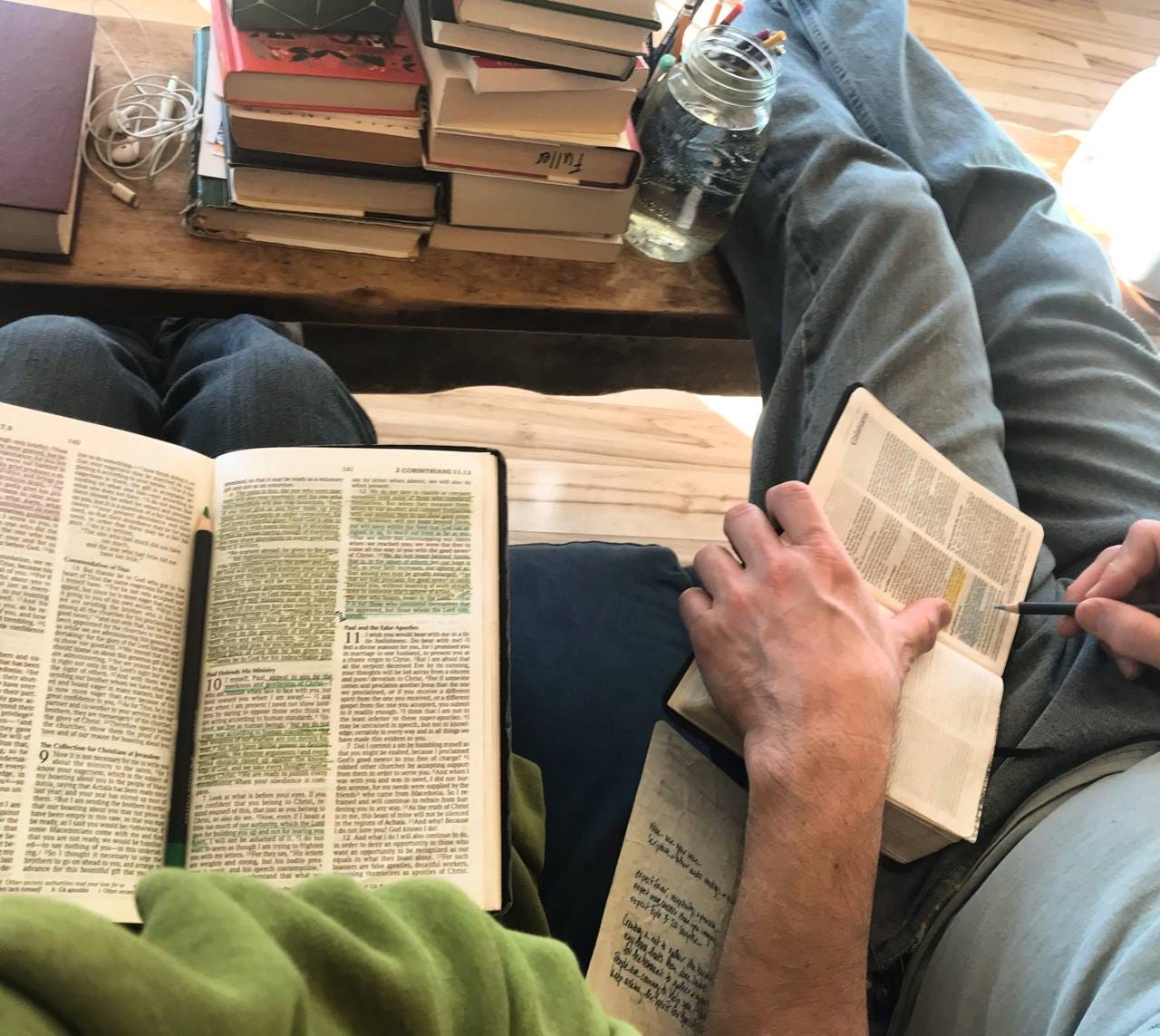
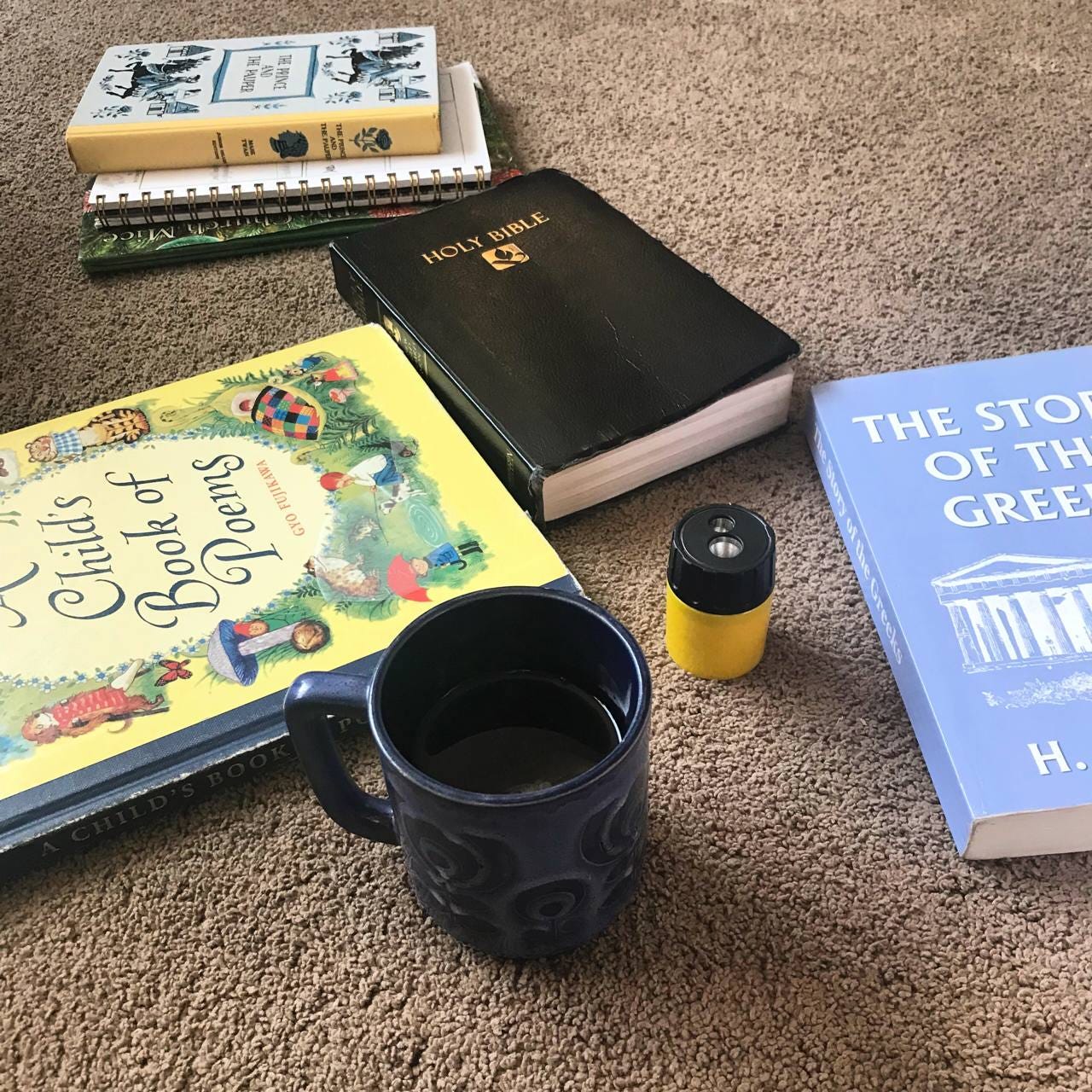
I had just written about limitations, so I guess it was fair that I got to relive it: Limits force us to focus. I could only reach my end of the coffee table, which held my tea, planner, bible, book for class, a scripture verse on a slip of paper, and The House of Seven Gables, all of which I’ve been working my way through.

That sounds productive, but I spent plenty of time just staring blankly out the window, watching the chickadees at the feeder and the cars on the highway. Also, I checked temperatures. Reminded Finn and Kav to drink their tea, and they made slow progress.

Both of the boys had a day – separately, though, praise God – when their fevers spiked high enough to peak with delirium and tachycardia, which is a fancy way of saying we could see their pulses tapping under the curve of their necks while they mumbled nonsense about ice cubes talking and the walls changing shape and color.

It was alarming, but twenty years of reading classic literature hasn’t been for nothing. Everyone who’s read Sense and Sensibility knows that Marianne raved incoherently before her fever broke, too.

So we kept their foreheads cool and let the fevers do their job. And they did, but when we thought they were finally on the mend, a new phase started with congestion and coughing, which didn’t seem fair because that’s not how it’s supposed to work. You’re supposed to get over whatever it is and move on with life, not just transition into a new form of sickness.

But no, two days later, both boys and I were all coughing and sniffling. Still drinking all the fluids and doing the right things, but also, still working our way through whatever it was. My head hurt when I turned too fast to look left or right, but I mostly felt fine as long as I didn’t do anything ambitious like leave the couch.

Sometimes we think we’re making progress, but then we suddenly realize there’s so much more ahead than we had anticipated. And it doesn’t feel like progress anymore; it feels more like discouragement, or even defeat.

He sees you when small steps forward cause you to grieve, because it seems like they ought to be bigger steps forward by now…or they ought not to have been needed at all because the circumstances should never have happened.

You’re not in trouble for having mixed feelings over progress that restores the regress of hard situations.

It’s okay to be both grateful for the progress and grieved over its necessity.

He is doing something in both the grief and the gratitude.

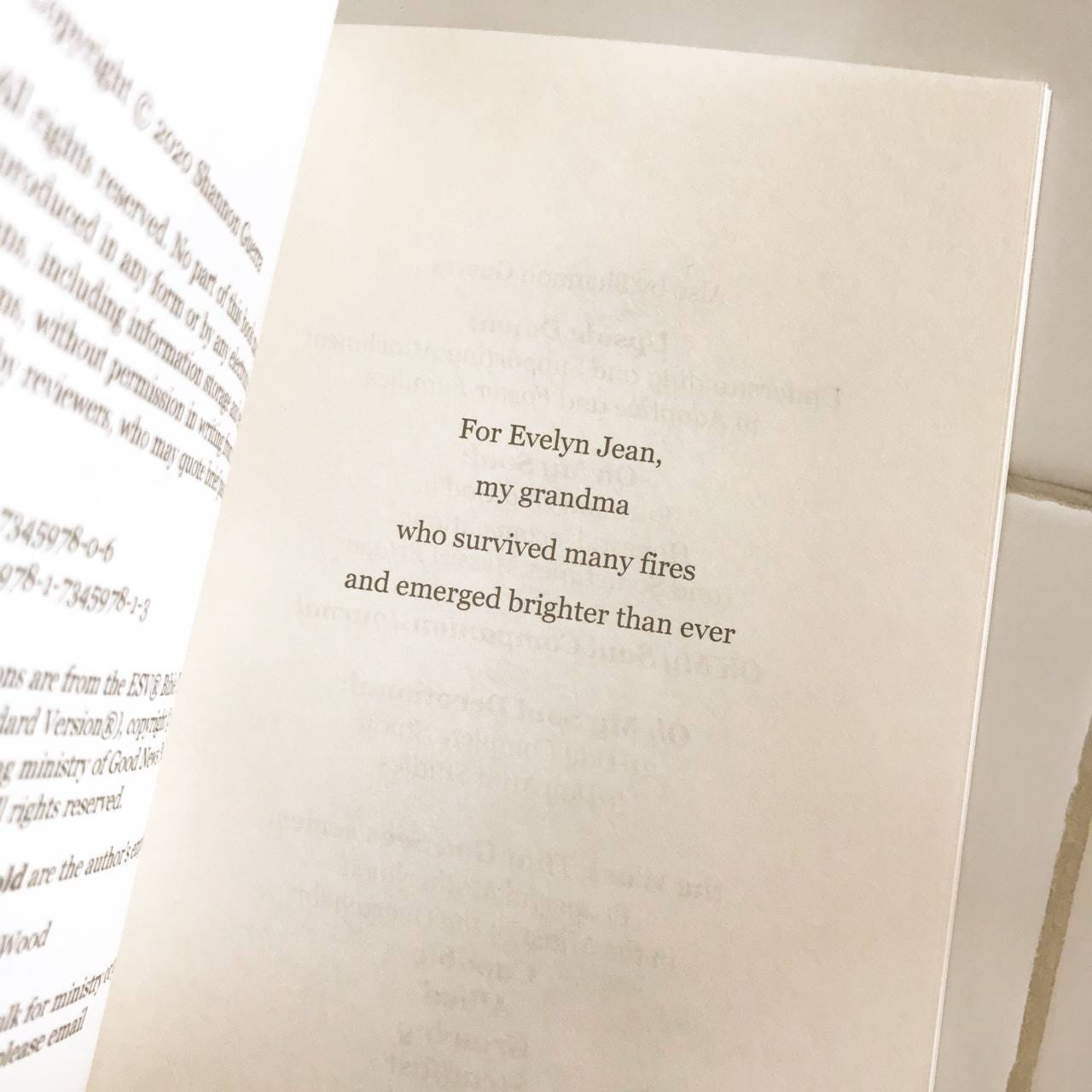
– Grit: Kindling to Relight the Wounded and Weary

I gathered the empty cups and crumpled tissues, thought about the work that would need to be set aside for another day. Wondered how long it would last, and how much I wasn’t going to get done this week.

And then I heard the Lord say, What if this isn’t sickness, but immunity?

Because that’s what perseverance and grit develop.

Wait for the Lord and keep to his way,
and he will exalt you to inherit the land;
you will look on the destruction of the wicked.

– Psalm 37:34

When we learn to focus and persist in the task that’s right in front of us, we protect ourselves from a lot of the drama and distractions in our periphery. We’re not necessarily unaware, but we’re on a mission.

(Like right now, she typed, ignoring the cat who repeatedly walked across her lap, meowing for attention.)

Being stuck on the couch with sick kids is not all that different from being stuck on the couch nursing a baby, which is how I’ve spent almost eleven years of my adult life. Those were the short years filled with long days; different couch, but the same coffee table. Those slow days taught me to steward what was in reach no matter how chaotic everything else out of reach was – drink the water, read the book, memorize the verse. Look out the window, observe and pray.

And this, too, is progress.

Be still before the Lord, and wait patiently for him;
do not fret over those who prosper in their way,
over those who carry out evil devices.

– Psalm 37:7

A few weeks ago one of our pastors said the difference between persistence and stubbornness is the direction you’re going, and that’s familiar because we’ve talked about holy stubbornness for a looong time.

Things don’t always go the way we want, but when we practice patient self control, playing it cool, we look like Jesus because we’re doing what He did. The Bible, of course, doesn’t say He “played it cool;” it uses phrases like divine forbearance...but the essence is the same. We, too, are looking past the wrongs and trusting Him to bring things right as we press on in the face of less than ideal circumstances.

We’re doing what needs to be done, no matter how humble or ugly or unimpressive it seems. We’re pressing forward through the obstacles. And we’re letting go of the things out of reach, out of our jurisdiction and control.

We’re (a)biding our time in gritty surrender.

Our steps are made firm by the Lord
when he delights in our way;
though we stumble, we shall not fall headlong,
for the Lord holds us by the hand.

– Psalm 37:23-24

I didn’t want the kid to make that choice, I didn’t want to have to prune that relationship, I didn’t want that to happen. But it’s less about what we want, and more about how we respond once we see things as they are: Will we look to Him? Will we sit at His feet? Will we trust Him and forge ahead, however we’re able?

…let us also lay aside every weight and the sin that clings so closely, and let us run with perseverance the race that is set before us, looking to Jesus, the pioneer and perfecter of faith, who for the sake of the joy that was set before him endured the cross, disregarding its shame, and has taken his seat at the right hand of the throne of God.

– Hebrews 12:1b-2

We are image bearers, becoming Who we behold even (especially) when it’s not easy to keep our focus. Like Mary of Bethany, who defied all kinds of opposition – including her closest family member and the cultural expectations of the day – to enter a room of men (scandalized gasp!) in order to sit at Jesus’ feet and learn from Him. She defied religious norms just like she’d seen Him do, and whenever she was attacked, Jesus came to her defense.

Mary was mantled with authority because of her grit.

The Lord helps them and rescues them;
he rescues them from the wicked and saves them
because they take refuge in him.

– Psalm 37:40

Another thing we talked about in church recently was the process of refining gold. My friend who has personal experience with this pointed out that when gold is refined, impurities are removed – which means the weight is reduced but the value is increased.

I must become less, He must become more…so we make space for Him to move, and give permission to Him to refine us.

Friend, if you are in a hard spot, do you see how He is letting you in to see the inner place, where most people aren’t willing to go? He’s showing you the place in His heart where He also went through change that felt like loss. Betrayals, misunderstandings, moves, and new directions. Rejection, people changing, culture shifting.

And He’s not wasting any of this.

…we boast in our hope of sharing the glory of God.
And not only that, but we also boast in our afflictions,
knowing that affliction produces endurance,
and endurance produces character,
and character produces hope,
and hope does not put us to shame,
because God’s love has been poured into our hearts through the Holy Spirit that has been given to us.

– Romans 5:2b-5

You know that one area that you’ve struggled with for so long – the one you’ve confessed and repented and prayed and changed habits for, but the battle is in the mind and you’re still at war, wondering if you’ll ever see victory. Wondering if things will ever change.

What if you started seeing yourself in that situation from God’s perspective? What if you saw it as He sees it now: after the resurrection, after death and hell have been defeated?

What if you stopped seeing yourself as bad at handling this situation? Because we fight from victory, not for it.

Much of the enemy’s game is just bluffing and confusion. He wants to convince us to agree with him that this is just how it is, this struggle is our “cross” (ooh, he’s good at twisting scripture!), and we just aren’t spiritual enough to figure this out yet.

But if we agree with God and know that we have been given every spiritual blessing in the heavenly places, including the authority to trample the enemy to pieces, we’ll look at it (and ourselves) differently.

We’ll know this is a work in progress but that God is making the progress, and our situation was never hopeless.

We aren’t bad at dealing with it. We just haven’t seen how good we are at conquering it yet.

No, in all these things we are more than victorious through him who loved us.

— Romans 8:37

In difficulty, opposition, or loss – or sickness or frustration or lack – we can choose to forge ahead, even when we’re sitting still. We’re not looking at this through fear’s lens anymore, focusing on the negative possibilities. We’re not looking through defeat’s lens, feeling like it’s over too soon and we blew it.

No, now we see through victory’s lens: abiding, watching it play out, not responding with knee-jerk reactions, but making deliberate moves in trust, confident that the Lord is at work, and He’s giving us the wisdom we need for our work, too.

What will we do when there’s so little within reach? Will we build even when our resources are limited and the materials aren’t ideal? Will we keep going even when the way is more uphill than we expected?

As we look to Him, we start to see like He does, too, and our perspective changes. So…what if this situation isn’t what it looks like? He’s teaching us to be alert, and to recognize that some things are not just what they seem.

What if it’s not really sickness or hardship or loss? What if it’s actually protection and preparation and provision?

It’s not sickness, it’s immunity — this situation isn’t taking from our lives, but adding to it. With the right perspective and gritty surrender, it’s gain, not loss. It’s adding steel to our spines, integrity to our intentions, wisdom to our experience, strength to our mind and character, and the ability to withstand.

Because slow progress is preparation, not punishment. Every time we trust Him, we protect our path forward. So much is happening that we can’t see, and God is doing miracles in us in the meantime as we look toward Him.


This is now available if you’ve been burned out or discouraged, and need some fuel for your calling. Grit is the first in the Kindling series — short, powerful, beautiful books to help relight you. Just $7 for the instant download, and you get both the full-color version and the black & white printable version, too. xo