not dead, just sleeping: when you need a resurrection

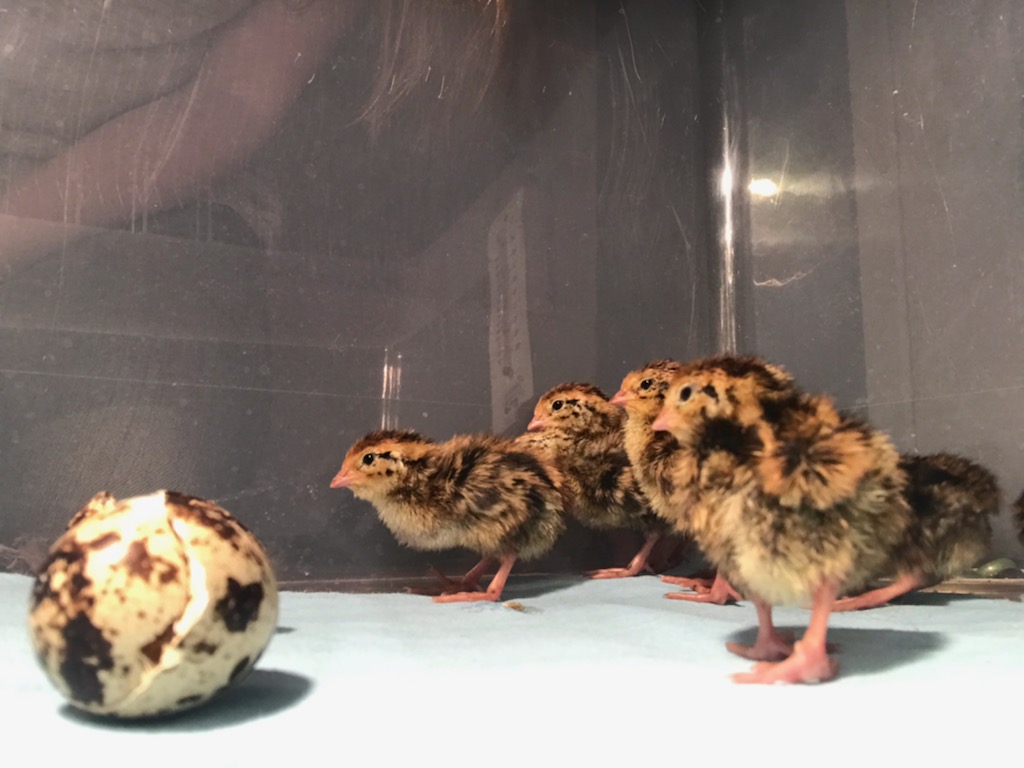
In the last few weeks of brooding almost 40 birds in our bathroom, I’ve learned a few things about chicks and quail:

They will poop on new bedding before you even finish laying it down.

They will poop in their new dish of food before you leave the room.

They will poop in their water before you turn your back.

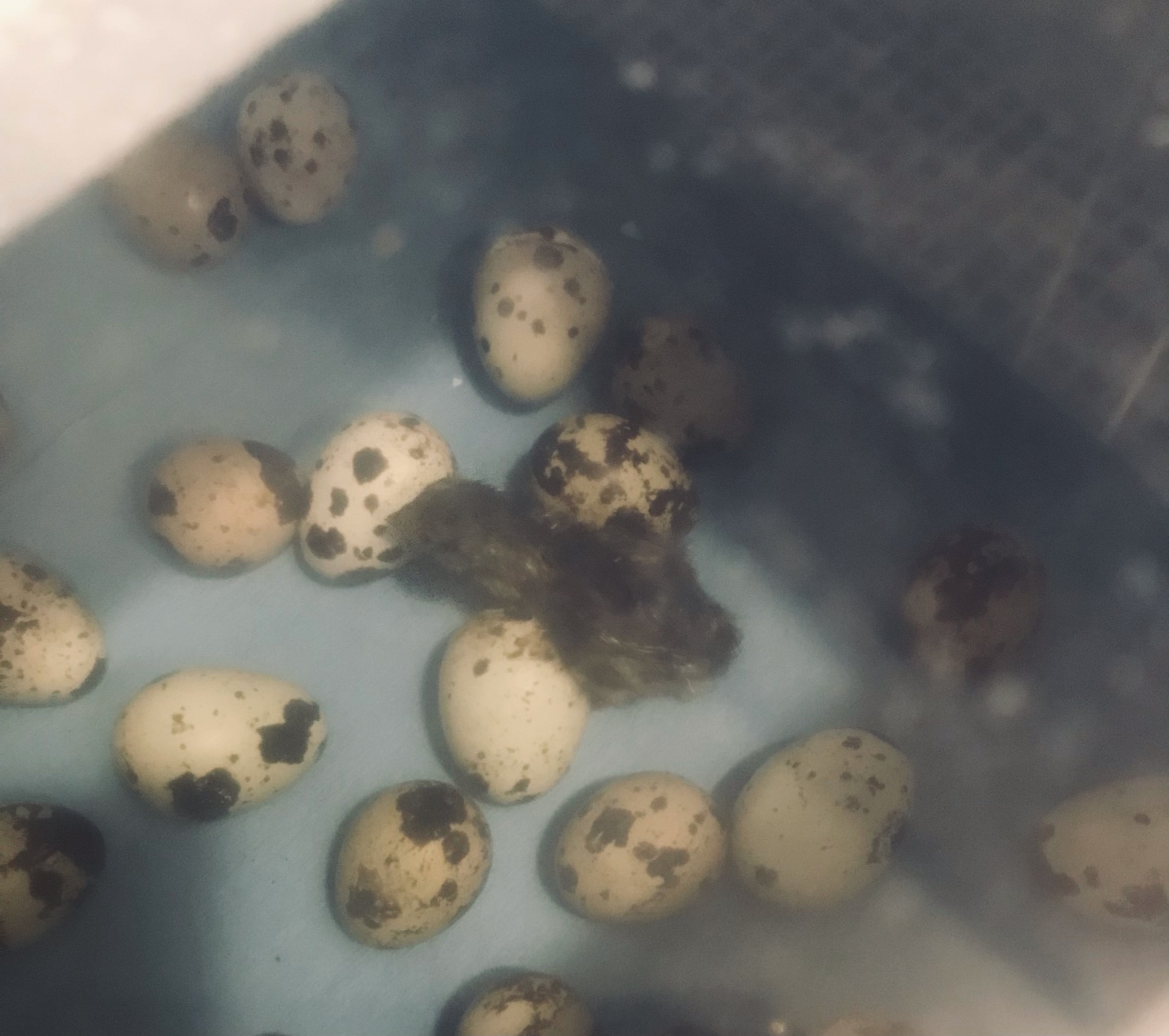
Aaaaand quail look dead when they’re sleeping.

not dead, just sleeping: when you need a resurrection

That last point, at least, I knew ahead of time, and it’s a good thing I did. During the first week there was often a moment of panic as we looked in the brooder to see them passed out, collapsed on their sides, legs out. But that’s just how they sleep.

They’re great, though: snuggly, nosy, clumsy, and messy. The water dish was their favorite hangout when they were small enough to walk in it – sometimes for drinking, but mostly for wading and splashing, and then tracking little wet toe prints everywhere. They thought they were ducks, though I told them otherwise.

We lost one within hours of bringing them home (truly dead quail differ from sleeping quail in that they’re cold, stiff, and not breathing) but the other 19 are happy and healthy in spite of our complete lack of experience. A week after we got the quail, our chicks arrived, and even the sick one we thought we’d lose managed to pull through. We call her Toughie.

And, can I interrupt this bird trivia to just point out how amazing that is? Isn’t it incredible that we can just take something on that we’ve never done before, and still muddle through with success?

I mean, it hasn’t been super easy. We’ve spent months researching, learning, gathering supplies, and building shelters for them. But as with most things, deciding to do the work is almost harder than actually doing the work.

During the first week, I often woke up at 3 am, anxious about how they were doing. I ran downstairs, opened the door, and heard their soft, happy twittering; they were fine, all nineteen, scattered and sleeping and eating and climbing all over each other. They thought they were puppies, even though I reminded them they are quail.

But there was that one time they weren’t all fine…when we went from twenty to nineteen because one of them was cold and stiff under the heat lamp. So for a split second when I opened the door and saw them asleep, looking dead, I would get a little nervous. We remember those times when things weren’t fine, and try to guard ourselves against the uglier parts of normal.

Because it’s not just quail that look dead when they’re sleeping: See also deciduous trees, rose bushes, and hobbies that get shoved to the back of the closet. But bigger things, too – like creativity, achievement, solutions, dreams, and goals. Certain relationships. Breakthrough.

Each time one of those falls asleep, we wonder if it’s actually dead. Should we give up on it? Because we’ve seen death, and it leaves a little scar of trust issues and anxiety to work through every time we encounter anything that resembles it. Is this worth resuscitating? Do we nurse it back to health? Do we keep feeding and watering it in faith, or do we pull the plug and move on to the other 19 needs vying for our attention?

Some things just need time and surrender, but others need persistent attention.

For example, my houseplant that we affectionately call Anne Shirley. As soon as she (or it, I don’t care – don’t come to me with pronoun nonsense) feels the slightest bit parched or neglected, she wilts in the depths of despair.

The first time it happened, I thought I killed her for sure. Woomp – all leaves down, this one’s a goner.

But I felt the stems, and they seemed okay. So I gave her some water, and lo and behold – the next day, Anne Shirley was as perky as ever. Such a drama queen.

(My glorious fern, on the other hand, is a different story. We’ve started calling her Eleanor – as in, Dashwood – because if she’s neglected she will just slowly turn paler and paler, suffering in silence.)

So some things must be watered, and others must be waited for.

And many require both. We water in the waiting, not knowing how long it will take to see life again. These are the situations the Lord must move in, because you cannot force growth – overwatering results in death as much as neglect does – and He must perform the rescue because we’ve tried everything and still it is stiff and cold, not breathing: A loved one’s salvation, a child’s return, a favorable ruling. After we’ve done everything we know to do, we’re desperate for what only He can do.

But this is what He does. When life is in the red, He intervenes out of the blue in ways we never could have imagined.

And he said to them, “Why are you troubled, and why do doubts arise in your hearts? See my hands and my feet, that it is I myself. Touch me, and see. For a spirit does not have flesh and bones as you see that I have.” And when he had said this, he showed them his hands and his feet. And while they still disbelieved for joy and were marveling, he said to them, “Have you anything here to eat?”

– Luke 24:38-41, ESV

This life of watering and waiting is where faith and obedience intersect. It is the lesson of walking steadily on without constantly checking progress, checking email, checking notifications, checking the mailbox. Faith and obedience knows the answer is coming, and does not have to constantly ask “Are we there yet?” like a kid on a road trip.

You’ve done and are doing what you need to do. So give them time, they’ll perk up soon. Those situations might think they’re dead —- you need to remind them they are alive.

The trees outside know; the pussywillows are growing again. The time for things to wake up is here.

_______

Related: What if you see the rescue coming, and it scares you? The newsletter comes out next week and this is what we’re talking about. Sign up here if you need it.

keep it: the only way we maintain good times for future generations

Over the last week with few exceptions, I’ve posted nothing on social media except scripture. I haven’t wanted to add to the noise. He has good things to say about this season, and that’s what I’ve wanted to focus on and draw attention to.

keep it: the only way we maintain good times for future generations

It’s been an interesting experiment and a good move for me, sort of like a fast.

Fret not yourself because of evildoers;
    be not envious of wrongdoers!
For they will soon fade like the grass
    and wither like the green herb.

Trust in the Lord, and do good;
    dwell in the land and befriend faithfulness.

– Psalm 37:1-3

It’s been Psalm 37 all week long. But if you’re paying attention (I know many of you are) you know that really, it’s been Psalm 37 for much longer than that. The events over the last few weeks, and even leading up to election week in November, weren’t huge surprises and they’ve been in the making for a long time.

Be still before the Lord and wait patiently for him;
    fret not yourself over the one who prospers in his way,
    over the man who carries out evil devices!

Refrain from anger, and forsake wrath!
    Fret not yourself; it tends only to evil.
For the evildoers shall be cut off,
    but those who wait for the Lord shall inherit the land.

– Psalm 37:7-9

On January 6th, we took the day off work and prayed. And then we went to church and prayed. Our pastor talked candidly about the risk of civil war, and I’ve thought many times about how we are facing this blend of civil and revolutionary war – civil because it is among our own countrymen, but revolutionary because of the cause and the nature of it.  But our pastor also talked about the grievous things it could mean for our kids and future grandkids, and I had not fully considered it in that vivid light.

Then one of the elders prayed, and he repented for his generation that allowed so much of this to happen. They were comfortable, he said; things were easy. And they took advantage of it, and the generation that came after took the ease and comfort for granted.

It made me think of this saying that I’ve been hearing a lot over the last year:

Hard times create strong men.

Strong men create good times.

Good times create weak men.

Weak men create hard times.

And it’s so true, I know it is, but surely we must be able to break the cycle. Because if we can’t, everything seems so hopeless – why should we work to create good times if it only results in weak men who ruin it for our great grandchildren?

Or worse, there’s that other argument we hear all too often: Why bother bringing children into the world at all?

But then, the same week, I also read this:

“What sort of world is this to bring them into? That’s another consideration.”

“A very cowardly consideration, dear. A mere shirking of responsibility. It’s a heavy responsibility, of course, a double one, responsibility for the children themselves and responsibility for the world they must live in. But I know of no better incentive for the building of a decent world than the possession of children who must live in the world you’ve built.”

– Elizabeth Goudge, Pilgrim’s Inn

God creates a beautiful, strategic curriculum for our lives: The warnings and repentance, the prayer and the challenge. And I realized again that we are not headed for war; we are already at war.

We always have been. But we lose ground every time we forget it.

What hasn’t changed is that we are occupying the land of a cleanup operation: We are in the middle of a spiritual war in a physical place, and it manifests itself in both ways. We see the spiritual and physical aftermath all around us.

So even when we get back to “good times” – the corruption is revealed, the fraud is overturned, the guilty go to prison (hashtag: we’re gonna need a bigger Gitmo) – we still need to remember that we are at war. We are always at war. Our hearts and culture are the battleground, and never more so when it looks like things are safe and easy.

We are still occupying and stewarding the land, on mission, until He comes.

There are quiet victories and struggles, great sacrifices of self, and noble acts of heroism, in it…done every day in nooks and corners, and in little households, and in men’s and women’s hearts – any one of which might reconcile the sternest man to such a world, and fill him with belief and hope in it, though two-fourths of its people were at war, and another fourth at law; and that’s a bold word.

– Charles Dickens, The Battle of Life

People’s hearts – ours, and those around us – are always and still the battleground. Hearts and identities and relationships will always need wholeness and fullness, in good times and bad, and that is where God wants to stake His claim. We till the soil regardless of the weather and circumstances because strong men create good times, but strong men can also create strong children. And those strong children will continue to inherit the land.

There were still children in the world, and while there were children, men and women would not abandon the struggle to make safe homes to put them in, and while they so struggled there was hope.

– Elizabeth Goudge, Pilgrim’s Inn

When the Constitutional Convention closed in 1787, Benjamin Franklin was leaving Independence Hall when a woman asked him what kind of government they had just designed. His answer was, “A republic, if you can keep it.”

And that is still our challenge today.

Turn away from evil and do good;
    so shall you dwell forever.
For the Lord loves justice;
    he will not forsake his saints.
They are preserved forever,
    but the children of the wicked shall be cut off.
The righteous shall inherit the land
    and dwell upon it forever.

– Psalm 37:27-29

In good times or hard times, we are still loving our kids and teaching them. We are still learning more and growing. We are still passing on values and standards and true education. We are still in the Word and abiding in prayer. We cannot let up and grow soft when times are easy, and we cannot let go and become calloused when times are hard.

The only way we do that is to remember that the war is never over – it is always raging in the spiritual battleground. We are not only meant to inherit the land, but to keep it.

rattle my cage: learning what we’re made of when our safe places are shaken

Snowy gloves pounded the window while the kids played outside. I overheard Vince yell, “We don’t hit windows!” and someone’s answering protest, “I wasn’t hitting, I was knocking!”

And here, friends, is the irony: We survived a 7.2 earthquake with no major structural damage, only to almost lose windows to children beating on them with Gortex mittens.

rattle my cage: learning what we're made of when our safe places are shaken

Local schools shut down for a while from all the damage, but the earthquake happened on a Friday morning and our homeschooled kids fretted all day about finishing their assignments for the week. I tried to talk to them about priorities – we were all alive, people were working to get the power back on, and everyone we knew was safe. As we waded through debris I kept telling them, for crying out loud, earthquakes are educational – you might forget half the stuff you read last week, but you’ll never forget living through this. You never forget learning that your shelters and safe places can be shaken.

I’ll never forget the feeling of being sifted as the house shook east-west, hearing the ground rumble and the walls rattle and glass and pottery shattering everywhere. I’ll never forget jumping out of bed, racing upstairs to find five of the kids on their beds, then running back down two flights of stairs to check on the other two kids, only one of whom was there. I have no idea how I made it up and down all the stairs while nine months pregnant and the house was still shaking. I’ll never forget seeing the entire west wall of library shelving slanted across the room, books smeared knee-high and spilling across stairs and entryway, and wondering if a cat was buried underneath.

We found the cats, all safe, all hiding under the kids’ beds. We found the kid who was missing; he ran outside when the shaking started. And we found the toilet upstairs, our only significant damage, cracked off its bolts on the tile floor — though the antique mirror and framed prints in the same bathroom were still hanging on the walls, just fine.

Early labor (which can last for weeks) started here around the same time as the earthquake. And it’s weird going into labor as aftershocks diminish; it’s like the earthquake in reverse. Contractions increase in intensity to the final, long-expected big event, while the earthquake shocked us in its suddenness and then decrescendoed to these little shakers that we mostly don’t even feel anymore.

Just in time, we officially decided on spelling Kavanagh with no U, in spite of the overwhelming results in our highly scientific polls on social media.  I almost had it – with a U, I mean – arguing with Vince that this isn’t the first baby we’ve given a last name as a first name to, and we didn’t arbitrarily remove vowels for Chamberlain or Reagan just because they seemed extraneous. And since the man is already familiar with Google, Wiki, and Justice Kavanaugh, I went to the next highest authority on the name I could think of: The Mitford series.

It’s the main character’s last name, and I thought, This will prove the spelling without a doubt, no contest. I’ve read this series all the way through twice – once when Vincent was a baby and again when I was pregnant with Afton – and then blew through some of the books again this year as comfort reading during the gruesome months of morning sickness. I know these stories and characters; this series remains the only modern fiction that I truly love.

So I grabbed one of the books off the shelf, confident of winning my case. Turned the pages. Skimmed the lines. Looked for it…hold on just a minute…lo and behold:

Kavanagh. No U.

WHAT.

Well, I’ll be et fer a tater.

I wanted to put more effort into walking him out in those weeks of early labor but a round-ligament-snappy-action prevented it, in league with a hip socket on strike that kept sending me in a slow melt to the floor without warning. (Yay forties!) So instead of causing alarming scenes in public, I made myself useful by staying home for two weeks and making pitiful requests to people around me: Can you bring me water? Can I have the orange yarn and the blue tape measure? Can you put on my socks?

Vin came over, picked up the pair of socks I brought with me, and briefly inspected them before he threw one of them back on the couch and started putting the other one on my foot.

“What, you don’t like that other sock?” I asked him.

“It’s the wrong one,” he answered, wrestling this one up my ankle, angling the heel just right and straightening the toes.

I know where he’s going with this; it’s one of our oldest arguments. For 22 years, since our college days when we first shacked up in Anchorage, he’s tried to convince me that Socks Are Not Interchangeable. Socks, he says, go on certain feet.

“See?” He holds the other one up. “The big toe is longer on this one, so it goes on this foot.” He commences wrestling that one, too, and I can see that he’s sort of, kind of, maybe a little bit right, though I’d never admit it to his face.

But this neediness and confinement also shook my safe places. I know labor and birth; this is our sixth delivery. We like to think that experience prepares us for what to expect. And sometimes it does.

But other times, it deceives us – not because our expectations are wrong, but because, however much it is, our experience still isn’t enough. Our expectations might not be big enough. Our endeavors might be too safe, or our safe places might be too small. Our priorities might be too narrow, focused on marking tasks off our lists and missing the fact that we can do truly hard things; we can live through and thrive in far more than we give ourselves credit for.

God has been preparing us for familiarity to take a flying leap for a long time. Last Christmas, when we didn’t know where He was sending us, He said, When you find yourself where you never thought you’d be, I’m positioning you for something you never could have planned. He kept saying, It’s a surprise, Love. Sometimes the surprise starts off with a shaking.

And then in April when we knew big changes were ahead but didn’t know Kavanagh was one of them, He said, You know how to do this, you’ve done it before. You’ve just never seen it like this. And we’ve been trying to roll with all of the surprises ever since.

So at 3am one morning, when early labor suddenly looked less like aftershocks and more like the big event, and the prospect of waking seven kids up to go to two different places in the middle of the night seemed so much harder than just having a friend come over and letting everyone else sleep, we rolled with that, too. After months of planning on a homebirth at the lighthouse, we threw out that plan and drove to the birth center in the wee hours of the morning. Just like we did for our last two babies.

The highway was snowy, the sky was dark; the midwives had the tub running when we got there because they knew how fast it went last time. And they knew the story of the one kid who was supposed to be a waterbirth but ended up being delivered on the bed while the tub was still filling, before the assistant arrived.

That, too, was the end of familiarity, because no matter how many times you’ve done this or what patterns you’ve come to expect, there’s no guarantee you won’t get your cage rattled. And I did. All our birth experiences have gotten easier and faster, except this one.

And “labor” doesn’t come close to expressing the amount of work and travail put into birthing a human…or anything else. We use the word so much that it has lost its impact as we gloss over the clawing, writhing pain of turning yourself inside out to do the work of bringing something (or someone) into the world.

The heat was terrible. She felt scorched to the bone, but it did not touch her strength. It grew hotter and hotter. She said, “I can bear it no longer.” Yet she went on.

– George MacDonald, The Golden Key

He is our stability, with us, among us, upon us in the heat and the friction and the shaking, regardless of what everything looks like around us or feels like within us.

After twenty-three hours of off-and-on that eventually progressed to hours of hard labor, we met the one we’ve been waiting for. And he is so worth it.

So often we give up on opportunity or calling because we think, I could never do that. That is for other people, stronger people, bigger people, people who are different from me. But what we really mean is, I don’t want my world to be shaken. Our excuse is our inadequacy but what really stops us is fear, or laziness, or a combination of the two.

Because labor is work, and shaking, and life-changing. We pooh-pooh ourselves while putting those who do bigger, harder things on a pedestal, while God wants us to see what we are really made of. We want a simple to-do list, a school chart of basic assignments to check off. But God calls many of us to the earthquake and the aftermath, saying, Hey Love, you have no idea what you’re capable of.

You’ll never forget living through this.

______

Need more encouragement like this? Sign up here to get new posts, right to your inbox.