posture: how we hold our charge

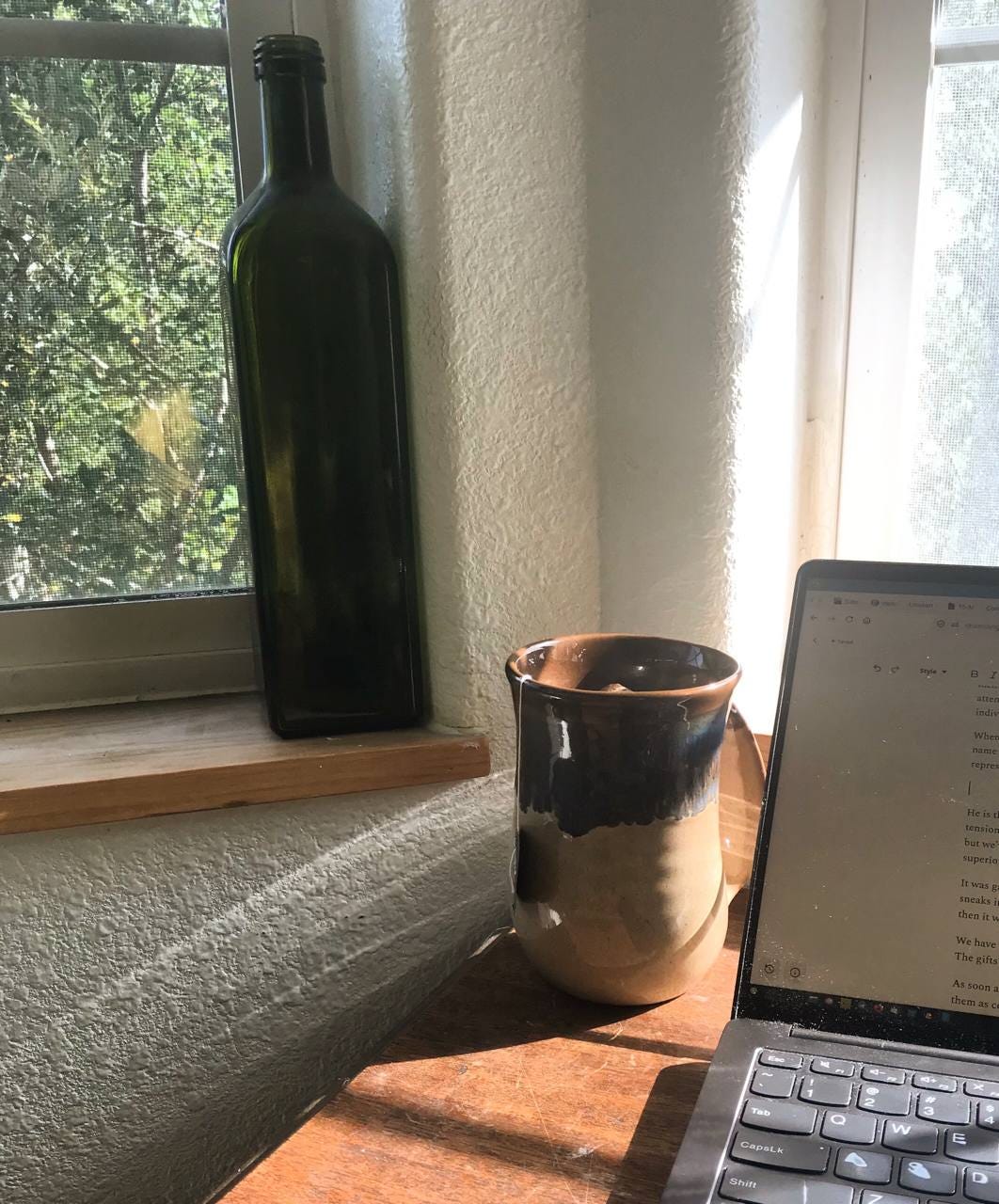
I have more words here than I need. The number at the bottom of the screen says 3748 and counting as I type this. Don’t panic, most of them won’t end up in this post.

But all the words have to go in the document so I can see what I’m dealing with, and to decide what to give you. Floating up in my head is the worst place for all the words because they just buzz around and stress me out until they’re pinned to the page or screen, safely confined, ready for examination.

That’s when I can see what all the noise has been about, and when patterns start to emerge.

Ohh, this theme. And that one keeps cropping up, too. I think I see what You’re doing.

posture: how we hold our charge ||Shannon Guerra @ Copperlight Wood

For the last few weeks, one of the main themes has been posture: how we are positioned to hold what we are charged to carry. Are we ready to receive, or to give? Are we attending, is our eye on the ball (hint: the ball is Jesus), or are we perpetually blindsided, looking the wrong way, focusing on the wrong things?

Or, also – and this is just as important – are we hearing the accusations of the enemy tell us we’re in the wrong place, at the wrong time, looking at the wrong things, when we’re actually right on target but he’s trying to distract and dissuade us before the moment arrives? Maybe we are holding our charge, but confusion comes in to waylay us.

Or maybe, more literally, we are to hold our charge – as in, don’t move yet, play it cool, keep watch rather than rushing ahead.

We can get this wrong any number of ways, and the enemy doesn’t care which ruse we fall for.

Sooo, we abide.

As I type this, we’re cleaning up after a four-day windstorm across the Valley. Not the kind where you move all your lawn furniture to a safe location, but the kind where the wind finds that safe location and then moves everything for you all over again as an extra service, generally leaving pieces upside down, or across the yard, and takes one of the table legs with it.

We knew the storm was coming, so we prepared: Stored fresh water, protected the coops, moved the lawn furniture (but I already told you how that went). We prepped some easy cold meals in case the power went out. And we kept the teapot and the crock pot filled and running.

What was supposed to be two days of wind extended to four, and I noticed some things. These observations were greatly made possible by the fact that we, unlike most of the Valley, never lost power, so I was at leisure to notice what I’m going to tell you, rather than dealing with the house getting cold or my phone battery draining or the toilets desperately needing flushed or how certain kids desperately needed to bathe.

Anyway, here: A windstorm at night is different from a windstorm during the day. And this, too, has to do with our posture and attention, and how we hold our charge.

In daylight, you can see the whipping of trees in response to the roaring gusts of wind, and you can look out the window when you hear a crash to see what fell.

You know what you’re dealing with, and what you’ll have to fix. And you know if that repair needs to be immediate, or if it can wait until the storm passes.

So that’s about six hours of the day for us in Southcentral Alaska.

During the other eighteen hours, the gusts come blindly. All is just noise amid the constant background of undulating wind. The volume rises and falls but you don’t see movement; you only hear it.

Relative calm settles briefly as the wind races to other neighborhoods, and then without warning it returns with frenzy, feeling its way across the angles of rooftops and through the fingers of tree limbs. Kitchen vents clap suddenly. Stove and vent pipes whistle across multiple notes in panicked harmony. Wood frames creak moodily, sometimes in timid hesitation and others in angry protest.

Unknown objects scud heavily across the ground. Probably, hopefully, they’re just large branches. More than once, something crashes. You vaguely guess the direction, and wonder what you’ll find in the morning.

I’m not only talking about windstorms, of course.

Some of us have been learning to posture ourselves in darkness so we can handle the noise we cannot see.


I don’t know if you’d call it the “mystic rites of our ancestral houses,” but each family has its own culture and traditions, some more ancient or life-giving than others.

In our house, it means Looney Tunes on birthday mornings, books and pajamas on Saturdays, and speed cleaning whenever there’s the slightest threat of a power outage, because a ) a little motivation goes a long way, and b) we want clean dishes and laundry for as long as possible, and also C) no one wants to go the ER during a windstorm because they slipped on a small Nerf gun that was left in a dark hallway.

Saturdays, though, are the one day of the week we don’t go anywhere, even when we don’t have hurricane force winds.

“You’re not allowed to have fun on Saturdays?” a younger extroverted friend asked me (she reads here, too – love you, darling). I explained that as an introvert with eight kids, two churches, and a dozen projects simultaneously, not going anywhere is fun. The bestest fun, the mostest fun. I’d do it all week and twice on Sundays if I could.

But we can’t, so we stick with Saturdays.

During the week we’re all over the place, and Saturdays are the lull for gathering ourselves back together. I often feel scattered and spread thin, investing in several directions and wondering if seeds are growing or if fruit will ever come. In some places, I can hear the noise but not see movement. Sometimes I wonder if I’m lacking vision and focus, and other times I wonder if my vision is just too big (Or, deep and wide, she thought) and needs time to flesh out.

For sure though, a big part of it is persisting in long, patient obedience even as the enemy hisses that doing the same thing over and over again while expecting a different result is the definition of insanity. But we know his schemes.

And also, there’s that pothos, bursting with more leaves every week.

We position our family with firm boundaries around Saturdays, and birthdays, and bedtimes, nurturing an atmosphere of peace so we can withstand the storm.

So I think we’re really talking about endurance in the midst of the overwhelm. We have to be postured to carry the charge if we are to endure.

…we also boast in our afflictions, knowing that affliction produces endurance, and endurance produces character, and character produces hope, and hope does not put us to shame, because God’s love has been poured into our hearts through the Holy Spirit that has been given to us.

– Romans 5:3b-5

It is just time, and patience, and obedience. It is like prayer, or like writing: We keep coming back again and again, hitting that same topic over and over, asking for words, seeking wisdom and perspective. If we give ourselves to it long enough, we see something happen. Eventually we make huge strides when we’re postured to do so for long enough.

Therefore, since we are surrounded by so great a cloud of witnesses, let us also lay aside every weight and the sin that clings so closely, and let us run with perseverance the race that is set before us, looking to Jesus, the pioneer and perfecter of faith, who for the sake of the joy that was set before him endured the cross, disregarding its shame, and has taken his seat at the right hand of the throne of God.

Consider him who endured such hostility against himself from sinners, so that you may not grow weary in your souls or lose heart.

– Hebrews 12:1-4

It is the steady work of untangling knots, mending what’s broken and torn, doing the hard repair instead of the costly replacement. Yes, it takes so much time. But if we don’t use that time to fix this, we’re going to spend other time – and often, a lot more of it – on bigger, more expensive repairs later on.

So we choose our hard, and our vision directs that choice. Do we see worth, or waste? What do we carry, and what do we shrug off as extraneous?

This has been our work for years in our own family and marriage. And at the desk, it is still the work, only the knots look more like paragraphs that don’t flow perfectly together or thoughts that don’t fit on the same string. The untangling here looks more like rearranging, rewriting, deleting, and sitting and staring in prayer, asking for revelation. It looks like phone calls and meetings and deep conversations, asking questions and reframing statements, connecting dots and finding patterns, listening and waiting.

We do not have answers for all these knots. Sometimes the yarn has to be cut. But more often, with enough gentle persistence, you can work a knot blindly and still manage to get it untangled. Because it’s not always about seeing the answers, but persisting in giving the thread it’s proper space after it’s been pulled too tight.

None of us like being pulled too tight. Yesterday afternoon I was already running late, already feeling stressed, already lost an hour of time in other tasks and hadn’t even opened the document to write yet. The phone started dinging notifications and this was the moment Bingley chose to jump on the desk and knock a book to the floor and start his loud meow that sounds less like it comes from a domestic cat and more like it comes from something that lives in the jungle with paws the size of small frisbees.

Hold on, I have a meme for this.

This is the noise, the tangling, the wind gusting that threatens to bowl me over.

But God’s been speaking to me about posture, so I’m learning to brace myself to withstand the things out of my control.

Like this little document, now ballooning to 4935 words – far too many, but don’t fret, less than half will stay in this post.

It has taken forever to pull together and I wanted to publish it two weeks ago. This Monday came and I was determined to finish it. Tuesday came and I thought it was finally almost done. Wednesday came and I realized it still needed work because there was still so much more to say, but I had already spent so much time on it that the words were swimming everywhere, so familiar I couldn’t even really see them anymore.

We clocked out early to get to class, and at the red light I wondered if I could tap out some sentences on my phone to make up a little time. Because this is me, and maybe you: I like to check off boxes, finish the projects, do all the things, and if I get a green light, I want to put the pedal to the floor. Not sit at red lights in the passenger seat, feeling late to everything.

In that moment, I heard the Lord. Let it sit, He said. Sleep on it, Love. Work smarter, not harder. Give it time to cure, and temper, and you – you hold your charge, rather than draining your battery.

In class, before starting discussion or anything else, instrumental worship music played and we just sat, soaking, for…I don’t know how long. Thoughts tried to crowd in: How is Reagan handling her class? Is she testing like she did last week? I hope the boys are calm. I hoped this and that and a million things I can’t type here.

But the music kept playing, and the Lord is teaching us to hold our charge. There was no awkward silence to break, nothing to do but to be with Him.


We (and by “we” I mostly mean me, but I’m trying to include you here) tend to resist stillness and default to restlessness. But restlessness is not a posture; it’s noisy filler.

For years, I took a notebook with me to church partly because of this. Every week, at the top of the page, I wrote the date, the name of whoever was speaking, the sermon notes, verse references, and my thoughts. I did it religiously, in all senses of the word.

Then I got tired of religion and restlessness, and I also got jaded with church, and with writing down the glib soundbites of entertaining presentations instead hearing revelation from solid teaching and preaching. Long after we made a better switch, I still left my notebook at home. I mostly stopped taking notes, and if I really wanted to get something down, I’d tap it into my phone.

And if you know me, you know there’s something off about that. I’m a writer. Also, I don’t use my phone for birthdays, calendaring, planning, finances, reminders, or anything else…I use paper. This is why my office looks like a tornado ripped through a library, and why I probably forgot your birthday, too.

But then we started a new class a few months ago and I thought it would be a good idea to bring my old notebook, especially since I was not going to drop an extra $15 to purchase the class workbook. I’d just take notes, instead. Hello, old friend.

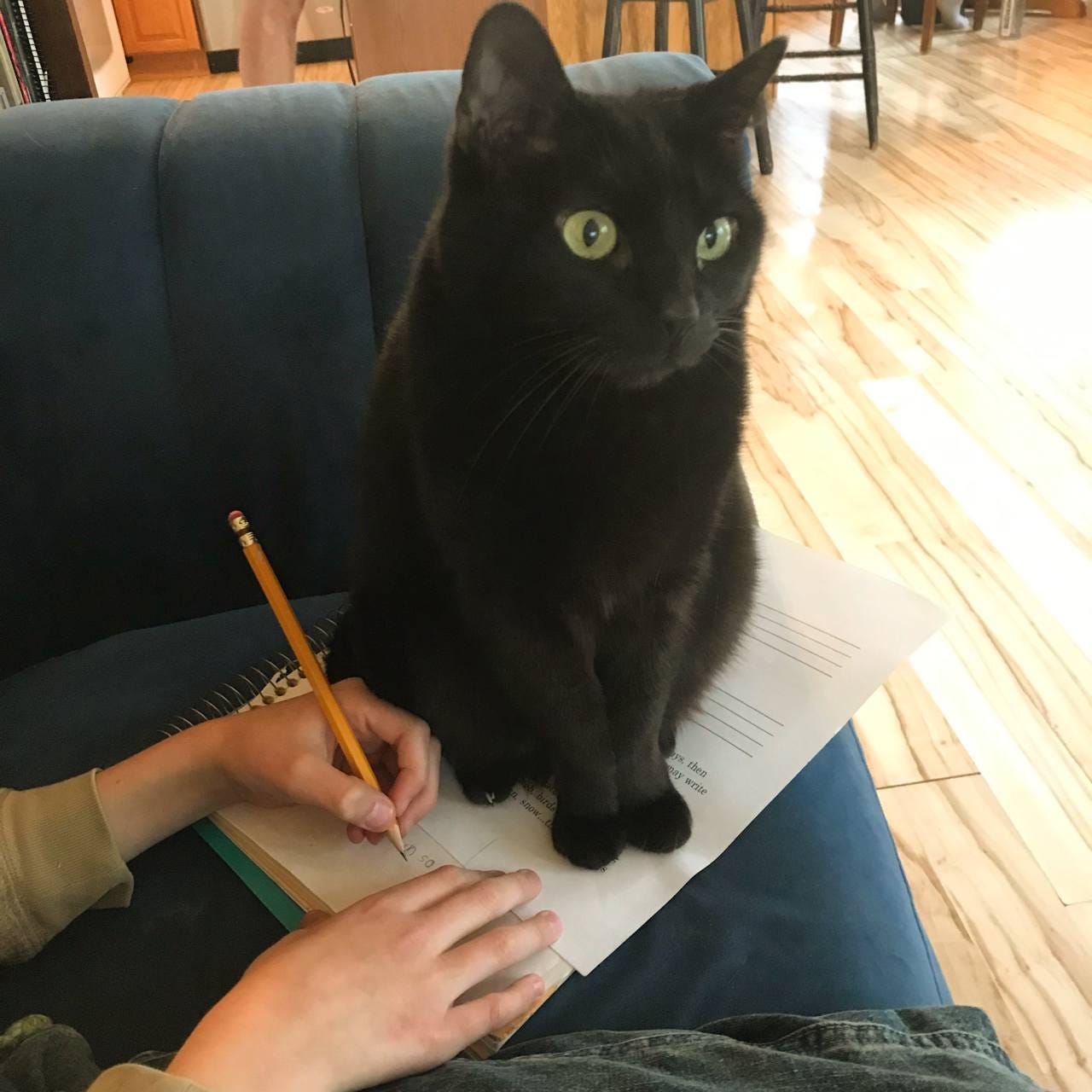
It is remarkable what happens when we position ourselves differently, to hear and respond more acutely. The first Sunday I took my notebook to church, the Lord said, Put the pen in your hand so you’re ready to write the revelation down. And then, notes and notes and notes.

The words have to be put on the paper. The pen has to be held, ready. We have to posture to receive, and steward, and bear the calling we’re charged with.

It reminded me of other wisdom I’ve read many times:

Your fingers would remember their old strength better, if they grasped a sword-hilt.

– J.R.R. Tolkien, The Two Towers

Friend, what is your sword hilt? What do you need to be picking up again, holding onto, and letting go of?

Because our fruit is born from faithfulness. It is not born from having all the answers or getting all the experience (though this is how those come, too) and it is definitely not about finishing everything according to our own timelines.

Fruit comes from abiding, living, persisting, and maintaining a stance of holy stubbornness that expects a good outcome.

Abide in me as I abide in you. Just as the branch cannot bear fruit by itself unless it abides in the vine, neither can you unless you abide in me.

My Father is glorified by this, that you bear much fruit and become my disciples.

– John 5:4, 8

If we can soak in stillness, we can handle the overwhelm, the noise, and the dark chaos that we can’t see out there.

The post is almost done. The word count says 5244 but only 2750 or so are in this piece; still, so many more than I intended.

Once finished – we’re so close now – most of the paragraphs will still be unused. They’ll get pushed to the bottom of the document, ready to start the whole process all over again.

That’s for next week, though.


P.S. We have a ministry update for you here. Got questions, want more info and details? Let us know what you want to hear about. Our Give page is here – thank you so much for your support as we share wholeness and hope, deep and wide.

what we are charged to carry

I talked about Exodus a while back and I’m currently in Numbers, so if you’re paying attention, that means I blew through Leviticus with nary a reference to it, and you’re welcome.

But I have a confession to make.

I actually like Numbers.

what we are charged to carry: how quiet perseverance makes room for exploits | Shannon Guerra @ Copperlight Wood

Is that shocking? It gets such a bad rap, but I think that’s because by the time we’ve endured all the details of the Tabernacle and the Levitical laws, we find ourselves in Numbers amid tribes and names and duties and we are just like, When will this ever end, and Pleeeease not another census, and also, what the heck, they’re not even talking about yarn anymore.

But Numbers is where the battles start. It’s where the spies scope out the Promised Land. There’s deception and cursing and blessing. Rebellion, revolts, and wars. So. Much. Drama.

Before we get to all that, though, we delve into tribes and their responsibilities, and yes, it’s boring. But we are grown ups and the Lord uses our postured attention to speak to us even when we couldn’t care less about the Kohathites.

On the blue couch with the Bible and coffee, my eyes go over the verses and sometimes the Lord tells me something that has nothing to do with the chapter at all, but about the day ahead or a situation I’ve been praying about. And this easy; it actually asks less of me than really studying, unraveling Greek or Hebrew, or wondering what a passage says in a different version. Because in these times, He gives answers, not more questions.

Also, this boring stuff sets the stage for the exploits later. I’m no Old Testament scholar, but it was a massive feat to organize this group of millions in their community functions, and it was not glamorous work. I need to see this boring stuff because my own life is riddled with the expensive, complicated mundane, and I need perspective.

What I mean is, it’s easy to be passionate and excited about Big Endeavors. There’s a mission or a battle ahead? Great! Let’s train, prepare, equip, invest, do all the things! Yes, it’s hard, but this is an adventure! It’s ambitious! Gutsy! We’re doing it for a cause!

It’s one thing to raise a bunch of money because you’re adopting or going back to school or launching a business venture or becoming a missionary or doing some other wild exploit. It’s another thing entirely to need roughly the same amount of funds to crown a broken tooth, cover eye appointments and glasses for three people, and replace your home’s heating system which has already been repaired numerous times.

These are not the escapades that inspire us. This the boring maintenance that keeps body and soul – er, house – together. And we need answers here too, not more questions.

So everything we read doesn’t have to be wars and drama and taking the land, just as everything we do at home isn’t always birthday parties and pizza nights. We need routine maintenance, like laundry and making beds. We need the calm to train our attention spans with books and tasks that are less flashy. So these parts in the Old Testament will grow us, if we let them.

My old NRSV talks about ancestral houses and the different services performed by clans, and it is of course not referring to physical houses, but generational giftings and callings. Or, deeper, it’s about the atmosphere and assignments of our families – including our church families.

This stuff seems dry when we read it, but we all have a particular culture within our homes and tribes we run with. Your ancestral house might excel in music and theatrical creativity; maybe everyone knows the hymnal from front to back. Some groups are quiet and reverent, others are loud and hilarious. Some of us have powerful deliverance ministries or community outreaches, but we still aren’t sure how to use the word “liturgy” in a sentence.

In chapter 4, this verse stopped me:

This is what they are charged to carry, as the whole of their service…

– Numbers 4:31a

You and I, individually, are charged to carry particular things as our whole act of service, too. They are specific things, not everything; we are charged to carry whatever the Lord has called us to. Not what He’s called our neighbor or pastor or best friend to.

Still in Numbers 4, in verse 47 it talks about “…everyone qualified to do the work of service and the work of bearing burdens,” and it’s referring to the tent of meeting. But as I’m reading it, the Lord is talking to me about my work and service, and how not wanting to and not being qualified are different things. Because here, too, is the discipline and obedience that bear fruit.

This is where the battles in our hearts start – and if we follow through, it’s where they’re won.

I don’t always want to do the work of thinking hard, or counseling and discipling, or helping my 20-year-old daughter in the bathroom. But those are things I am charged to carry.

On the daily, I tend to feel scattered and spread thin: kids, family, ministry, business, writing, Gaining Ground, Homesteaderly, homeschooling, personal study. What am I focused on? Aren’t we supposed to have a niche? Everyone says so. At least, all the self-promoting experts on the internet do.

But as I’ve been in Numbers, I’ve also been in Proverbs 31 for weeks, rereading, letting it sink into me. I never seem to get enough time in it, so this time around I decided to linger. And as I’ve gone over it again and again (not the whole chapter, just the last 20ish verses), I’ve realized that this woman didn’t fit into tidy, clean boxes, either. She, too, was all over the place: family, business, community, creativity, caring for her household and also for herself.

Huh. The world tells us to focus and “niche down,” but that is not how life works for many of us. Most of us are not charged to carry just one or two simple priorities. When we seek the Kingdom first, our passions run deep and wide. We scatter seeds everywhere.

In the wide broadcast, it seems like it’s taking forever to see fruit come of it.

Look at the plant, Love, He says.

About a year ago I repotted and hung this pothos; it had only two stems and about four leaves. Now it has fourteen.

All I’ve done is water it, and wait.

And this is where we see exponential growth: small steps of obedience, plus time and patience.

Steadiness and grit. Backbone and perseverance. Constancy and equanimity. On their own, they’re just stubbornness. But leveraged in obedience toward our callings, they multiply into something beyond our expectations.

I didn’t have a grid for that, we think.

And He says, That’s why I’m giving you one.

Our small acts are laying down lines, creating a platform that our future exploits are built on.


Subscribe here for free to receive these posts directly to your inbox. If you’d like to support our ministry, you can give here. Thanks!

the gift is free…but it’ll cost you everything

That’s the sentence one of our pastors said a couple weeks ago. We were gathered in the living room like normal, almost but not quite stuffed to the gills…and by that, I guess I mean two things: First, the room was full but not overly crowded, and second, it was Italian night but somehow 2/3 of the potluck was dessert.

the gift is free...but it'll cost you everything | Shannon Guerra @ Copperlight Wood

Finnegan was sitting in Vin’s lap, and Kav and I were on the floor, coloring. The discussion was about how Jesus invited people to the Kingdom – His approach was not the bad-news-called-good-news gaslighting that is sometimes misdelivered. Nor was it the flimsy appeal we hear so often that feels like a discounted ticket to an event you have no interest in, or junk mail promises from political candidates asking you to vote for them…but I repeat myself.

Anyway, when our pastor said, “The gift is free…but it’ll cost you everything,” Finnegan spoke up, which he’s hardly ever done before.

“What sense does that make?!”

Great question, right? We all thought so. How can a gift be free if it costs you anything, much less everything?

Discussion went back and forth. Adult-y concepts were tossed around, like debts, and payments, and real estate deeds, and ownership. This stuff makes sense to us, but they’re not on the grid of most ten-year-olds.

Finally I asked Finn, “What’s your favorite color?”

“Blue,” he said.

“Alright. You have a blue dot, and it represents your whole life. The whole thing – every day, everything you have, your whole being, is this blue dot. It fits right here,” – I held out my hands – “and has a beginning and end. That’s your life.”

“Okay…”

“But Jesus offers us a line that has no end. It’s infinite, goes on forever. He created it and paid everything for it, and you can have it for free – but you have to give Him your blue dot, because you can’t have both. It can only be one or the other.”

“Huh.” Wheels were turning. We’ve been going over this scripture for weeks, months.

You were dead [past tense] through the trespasses and sins in which you once walked, following the course of this world, following the ruler of the power of the air, the spirit that is now at work [present tense] among those who are disobedient.

All of us once lived among them in the passions of our flesh, doing the will of flesh and senses, and we were by nature children of wrath, like everyone else,

but God, who is rich in mercy, out of the great love with which he loved us even when we were dead through our trespasses, made us alive together with Christ

—by grace you have been saved—

and raised us up with him and seated us with him in the heavenly places in Christ Jesus,

so that in the ages to come he might show the immeasurable riches of his grace in kindness toward us in Christ Jesus.

— Ephesians 2:1-7

“So the whole, unending line is free…but it’ll cost you everything. The whole blue dot. This, “ – I held out my hands again, a foot apart – “for this.” Hands flung wide.

“It doesn’t even seem fair,” he laughed, and the rest of us agreed. It’s not fair; it really is the most lopsided deal in the world.

And he gave his dot to Jesus, right there, in front of everyone.

Indeed, just as the Father raises the dead and gives them life, so also the Son gives life to whomever he wishes.

The Father judges no one but has given all judgment to the Son, so that all may honor the Son just as they honor the Father. Anyone who does not honor the Son does not honor the Father who sent him.

Very truly, I tell you, anyone who hears my word and believes him who sent me has eternal life and does not come under judgment but has passed from death to life.

Very truly, I tell you, the hour is coming and is now here when the dead will hear the voice of the Son of God, and those who hear will live.

— John 5:21-25

Anyone who hears and believes exchanges death for life, their dot for the line.

After Finn prayed, our friend Chris said, “I see this picture of Jesus taking all of our dots to a wall. On the wall is a picture that’s being made of dots in all their different colors, and when someone gives their dot to God, through salvation, God adds it to the picture. Every dot missing represents someone who is still separate from Him.”

We begin inside the dot, stretching and pushing against its sides, unable to do anything but strive against its ungiving, deceptive boundaries. We choose between being the master of our dot or the steward of the line, but we can’t have both.

Jesus doesn’t give up ownership; we do. He is still the master of the line, but in exchanging our puny domain for His, our world expands deep and wide.

God did not send the Son into the world to condemn the world but in order that the world might be saved through him.

Those who believe in him are not condemned, but those who do not believe are condemned already because they have not believed in the name of the only Son of God.

And this is the judgment, that the light has come into the world, and people loved darkness rather than light because their deeds were evil.

For all who do evil hate the light and do not come to the light, so that their deeds may not be exposed.

But those who do what is true come to the light, so that it may be clearly seen that their deeds have been done in God.

— John 3:17-21

That night while putting the boys to bed, we talked for a long time: about dots and lines, mosaics and murals, the Holy Spirit and surrender.

We talked about hearing God’s voice and moving in cooperation with what He says, and the ways we explain this to six- and ten-year-olds really isn’t that different than how we explain it to adults. We invite honestly, without manipulation or apology or junk mail promises, because Jesus doesn’t need gimmicks to justify the offer.

Kids understand as well as we do – maybe better – that it is the best deal in the world for us to trade our entire ownership of this temporary, decaying mess for the free, eternal, light-filled expansion.

“What color is your dot, Kav?” I asked our six-year-old.

He grinned. “Red.”

And before falling asleep, he prayed, and traded his dot for the line, too.


Subscribe here to receive these posts straight to your inbox. Thanks!