trying too hard: the difference between giving up & surrender

It’s fall, so if you come to our house in the next few weeks, I’m warning you, there will be quail in the main bathroom again. But they don’t stare or gawk, and you can pretty much do your business in peace.

Our last hatch of the year was at the end of August and for the first time, we had to help a few of the quail out of their shells. And if you know about hatching chicks of any kind, you know you’re not supposed to do that.

trying too hard: the difference between giving up & surrender | Shannon Guerra at Copperlight Wood

Three of them were stuck, though. They had done most of the work themselves already, but the incubator’s humidity was off and it had been too long; they were going to die anyway. Their shells were just too dry and wouldn’t crack the rest of the way open…so I helped. One at a time, I took their warm eggs from the incubator and held them in my hand. With fear and trembling, I slid the tine of a fork into the widened crack, widened it a little more, and popped them back in the incubator.

They made it, but two out of the three really struggled – and we did, too. Their toes would not straighten out, so we painstakingly splinted them with bandaids. They had splayed legs (common even in otherwise healthy chicks) so we popped them in small jars for teacup therapy. We tried every trick we knew, and learned a few more from the internet.

By day two, one of the chicks was better but it was clear that the other one’s leg had stiffened wrong and it was still walking on curled toes. It seemed happy enough for the time being, even though it struggled to get around like the other chicks who were zipping all over the place.

How do you put something out of its misery when it doesn’t seem miserable yet? Do you wait for the misery to come, or do you keep praying for a miracle? There are much bigger livestock to apply this too, and I’m grateful we only deal with poultry.

The other chick seemed fine until day three, when it somehow got caught under the food dish and twisted itself all up. It could only spin in circles, could not get right side up again, and was obviously miserable. We couldn’t wait long after prayer for a miracle, so off that one went, too.

And here’s what I kept wrestling with that seemed to vocalize so many other struggles: Do we keep praying and trying, or do we give up?

At what point do we know we’ve really given it all we’ve got?

And, are we really giving up at that point, or are we surrendering?

Which brings me to one of our annual meetings for Reagan, our adoptive daughter. She is nineteen, with many special needs, and she can be finished with school, or she can have up to two more years. It gives us some structure for her life, so we’ve taken it a year at a time, and decided to keep going for now.

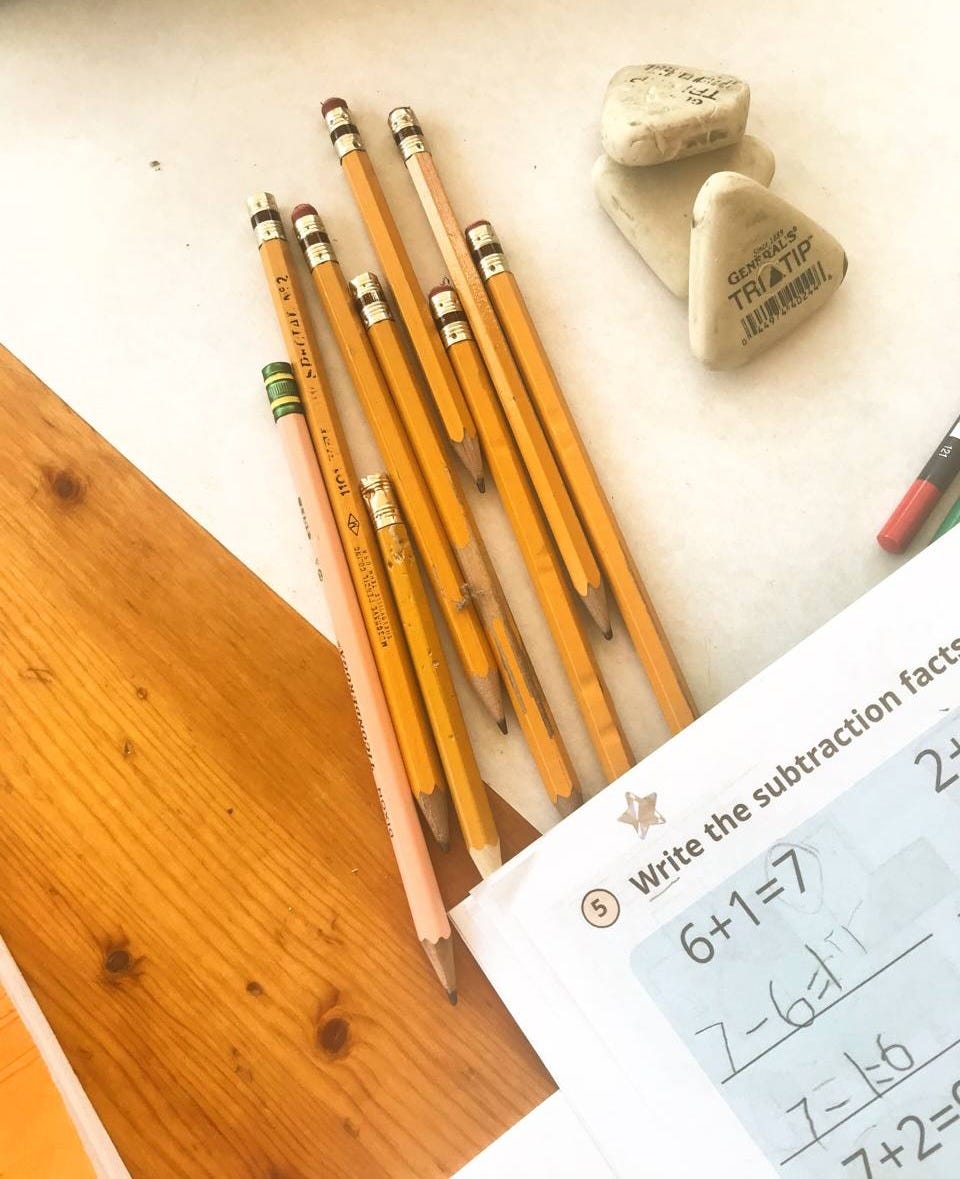
But that means we also have to decide what to do about math.

Math has always been so hard. Not just in the normal sense because math is hard for some kids, but haaard because she doesn’t have any comprehension of so many concepts. Money, spatial relations, telling time, they all mean nothing to her. Even simple addition and subtraction is a fight, and whatever aspect we don’t do all the time, she forgets.

So the spiral method of learning – when you cycle through various concepts and eventually revisit them to review before moving on – has never really worked for her. By the time the same concept comes around, she has to learn it all over again. And often, she doesn’t want to. So it’s a battle, and after 13 years it feels like one that’s very much not worth fighting anymore.

She has struggled, and we have, too. We’ve tried all the tricks. We keep explaining, we keep praying for a miracle.

And aside from math, she’s happy. She doesn’t care what grade she’s in or that her siblings can zip all over the place around her.

Like I said a minute ago: Do we keep trying, or do we give up? At what point do we know we’ve really given it all we’ve got?

But also: After 13 years, is it really giving up? Or is it surrendering, so we can move on to other things? Because the line between those feels super blurry.

Sitting across from our contact teacher, I finally ask, “Does she have to do math? I mean, it’s been thirteen years. She’s been in first grade workbooks for the last eight or nine of them, and cannot get through them. Can we just be done?”

Exasperation and tears. It feels so much like failure. All this time, and we could not get her farther than this.

But on the other side of the desk, our teacher nods.

“Yeah, you can be done.” More tears. Because as much as it feels like failure and finality, it also feels like relief.


What is the difference between surrender and giving up? I’m still sorting this out, but I think a big part of it has to do with control. I don’t mean controlling others, or even self control, but how much control we actually have over an outcome. Because sometimes (often) we take an unhealthy amount of responsibility onto ourselves for those outcomes.

We influence, yes, but we don’t cause other people (and certain situations) to change. We pray, we love, we act…but people make their own choices, they decide their own character. And when we’re working harder than they are for a better outcome, that’s a good time to surrender it.

Many sincere, dedicated believers struggle with tremendous confusion about when it is biblically appropriate to set limits.

– Cloud and Townsend, Boundaries

We invest affection, love, time, prayer, creativity, and effort into these situations. And when it all comes to nothing – or at least, seems like nothing, in the long run – it all feels wasted.

For the ignored friend, the parent of the prodigal, or the spouse who is neglected, abandoned, or abused – at what point do we quit trying so hard, quit striving for the change that someone else can only choose for themselves? We never stop praying, but when do we stop reaching out, trying so hard, waiting for the other person to mature and grow?

Powerful people do not try to control other people. They know it doesn’t work, and that it’s not their job. Their job is to control themselves….A powerful person’s choice to love will stand, no matter what the other person does or says.

– Danny Silk, Keep Your Love On

We can’t just wait for them to change. Sometimes we use waiting as an excuse to not make changes of our own, but we have to be responsible for the changes we should make, and responsive to the things the Lord is telling us to do.

With fear and trembling, sometimes we hold these situations like dry, not-quite-hatched eggs, and we carefully try to help them open. And sometimes it works. But also, sometimes it doesn’t. After we have obeyed, the outcome isn’t up to us.

Hear me, friend: God does not hold us hostage for miracles. He does not need us to strive for them.

And on the other end of things, He does not depend on our steadfast maintenance of the status quo to buy Him time, either.


Circumstances are one thing, but relationships are even stickier. What do we do when someone we love repeatedly shows how little they care, or they seem to thrive in creating chaos, or they indulge their immaturity by hurting you in passive aggressive ways? It’s hard to just move on and go about the daily tasks of life, to put on the mask and pretend things are fine, because that’s what this other person is doing and you know how wrong it is.

Some relationships we just have to let go of. Many friendships are for certain seasons and then they fade away. But certain relationships – like family members, or people you have some kind of ongoing work, ministry, or community partnership with – don’t just fade away. Somehow in these situations, we have to figure out how to love steadfastly, in the way that covers the multitude of sins, because of their proximity.

This kind of love brings us to endurance. We can’t change the other person, and we often can’t change our circumstances or proximity. So we do have to stick it out, and that can feel a lot like failure, giving up, and lowering our standards. This is so far beneath what I wanted this situation to look like. Ugh.

So we pull out all the tricks we know for this, too. We pray. We forgive. We set boundaries. And sometimes we wonder why we have to settle for so much less than what God surely intended for this situation.

It is hard to forgive and even want to keep trying when they use that proximity to make a show of how much more they care for others than you, and they make sure you see it. It is hard to overlook, to keep showing grace, to keep your cool inside your own boundaries. And boundaries, for the record, are limits placed out of love and protection. They are not a cloak for rudeness couched in a desire to avoid responsibility.

As we surrender the outcomes that are out of our control, are we really settling for less? Or is God training us for more?

Because His character hasn’t changed. His will for us and the other person has not changed.

Are we really lowering our standards? Or are we moving on so we can fight other battles – the ones we have a hand in winning?


One of the battles we continue to fight with (and for) Reagan is communication. She is verbal but most people can’t understand her because she slurs, blends words, skips words, and generally speaks in that toddler-like manner that only parents and siblings can decode.

So here’s where we stand our ground: Even when I understand what she’s saying, if it’s not clear, I usually have her repeat it correctly.

“Slow down and say each word so I can understand you,” I often tell her. There will come a day when she needs someone else to understand her, and if we let her get away with garble, she will regress further.

I sat next to her during worship at one of our community-wide gatherings a couple weeks ago, and prayed for the millionth time for healing in her. And because it has been a million times (but who’s counting) I also prayed for healing in my own heart over the hope deferred, the things I cannot change, the things I don’t know how to change, the loss of what seems like things should have been.

Hope deferred makes the heart sick, but a desire fulfilled is a tree of life.

– Proverbs 13:12

I have wondered how sick my heart is, how skewed my perspective is from living so close for so long and not seeing certain answers. I have fought the battle of faith against futility, seen the shimmer of horizon through closed eyes in prayer, and knew it wasn’t a vision, but tears.

Rejoice in the Lord always; again I will say, Rejoice.

Let your gentleness be known to everyone. The Lord is near.

– Philippians 4:4-5

The fight is not about what I can change in her, but in what I am letting God change in me.

It is not about lowering my standards or expectations, but about seeing rightly the battles that I can and need to be fighting.

It is about seeing how other desires are fulfilled, and focusing on the tree of life.

Do not be anxious about anything, but in everything by prayer and supplication with thanksgiving let your requests be made known to God.

And the peace of God, which surpasses all understanding, will guard your hearts and your minds in Christ Jesus.

Finally, brothers and sisters, whatever is true, whatever is honorable, whatever is just, whatever is pure, whatever is pleasing, whatever is commendable, if there is any excellence and if there is anything worthy of praise, think about these things.

– Philippians 4:6-8

The leaves are falling outside and the season is going fast, racing toward the long winter. And we grieve over the loss of time, the speed of time, the lost opportunity of what could and should have been. In the storm and shadow of these deep struggles, our efforts can feel like such dim lights in such darkness. Our small influence, our private lives, our humble gifts, what can they do amid the raking waves in the present, violent tumult?

In that moment during worship as I looked down and watched my tears hit the hardwood floor, I knew with certainty that next to me Reagan was just giddy over the volume of the music. Delighted in the moment, flapping her hands, utterly apathetic about how I was even at that moment fighting for her.

Jesus, receive the reward of your suffering. We sang it that night, and we live it every day as we give it all we’ve got, and then surrender.

for the one who is tired & heartsick & wondering if things will get better

Or, Grit…chapter 2.

Don’t stop praying for that thing you’re tempted to give up on.

The Lord doesn’t put good desires in your heart to tease you, but to show you where you’re going. Intercede for someone else while you wait, and use this time to bring life elsewhere, too.

Whoever brings blessing will be enriched, and one who waters will himself be watered.

— Proverbs 11:25

He’s not impatient or annoyed by you constantly asking Him if you’re doing it right. He’s not shaking His head and tsk-ing, wishing you’d get your act together and stop bugging Him. He’s a good, good Father. He loves your heart that continues to press forward in obedience and surrender, especially when you don’t know what it’s exactly supposed to look like or how things will turn out.

You can trust Him to tell you what you need to know when you ask. And you can trust Him to give you what you need when you ask, too.

For everyone who asks receives, and the one who seeks finds, and to the one who knocks it will be opened. What father among you, if his son asks for a fish, will instead of a fish give him a serpent; or if he asks for an egg, will give him a scorpion?

If you then, who are evil, know how to give good gifts to your children, how much more will the heavenly Father give the Holy Spirit to those who ask him!”

— Luke 11:10-13

The Lord is still shining on your situation. It might seem like it’s taking too long and you’ve almost given up hoping and praying and watering and expecting, but your answer is on the cusp of blooming. Do not cut it down too early. Don’t give up on tending it. He is putting things in order, and answers, solutions, and breakthrough might start unfolding faster than you can believe.

Maybe you thought you would be further by now. You’ve been in bud for so long, just waiting and waiting, almost to the point you’ve wondered if you’re running out of time. What if there’s not enough summer left? What if winter comes too soon? And why does it even matter, if by all rights you should’ve been in full bloom eons ago, and here you still are, waiting?

Are you just bad at blooming? No.

Are you destined to stay folded up and hidden? No.

Is it God’s will for you to be unhappy, because He loves you very much and has a miserable plan for your life? No.

You are not too late. You’re not bad at this. God has joy ahead that would make you laugh at your concerns if you could see it right now.

It feels dark, frustrating, and unrewarding out there some days. You work and work and work and wait, and hope a little, and look…but nope, it’s not there yet, so you start all over again, still not seeing the fruit of your labors.

But something’s happening underneath. It really is. We’ll see it soon. Hang in there.

But thanks be to God, who gives us the victory through our Lord Jesus Christ.

Therefore, my beloved brothers, be steadfast, immovable, always abounding in the work of the Lord, knowing that in the Lord your labor is not in vain.

— 1 Corinthians 15:57-58


This is chapter 2 of Grit: Kindling to Relight the Wounded and Weary.

be still and know: how we find certainty in the deep end

The more we know, the more we realize how little we know. And this is both good and bad: It’s great for humility, curiosity, and continued growth, but it’s not always so good when you actually are right but you doubt yourself.

be still and know: how we find certainty in the deep end || Shannon Guerra at Copperlight Wood

For example, a few weeks ago when we were helping friends move, we pulled into a storage facility right as some other people were leaving. The security gate was open to let us in, and then it closed behind us.

We drove across all the rows of storage units, and…our friends weren’t there.

“They said it’s the one by the church, right?” Yep, that’s what they said…but we’re smart enough to know that there are things we don’t always know, which means this might not be the only storage facility near the church.

Maybe, after we got separated along the road, they went to some other place we’re not aware of, because no one else in our party – which was originally a convoy of six or seven vehicles, including a giant U-Haul – were there.

We pulled back up to the closed gate and waited for the sensor to kick in.

Buuut there was no sensor.

Instead, there was a code box for customers…and we weren’t customers.

Visions of passing Sunday afternoon locked in a storage yard with five kids flashed through my mind. Fortunately, the sign had the company’s phone number on it, so I called that while Vince called our friend to let him know our situation.

My call went straight to voicemail.

“Hi, we’re helping some friends move,” I began, “but we must’ve gone to the wrong storage facility–”

Vin, on the phone with our buddy: “Hey! We pulled into the storage place but–”

Me: “– the gate was open when we got here because some people were leaving, but then it shut behind them–”

“–uh huh…yeah, no, we’re here–”

“– and we don’t have the code to get out, so we’re stuck inside. If you could call me back AS SOON AS POSSIBLE, my name is Shannon and my number is 907–”

“They’re on their way,” Vin said, hanging up. “They missed the turn.”

” – what? Wait, they’re coming? OHHhhh – Okay, nevermind, disregard, this is the right place and our friends are on the way, thankssomuchhaveagreatdaybye.” It’s fine, we’re fine, please don’t call the cops, etcetera, etcetera.

Moral? You can be right but still think you’re wrong because you’re early, or you’re alone, or everyone else is wrong, or you’re afraid, or a million other reasons.


When we know enough to know we don’t know everything we need to know (kudos if you don’t have to read that at least twice), it can be a little intimidating. Inhibiting. Unnerving.

In seasons of deep growth, we realize more than ever that there are so many people who already know what we need to know. In any given situation, there are people who can do this better. Who have the right answers, and all the training. Who don’t make things awkward, or aren’t accidentally rude (sigh), or had polished beginnings that make our raw edges seem to stand out all the more.

We feel over our heads in the deep end, but Jesus is asking for trust and intimacy, not impressive performance. Not back up plans, not fail-safe programs. Not our know-it-all, I’ve-got-this, watch-what-I-can-do mentalities.

We like those things, because they puff us up and make us look good. But we’ve got some dying to the flesh to do.

When pride comes, then comes disgrace, but wisdom is with the humble.

– Proverbs 11:2

So we have to know enough to know that we don’t know everything.

But also, and just as important:

We have to remember that the Lord tells us what we need to know when we ask Him.

If any of you is lacking in wisdom, ask God, who gives to all generously and ungrudgingly, and it will be given you.

– James 1:5

Do we really believe that, though? Because here’s the next part, and it’s where we tend to get hung up:

But ask in faith, never doubting, for the one who doubts is like a wave of the sea, driven and tossed by the wind. For the doubter, being double-minded and unstable in every way, must not expect to receive anything from the Lord.

– James 1:6-8

Well, great, what does that say for us? I thought this was the right place…but no one else is here…and I must’ve got it wrong somehow.

But no, that’s not doubting or double-mindedness. The “doubting” referred to in that verse is not condemnation for not knowing something, or being confused, or having a misunderstanding, or getting the rug pulled out from under you.

It doesn’t mean we always have to be certain about everything. God already knows we don’t have all the answers; that’s why we’re asking in the first place.

In the original Greek, the word for doubting here is diakrinó, and we learn more about it when we look at the root words it’s made from: dia, which means “through,” and krino, which means “to judge.” So you could say that this doubting is “through our own judgment” – or, arguing with God because we think we know better.

Here’s how it goes: We don’t know, so we ask, and He answers.

That seems like a simple flow chart, pretty straightforward.

But we tend to get muddled in the “He answers” part, because that’s where the flow chart forks into two options: We either believe Him and act on what He said, or we doubt Him – diakrinó – and argue.

Because we do hear His answers, but sometimes before we have a chance to put our pants on and act on them, the enemy hisses into our ears, and it’s the same thing he said in the very beginning.

“Did God really say…?”

And we start to have doubts.

Did I really hear God? Was that really Him?

Is He really that good? Is the answer really that simple? That full of joy? That much of a relief?

Or, just as often:

But I don’t want to ______ (wait, move forward, obey, abstain, be alone, whatever).

It’s too _______ (hard, radical, uncomfortable, soon, expensive, whatever).

That must not have been Him.

And there we are, a wave of the sea, driven and tossed by the wind, double-minded and unstable in every way.

In this case, we must not expect to receive anything from the Lord because He already gave it to us but we said, “Ehhh, I don’t think so, no thanks.”


But also, sometimes we start to act on what He said, but then circumstances shift and we question the original plan.

After a year of no broody hens, our darling Uno has decided at the very end of summer that she wants to hatch chicks again. It’s not the best time for it, especially in Alaska, because our winters usually start around mid-October. So I searched “broody hen in fall” and scoured the internet for answers.

And the consensus from chicken keepers all over, including cold climates, said Yes, go for it.

But still, this is Alaska. So I prayed some more, hemmed and hawed, and discussed with the husband and kids. We all agreed, sure, let’s do this. Uno and her eggs would need to be moved to a more protected coop, but we’ve done that before, no biggie.

We didn’t know, so we asked, and got answers. Easy peasy.

And then we moved Uno…and she threw an absolute fit.

Refused to sit on the eggs. Tried to rush us to get out of the new space. Clucked and scratched and rolled in the dirt. Poked her head through the fence to make faces at the other hens.

She totally diakrinó-ed, like she forgot that this is what she wanted in the first place.

Meanwhile, the warm eggs sat in the neglected nest, getting cooler by the minute.

I wavered, and second guessed, and did a little diakrinó-ing of my own while I watched her fuss: Should we have moved her so soon? Maybe we should’ve put her in the other spot. Or used the other box. Or left her for a few more days. Or, or, or…anything, because this doesn’t seem to be working.

But no, I remembered. We clearly heard Yes, do this, and we knew she had to be moved. She couldn’t stay where she’d been because it wasn’t a safe place to hatch chicks. And we couldn’t move her to the other place she brooded in last year because it wouldn’t be warm enough in the fall.

The Lord knows this hen and this process better than we do. We can trust Him. And we can remember that just because things don’t look like they’re working, it doesn’t mean they actually aren’t working. They’re just still working out.


So, how do we know what’s from the Lord, and what isn’t? How can we be certain?

We have to know Who we’re dealing with. When we know Him, we recognize Him. And when we look toward Him, we become like Him.

Now the Lord is the Spirit, and where the Spirit of the Lord is, there is freedom.

And all of us, with unveiled faces, seeing the glory of the Lord as though reflected in a mirror, are being transformed into the same image from one degree of glory to another, for this comes from the Lord, the Spirit.

– 2 Corinthians 3:17-18

When we know Who He is, we know better who we are. And as we abide, we remember that we have the mind of Christ and can know the things we need to know, and can reject the things that are beneath us.

But be doers of the word and not merely hearers who deceive themselves. For if any are hearers of the word and not doers, they are like those who look at themselves in a mirror; for they look at themselves and, on going away, immediately forget what they were like.

But those who look into the perfect law, the law of liberty, and persevere, being not hearers who forget but doers who act—they will be blessed in their doing.

– James 1:22-25

Wouldn’t we like to be blessed in our doing? We have to act on what we hear, and persevere.

God is instilling in us the faith to walk in a little uncertainty and discomfort without doubting Him. When we obey and persevere, we can handle the tension that comes between our act of obedience and the fruit it eventually bears.

This is how we can be still and know.

After about 40 minutes – longer than I’d like, but not really that long in the scheme of things – Uno finally settled on her eggs. I peeked in on her, and she had knocked over the food and kicked dirt in her water and made a general mess of things, but she was sitting on those eggs like it was her great mission. (Which it is.) We both made it through the doubting and arguing and trusting our own judgment, and settled into trusting the Lord for a nest of chicks in fall.


Can I throw one more wrench in the works here? One of the biggest reasons we doubt – or argue with God – is because we’re actually afraid of what we want.

Often, we’re afraid of freedom.

Here’s what that might look like:

  • Fear of healing because it changes our routines, what we’re used to, and how we (and others) see us
  • Fear of Jesus following through with His word and promise
  • Fear that it’s “just what we want” and not really what God wants to give us
  • Fear of what the Lord will ask us to do in return, as though we’re making a deal with the devil – and oooh, do you see how deceptive that is?
  • Fear that we’ll get in trouble if we rock the boat instead of maintaining the status quo

…so it feels safer to doubt God’s voice. Our judgment is better than God’s judgment because He’s really not as good as the Word says He is (but we would never say it that way, of course).

We know what we’re already dealing with and we can just live with it. We don’t know what change might bring, or if we can handle that – and if we’re honest, that’s because we’re not trusting God in any of it. We are afraid, so we hang onto control instead of letting go in surrender.

If you recognize yourself in any of these thoughts, it’s time to examine where those thoughts come from.

Not all thoughts are our own thoughts. Something flies into our head, and we think it’s our thought because it sounds like our voice, therefore it must be from inside us…right? But we’re horrified by some of what we hear, not knowing the depths of where those thoughts come from.

But no, they’re not all from us. Many of them – particularly the ones that contradict the things we know and leave us feeling confused and double-minded in their wake – are planted by the enemy, attempting to get us to make agreements with him.

He whispers, “God doesn’t love you” and even though we know that’s not true, we wonder if it is…and the more we wonder, the more we slide out of truth and into agreement with the enemy. He sneers, “God doesn’t want to give you that” or “God’s mad at you” or “That’s too good for you” or any other statement that rejects God’s truth and goodness.

We can recognize these counterfeit thoughts by the instability and confusion they bring. I know this is wrong; why am I thinking it? Or, I know this to be true; why am I having such a hard time believing it? Because the enemy wants you to. We have to learn to identify and filter out those attacks, to take every thought captive. And we do that by knowing which spirit we’re dealing with.

It doesn’t mean we always have to be certain about everything. It just means we have to be certain about God, and His goodness.

And without faith it is impossible to please him, for whoever would approach God must believe that he exists and that he rewards those who seek him.

– Hebrews 11:6

When we’re in over our heads, we want our default to be trust and intimacy, not insecurity and performance. Because when our default is corrected, we move forward in boldness and peace.

We have to remember what we heard in the first place. We have to remember that the Lord tells us what we need to know when we ask Him.

He really does.

God is offering us freedom in the areas we’ve learned to be rigid, restricted, lazy, inhibited, intimidated, and stifled.

When we trade those in for His freedom, we have the margin to be disciplined in the ways He actually wants us to be, which brings joy and beauty and order, rather than the empty pride of a checked-off box or feeling of superiority.

The old flesh is dying off, and we find life underneath it.


This post is also available for free as a short study that you can use for journaling, or small groups, or with a friend. You can print the short 2-page version with just the questions, or the expanded version (8 pages) which includes the post broken into four parts with the appropriate questions for each section.


P.S. Want more on this? Here’s a related post — If you’re finding yourself a little (or a lot) over your head in all new terrain, unsure of what you’re doing or how you’re doing it, I have good news for you: This is where God increases our capacity. Read, or catch the audio here.