
Before we worked from home together, Vin commuted to Anchorage and was gone about 60 hours a week. For most of those years he drove a small pickup. It’s Alaska; everyone has a pickup here.
Handy things they are, except for when it comes to highway mileage. A pickup has a tailgate and a bed, and unless you have a canopy or cover on it – we didn’t – you get drag.
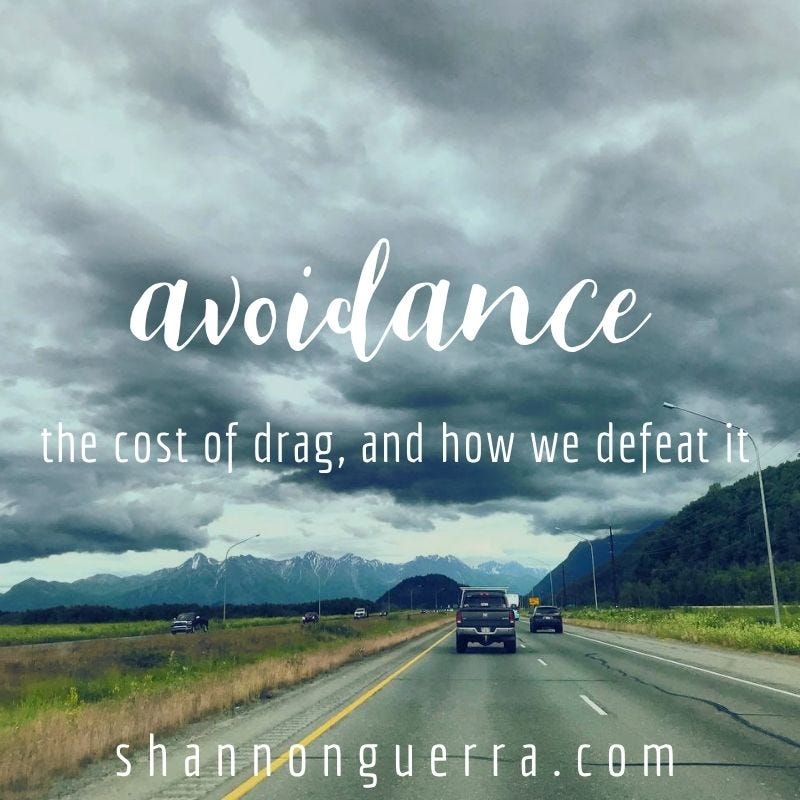
Resistance. Opposition to forward motion. You spend more gas trying to get where you’re going just because that truck bed and tailgate are cupping the wind at highway speed.
For years, people told us we should get a commuter car. We knew we should, too, but buying a new vehicle and selling an old one is a pain. Those were desperate days, too much going on, who needs one more thing to do?
So we avoided the change and stuck with the little pickup until January of 2014, when Vin rolled it on the highway during a snowstorm, totaling it.
Then we had no choice: A commuter car it was. And you know what we started saving in gas?
Five hundred dollars a month.
We knew it would make a difference, but we had no idea it was costing us that much. What could we have done with an extra $6000 a year, for those six years?
What else is our avoidance (stubbornness, laziness, resistance, denial, or any other drag) costing us?
Here’s the big question that might save you a ton of time, money, emotional investment, and other resources:
What am I ignoring or putting off that will actually be for my overwhelming good?
Sometimes lost things are found when we let go.
Our days are no longer desperate like they were then. Or, maybe they are, but in different ways: The kids are calmer, but our scope is broader, there’s no steady paycheck, and our schedule is often out the window because our work is way different and almost always changing.
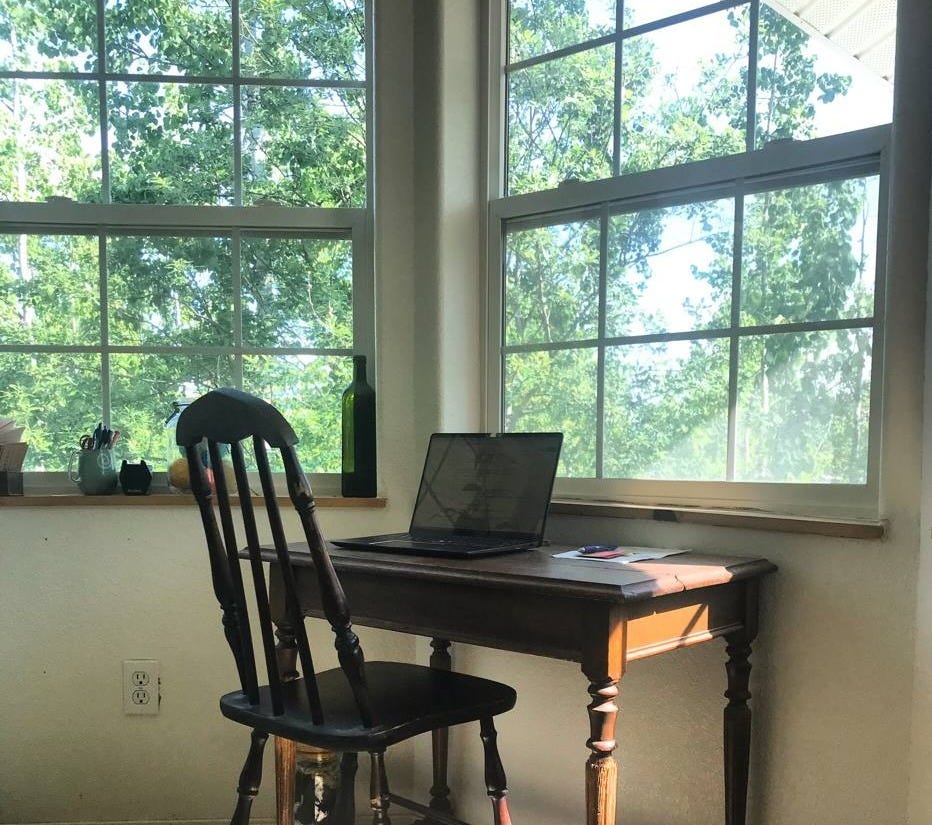
I’m still a writer, but I’m only at the desk one or two days a week lately. It feels weird. And what’s weirder is even with such limited time, I have days when I don’t want to write.
Those days make me wonder if I still am who I was, or if I lost something. Did I drop my calling? Why is it so hard to shift back and forth sometimes? Am I walking in neglect or disobedience? Or am I just tired? (Stupid question. Don’t answer that.)
A single day of feeling supremely off kilter can make me wonder all those things, because I am fragile and human.
That’s the wrong kind of wonder to have. It’s drag, and it’s far more expensive than commuting to Anchorage in a little pickup, because if not caught it leads to brooding, which in turn often leads to all sorts of leading questions and bad conclusions.
The cost is high because it’s our identity and vision at stake.
So here, too, is where we ask: What am I ignoring or putting off that will actually be for my overwhelming good?
And in this case, the answer (for me, at least) is pretty much the same every time: Abiding. 1
If I were abiding in this situation, I wouldn’t be doing the wrong kind of wondering. I wouldn’t be questioning my calling or ability, wondering if I lost it or if it was just a long season that’s over.
I’d have real answers, instead. I’d have peace and grace for the day, instead of anxiety and discouragement.
When I finally confront the issue head on, rather than avoiding it for days on end, striving and struggling needlessly in angst, it takes a whopping five seconds of concentrated abiding to realize what’s going on.
Be honest, Shannon. Ask the question. Put it into words and confess it.
So I do, and it’s another finally-suddenly moment, because that’s when I hear the answer.
You haven’t dropped or lost or neglected anything, Love. But you are not always meant to tell and translate. You also need to soak and receive.
Oh. Duh. Well, that sounds so obvious.
But I’ve gotten so used to the feeling of pressure that I didn’t even recognize it. This happens with all sorts of mindsets, and they become like refrigerator noise in the background of our lives that we don’t even hear anymore.
So listen: What is the noise you’ve been ignoring, or that you’ve gotten used to? We can’t deal with it until we identify it.
When I let go of the pressure to write, that’s often when a torrent of words rush out. Onto the screen, in my phone memo, on any scrap of paper I can find.
Like I said earlier, sometimes lost things are found when we let go.
Oh, that’s where I am. That’s the me that thrives the way You made me to – because I finally looked for where You are in this. I missed the forest for the trees, but You were here all along.
To be fair to myself and honest with you, I can abide in all sorts of things while avoiding the main issue I really need to talk to the Lord about.
I think it’s a common ploy of intercessors; we can procrastinate and distract ourselves by praying for a million other things, and still feel pretty good about our abiding. A friend of ours who led worship for years said it’s the same on that side of the coin, too: If he didn’t want to deal with something, he would worship, instead.
Isn’t it funny how we can use righteous things to avoid becoming more righteous?
And isn’t God gracious to still meet us in our avoidance, and wait for our honesty? Even our ability to face things is grace from Him.
It would be nice to have more grace and peace, though, and get back on track faster.
May grace and peace be yours in abundance in the knowledge of God and of Jesus our Lord.
– 2 Peter 1:2
We tend to overuse and gloss over those terms. What do they really mean in the messy situations we’re dealing with?
Grace and peace look like solutions, resolution, revelation, and certainty. They look like security in our identity, steadiness in our calling, and boldness in our obedience.
May those things be yours and mine in abundance. And may we cooperate with receiving them, because God’s generally not going to force them on us while we’re ignoring the issue He wants to address.
To defeat the drag and make forward progress, we’ll need to sell the truck, make the move, call the person, spend the money, ask the question, admit our weakness, acknowledge the problem, confess the sin, set the boundary, etcetera, etcetera. It could be anything. It’s probably on your mind as you’re reading this.
Anyway, whatever it is, if we’re not willing to do it because we’d rather feel the drag against our tailgate (ahem), then He’s generally not going to force that particular answer upon us.
Good news, though: He’s made us for the answer. He knows how weak, exhausted, angry, wounded, confused, overwhelmed, or whatever we are that seems like it’s holding us back.
Seriously, He knows how whatever you are. And He did all the heavy lifting to make us like Him:
His divine power has given us everything needed for life and godliness, through the knowledge of him who called us by his own glory and excellence.
Thus he has given us, through these things, his precious and very great promises, so that through them you may escape from the corruption that is in the world because of lust and may become participants of the divine nature.
– 2 Peter 1:3-4
You and I cannot participate in the divine nature if we neglect to abide. Abiding is the participation: This is how we know, hear, act, and become more like Him.
It’s how Peter, who wrote those words, went from being an impulsive loudmouth you probably wouldn’t want speaking at your funeral to becoming an older and wiser heavyweight who could handle the spotlight. Both versions were forces to be reckoned with, but only one was fully surrendered and thus able to lead others in that same transformation.
So we don’t want to waste gas, too focused on the problem to do anything to actually solve it.
If we’re putting off abiding – or any other prompting of the Holy Spirit – we’re not changing anything for the better.
Such a bummer. I’m so sorry.
What can we do, then?
First, if this rings a bell, we need to acknowledge our avoidance and confess it. It’s not a huge, drawn out thing. It’s a reality check, and it’s instant: “Yep, I’ve been doing that.”
Then there are several things we can do. But to work smarter and not harder, the best first thing is to ask God: What do I need to do now? And then do it.
I know, the best time to do it would’ve been a long time ago. But the next best time is now.
And one more question to ask Him: How do You want me to see this situation? Because we want to see it the way He does. He’s not discouraged or dismayed over this. He’s not overwhelmed, overwrought, or doing the wrong kind of wondering.
When we’re looking at Him and seeing things the way He does, we see possibilities instead of limits. We stop partnering with fear, agreeing with the enemy, making blanket statements and accusations and assumptions. We stop doing the things that make it worse, and start doing the things that make it better.
Bemoaning that the enemy is winning in different areas or how we feel like we are losing in other areas is a poor strategy for defeating him. It’s a total drag, wasting our resources.
But quick cooperation with His promptings brings momentum. Obedience to God is spiritual warfare. And this is how we win.
Sign up here to get these posts to your inbox for free. (Upgrading to a paid subscription is a huge support to our ministry, thank you!) You can read more about what we do here.
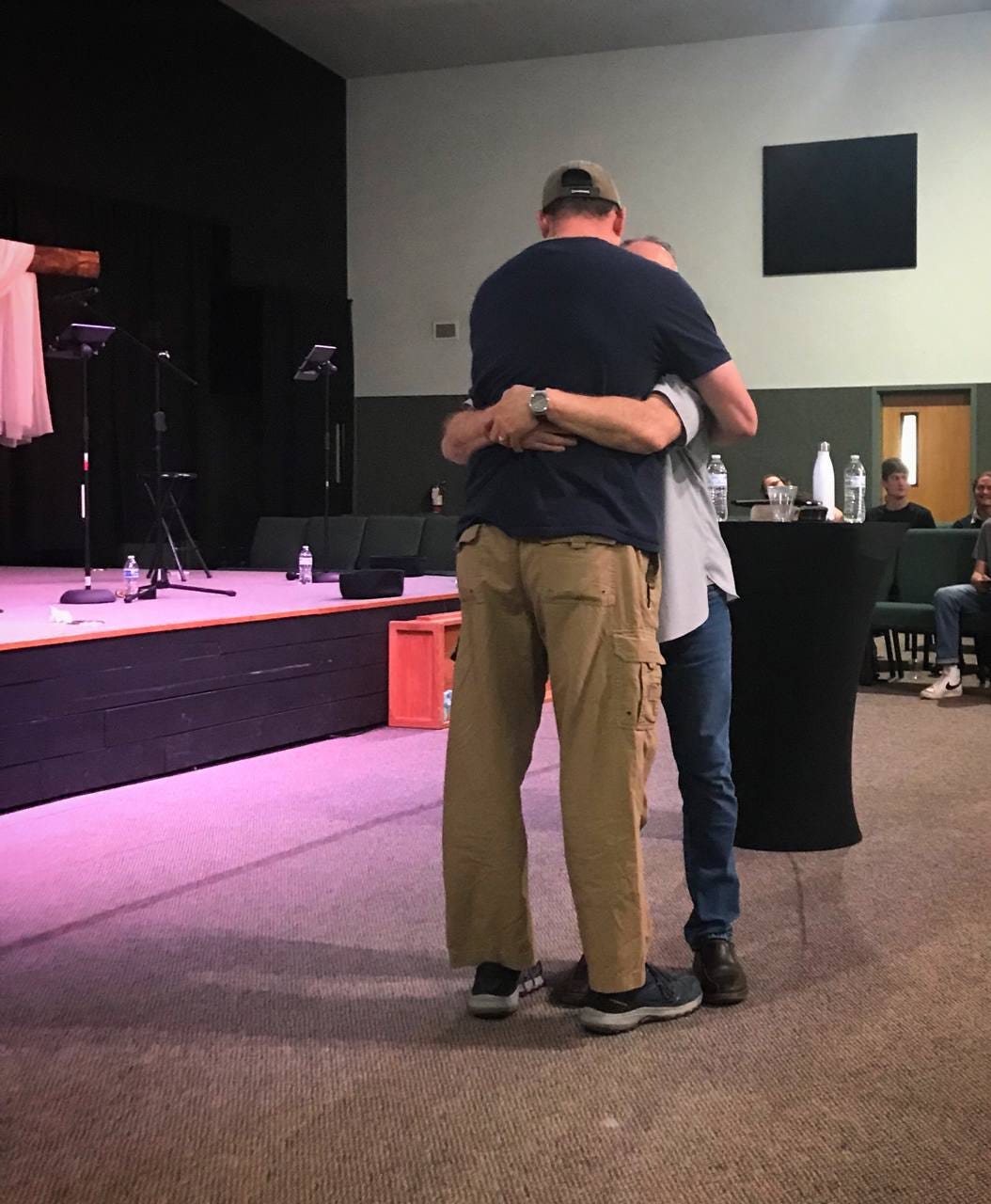
P.S. Our pastor gave a great message here that relates to this topic (starts at 1:09). Bonus: Vin is in a couple of dangerous aggressive super awkward sermon illustrations. 😅
- Often for me, writing IS abiding. Journaling, praying, all the thoughts going on paper or screen…I’m talking to and with Him more than anyone else. But after years of writing as vocation and ministry, writing is also work, and there’s the struggle. Maybe there’s a post on that coming soon. ↩︎