favorite books of 2025

“Mom, what’s a frigate?” Finn asked, laying on Grandma’s living room floor. His language arts binder was opened in front of him.

“There is no frigate like a book!” I quoted. “Have you heard that yet?”

He shook his head.

Kav looked up and raised his eyebrows.

My cousin pondered for a second, and then shook his head, too.

But across the kitchen Chamberlain smirked, because she knew. She spent quite a bit of last year immersed in Emily Dickinson.

There is no Frigate like a Book
To take us Lands away
Nor any Coursers like a Page
Of prancing Poetry –
This Traverse may the poorest take
Without oppress of Toll –
How frugal is the Chariot
That bears the Human Soul –

– Emily Dickinson

(Anyone who can express ideas this brilliantly has earned the right to capitalize and punctuate however they choose.)

favorite books of 2025 by Shannon Guerra @Copperlight Wood

Out of the 58 frigates I traversed last year, here are my favorites:

Something Fresh/Leave it to Psmith by P.G. Wodehouse

This was the year I got Vince addicted to reading Wodehouse. High five. We each read several of his books last year and these two were by far our favorites; I also managed to get Something Fresh into Gaining Ground’s list of books, which means I read it twice in six months and still loved it. These are the first two in the Blandings series and the plots are pretty similar, but both are such hilarious chaos that you won’t even care.

…he took the entire staircase in one majestic, volplaning sweep. There were eleven stairs in all separating his landing from the landing below, and the only ones he hit were the third and tenth.

— P.G. Wodehouse, Leave it to Psmith

That Hideous Strength by C.S. Lewis

This was also the year I finally read The Space Trilogy, of which That Hideous Strength is the final book. All three were good and opened my eyes in new ways. But this one reads more like a typical novel (not really sci-fi at all, and can be read as a standalone), and I could not put it down.

There are a dozen views about everything until you know the answer. Then there’s never more than one.

― C.S. Lewis, That Hideous Strength

To use modern terms that parallel our times, the plot revolves around a normie couple who finds themselves on opposite sides: One is lured by pride and insecurity into the deepest of deep state corruption, and the other stumbles into an eclectic group of (mostly) ordinary faithfuls taking refuge together and watching for their moment to intervene.

I loved almost all of it, didn’t understand quite a bit of it, and was mindblown by the last third of the book which will forever change how I see God. It is not a kids’ book by any means; Vin read the first two (Out of the Silent Planet and Perelandra) aloud to our ten-year-old, but this one starts right off with adult themes and continues into violent, disturbing concepts.

She Deserves Better by Sheila Wray Gregoire, et al

Yep, it looks like a liberal feminist book – which no doubt had something to do with our local library’s decision to carry it – but the full title is She Deserves Better: Raising Girls to Resist Toxic Teachings on Sex, Self, and Speaking Up, and it is a Biblically accurate book (with the exception of when concepts like spiritual warfare are discussed, which are not the author’s wheelhouse; when the authors stay in their lane – 99.8% of the time – the information is excellent) that reviews where the Church (including youth groups, conferences, and media aimed at teens and couples) has veered astray, pressing girls/women into ideologies and double standards that the Bible never intended.

Even though I didn’t attend youth group until my senior year of high school, these teachings were familiar to me and we even taught them 20 years ago when we first led younger couples. We have since repented because they don’t reflect what the Bible actually teaches, nor do they bear fruit that Christians can be proud of.

We gave copies of this book to our daughters for Christmas. If I could, I would buy copies for you, too. Resolving these issues and teaching them correctly moves us far upstream to prevent a host of tragedies later on. You can read a related post here by Vince.

“Our job is not to raise obedient daughters who won’t make waves. Our job is to raise daughters who will run after Jesus without worrying if they’re faster or slower than the boys around them.”

– Gregoire et al, She Deserves Better

Keep Your Love On by Danny Silk

This was the second time I read this book, and for the record, I didn’t like it the first time. That was about 12 years ago when I was living in the midst of chaos and depression; I was trying to do everything right with our special needs kids but feeling like I must still be doing everything wrong because nothing seemed to be working. I felt so, so helpless and overwhelmed, and we had a lot of healing that just needed to work out over time. So reading a book about powerful choices in difficult relationships while still feeling so extremely powerless to change our family’s situation was not the best timing, probably.

But! By this time around, I’d learned that feeling powerless and being powerless are two separate things…and also, life is so much easier than it was then. So much healing has come…sometimes it just takes a long time to see it. So what am I saying? If your life is falling apart, this may (or may not) be the best book for you. But it’s worth a shot. The principles in it are solid, and Kingdom culture is lived out through them.

favorite books of 2025 by Shannon Guerra @ Copperlight Wood

Persuasion by Jane Austen

Do I even have to tell you why this is worth reading? Because it’s Jane Austen, that’s why.

Not good enough? You don’t know what that even means? Fine. Persuasion is a remarkable example of wit and observation on human nature, and a scathing rebuke of hypocrisy and vanity:

Also, it’s shorter than most of Austen’s other novels, so you should try it.

Cry, the Beloved Country by Alan Paton

File this under “books I should’ve read 30 years ago, but somehow missed.”

The first thing I noticed in this one was the odd punctuation. There are no quotation marks for dialogue, and somehow that makes the tone of the book feel so much gentler and quieter, even as the story covers hard things. (The Road is another example of this.)

Cry, the Beloved Country is about a minister in South Africa who needs to find his estranged sister and son in Johannesburg. In that journey, he finds unlikely allies and unlikely opponents. My big takeaway from it: Regardless of our how other people revere us, our strongest, most impactful ministry is to our own family, whether they choose to receive it or not.

Gone With the Wind by Margaret Mitchell

I think I’ve read this epic five times now, and it still holds up. I’ve written why here. If you start it now, you have a good chance of finishing it by 2027. (grin)

Rise to Rebellion and The Glorious Cause by Jeff Shaara

In spite of being married to a history nerd who owns over a dozen books by this author, I had never read any of them until 2025.

These two are about the Revolutionary War and I liked the first, loved the second, and felt like I finally got an understanding of the main people, events, and strategies of that time in history. They read like fiction, and the examples of leadership and integrity illustrated in this series are lessons we and our children need.

Made In China by Amelia Pang

This is one of a very few books that I think everyone — especially Christians — should read and be aware of.

After working eight hours a day in the quarry, prisoners had to manufacture artificial flowers for six more hours at night. Chen folded adhesive labels to garish lilies, tulips, and poppies. He glued fake stems to polyester and silk flowers. The mustiness of the silk mingled with the strong glue, covering the iron scent of blood.

— Amelia Pang, Made in China

Do you know how all the cheap made-in-China goods are made? Do you know why they’re so “affordable?” It’s because the labor isn’t paid for. Or it is, but only by the slaves — many of whom are Christians and other religious minorities — and the price they pay is often their lives. We have no excuses and we need to stop profiting from slave labor.

I wrote a longer write up on this here (scroll down to “books I loved this month”).

The Awe of God by John Bevere

There’s revival within these pages: personal, corporate, national, global. Such an important message. I talked about it more in this post also, and Vince wrote a longer review here.

A Man For All Seasons by Robert Bolt

If you’ve never read a play before, this is a good one to start with. It reads surprisingly fast, is filled with humor, and tells the story of Thomas More, who refused to compromise his principles and capitulate under pressure to Henry VIII when he desperately wanted More’s sanction/blessing/passive approval/thumbs up to divorce Catherine of Aragon (wife #1, whom he was married to for 24 years) so he could marry Anne Boleyn (wife #2, whom he had beheaded after 3 years).

You probably already know that Henry’s love life continued to plunge downhill from there, and he should’ve just listened to Thomas.

Man and Woman, One in Christ by Phillip Payne

Great book with important information that Christians — especially pastors — need to know. Yes, there’s some Greek in here, but we can do hard things, and those who teach the Bible surely ought to take the time to do them. :) The book is a little repetitive in places but even the repetition is helpful because there’s so much information to absorb. (Payne has a simplified version called The Bible Vs. Biblical Womanhood that I’ll be reading this year. If Greek makes you nervous, that might be the book for you.)

Teachers will be held to greater accountability. Those who promote Biblically-illiterate notions that women should be silent in churches and cannot lead or teach need to take the time to learn the original language, context, and culture of Biblical passages before they promote false teachings out of laziness, ignorance, or bias, and oppress half of God’s image bearers in the process.


Some honorable mentions…meaning, I really liked these books too, but not enough to write another paragraph about each one because I’m tired of fighting Bingley for the keyboard:

Ivanhoe by Sir Walter Scott
Gentian Hill by Elizabeth Goudge
Barchester Towers by Anthony Trollope
The Complete Tales of Winnie the Pooh by A.A. Milne
Changes That Heal by Henry Cloud


One of the nerdy-fun things we do with our reading is we have this chart on our fridge. I’ve mentioned it before, and we adjust the categories every year. But still, even with all that tweaking and all the books we read this year, a few of last year’s categories didn’t get marked off because the books we were finishing toward the end of the year didn’t quite fit the ones that were left. We’ll keep trying.

By the end of the year, our list looks like this:

And currently, our new list looks like this:

If you’d like to do your own version of this challenge with some friends or your family, here’s a free download of the list we’re using this year. Feel free to copy and adjust it to your own interests.

And! If you’d like to read more classics this year, we’d love for you to join us at Gaining Ground, where we’re currently in the middle of At the Back of the North Wind by George MacDonald but you are welcome to jump in anytime.

Want to see my previous years’ favorites? Here you go, in reverse order: 202420232022, and 2021.

Praying that you journey on so many incredible frigates this year,

Shannon

P.S. Want to get these emails directly to your inbox? Subscribe here. If you want to learn more about our ministry, our about page is here. If you’d like to support our ministry, our give page is here. Thanks!

landmark: when the finally-suddenly is just ahead

“Right there, that one.” Still going highway speed, the road to Grandma’s house rapidly approached on the passenger side.

Vin hit the brakes to slow down in time, and flicked the blinker. “I was looking for the sign…it’s not there anymore,” he said, making the turn.

I never look for the street sign, so I didn’t even notice it was missing. Grinning, I pointed through the cracked windshield at the Butte looming in front of us.

“It’s right there. There’s your sign.”

landmark: when the finally-suddenly is just ahead

I don’t mean to brag. The man drives us everywhere and keeps a map in his head, while I almost took out an ornamental tree the last time I made a u-turn in the library parking lot.

But this road, I know. I’ve driven it so many times I could do it with my eyes shut…figuratively, of course.

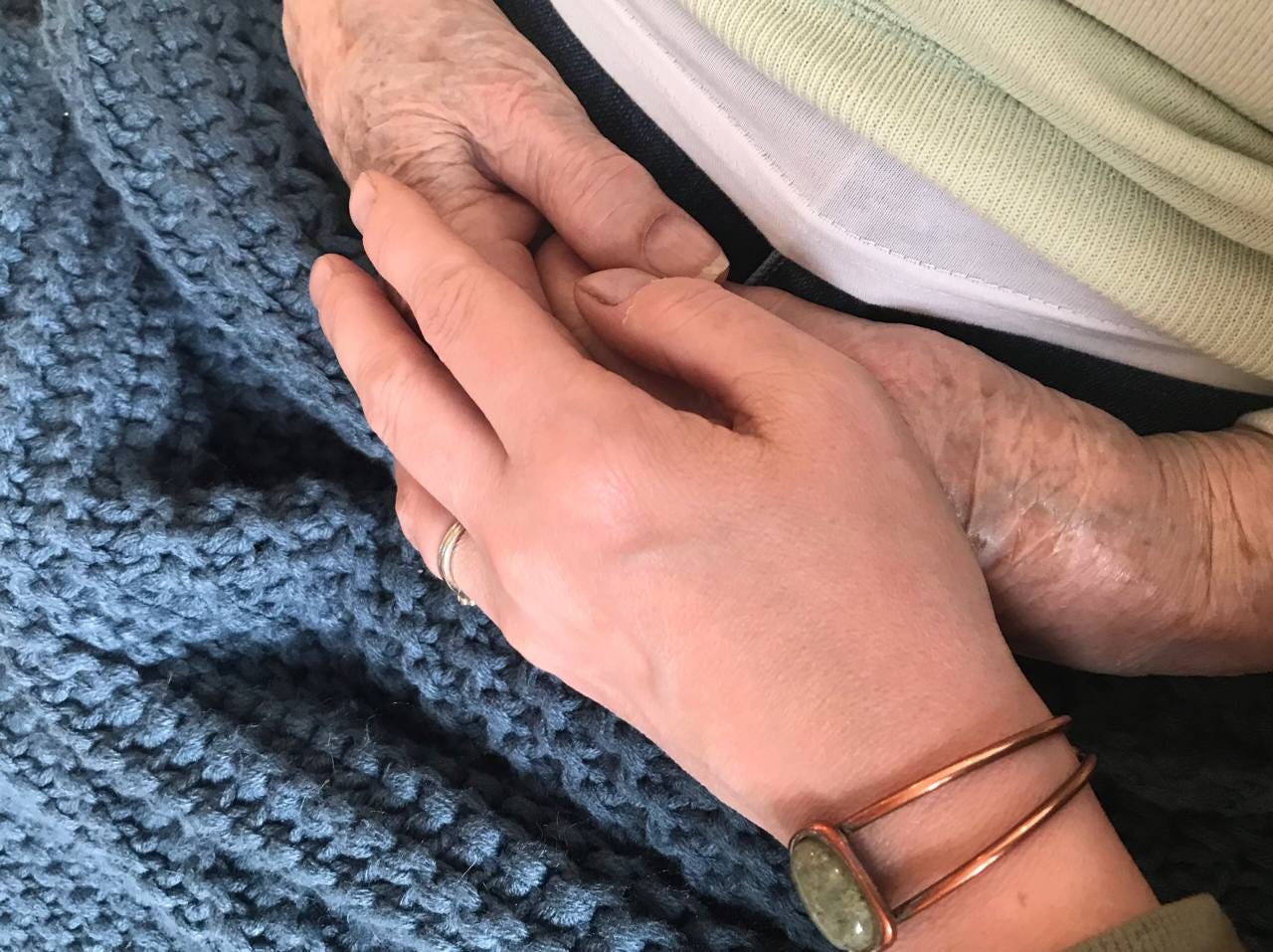
I’ve been driving it more and more, too. The plan, for now, is to take it weekly because time is flying and Grandma is 94 and things that weren’t a concern a year ago are now quite different. A year adds miles to all of us.

Meanwhile, I’ve worked my way through Numbers but got hung up in chapter 33 because it is the end of the year and that chapter seems parallel to life right now. Because ready or not, change is here, and so many other markers we thought we’d never get to.

Promises fulfilled. Breakthroughs achieved. Milestones that were always in the distance, so far off we never really thought we’d see them up close – but here they are, rapidly looming larger and larger as the safe space between us shortens.

It’s finally, suddenly. And there are no brakes for slowing this down.

So let me tell you about Numbers 33, which summarizes the Israelites’ journey from Egypt to the Promised Land. They had been slaves, and went from bondage and captivity to freedom and fulfillment. You probably know this story almost as well as you know your own, so you know it wasn’t an easy-peasy, quick trip.

Just because you’re no longer a slave doesn’t mean you suddenly know how to live in freedom.

So the Israelites, like us, had a journey to make. And Numbers 33 gives us the landmarks:

They set out from Rameses in the first month, on the fifteenth day of the first month; on the day after the Passover the Israelites went out boldly in the sight of all the Egyptians…

– Numbers 33:3

During this journey, the Israelites wrestled with the same questions we do when we’re being honest: Is obedience worth it? Can we trust God? Are we who He really says we are, and can we really do what He tells us to?

Are we willing to go where He sends us?

Some of us have been promised something before, and it didn’t turn out the way we thought it would. It took too long, or maybe we confused the middle for the end. Maybe it was super messy, and came with trial or trauma. We feel like the promise burned us and we stopped trusting.

So now when we see a new landmark of promise and fulfillment looming ahead, we hit the brakes.

Dig in our heels.

Backpedal.

We do all the metaphors because we’ve (mis)learned that promises can also feel very much like threats.

You know the story of the twelve spies; this is exactly what ten of them did. The enemy wants us to see the worst case scenario and assume that all is lost.

We should, of course, be looking at Jesus, but problems (current or potential ones) are loud and flashy and demanding. They get in our face and try to become idols, because if they can command more of our attention than we give to Jesus…well, that’s what we’re worshiping, don’t you know.

But when we know the land, know the hand of God, and understand Romans 8:28 (and the rest of scripture), we know better: All is not lost. All is gain. There is nothing the enemy can do that, when surrendered to the Lord, cannot result in our gain.

When we understand that, it’s easier to stand our ground instead of shrinking back and looking for excuses to avoid what we’re called to do.

So, friend…in this season, what are you called to do?

We have to be free from fear. If we’re afraid of the landmark looming in the distance, we won’t confront it; we’ll be ruled by it, instead. But our wild exploits are rooted in our fearless movement forward.

Teach me your way, O Lord, and lead me on a level path because of my enemies.

Do not give me up to the will of my adversaries, for false witnesses have risen against me, and they are breathing out violence.

I believe that I shall see the goodness of the Lord in the land of the living.

– Psalm 27:11-13

Still though, so many things we thought were down the road are now right in front of us. We’re almost-finally-suddenly there, and so is the temptation to stall our engines or shrink back.

How many times have we sensed the “suddenly” coming, and we sabotaged it out of fear? Are we allowing God to be as big as He is – and trusting Him for all that He says – or are we making Him small and safe, in the terrain of our own choosing?

Maybe it will help to look back, and see how far we’ve come.

They set out from Pi-hahiroth, passed through the sea into the wilderness…

Look at what you’ve done: You faced the event you’d been dreading. You rose above fear and found a mantle of authority on the high ground. You confronted dishonor, you let go of betrayal, you forgave the one who repented, and you continued to love, even in new ways, the one who still doesn’t know how.

They set out from Marah and came to Elim…

You read this book and then that one, and you stumbled into a curriculum that was clearly the Lord’s design because it was not of your choosing. You learned so many lessons you never planned for, and you grew in deeper humility along with them.

They set out from Elim and camped by the Red Sea. They set out from the Red Sea and camped in the wilderness of Sin…

You had that hard conversation and made that brave confession, you learned that you could articulate those thoughts and feelings you’ve held onto for years, because you finally had a receptive audience. And you learned that the Lord is always receptive, too.

They set out from the wilderness of Sin and camped at Dophkah. They set out from Dophkah and camped at Alush.

You saved and invested, put the work in, milestone after milestone. Some of the markers are invisible to everyone but you – but you know how you carved out time to make way for a service that that no one else would see.

They set out from Alush and camped at Rephidim, where there was no water for the people to drink.

When you didn’t see the answer or the provision, you waited and it came. No, it didn’t look at all like you thought it would, but it came.

They set out from Rephidim and camped in the wilderness of Sinai.

You learned about balancing graciousness with firmness, and discerned between overlooking mistakes and confronting sin. Wisdom has taught you more about which concerns should be shared and which should stay private and prayed about. And you’ve gotten better at magnifying righteousness, instead of venting frustrations and giving the enemy the satisfaction of having volume added to his harassment.

Look at how you’ve grown, how far you’ve come. Look at what He’s done.

He reached down from on high; he took me;
he drew me out of mighty waters.
He delivered me from my strong enemy
and from those who hated me,
for they were too mighty for me.
They confronted me in the day of my calamity,
but the Lord was my support.
He brought me out into a broad place;
he delivered me because he delighted in me.

– Psalm 18:16-19

Can you believe it? Look back and see all the landmarks you’ve made it through, all the posts you held, all the places you stopped to build an altar and worship. A little wonder and amazement is called for.

He has been training us to take the land, drive out idolatry, expand the Kingdom, root out lies and deception, heal trauma, free the captives, and prepare the way of the Lord. We’ve learned that we have to start with the land in our own hearts first, because if we are still living as captives, we cannot free anyone else.

Toward the end of Numbers 33, there’s this little phrase in verse 54: “according to your ancestral tribes you shall inherit.” They, of course, were talking about boundaries of the land of each tribe, but there’s truth here for us, too.

According to your family culture (the way you hold your chargethe way you bear your calling, what you invest in, focus on, attend to, and cultivate)…you will inherit.

Our lives – and what our children will inherit from us – are wrapped up in these promises and how we follow Him into them.

We want each one of you to show the same diligence so as to realize the full assurance of hope to the very end, so that you may not become sluggish but imitators of those who through faith and patience inherit the promises.

– Hebrews 6:11-12

His goodness is the lay of the land – and you don’t need a sign if you’re familiar with the territory. You just need to know the landmarks.

He has been, and will continue to be, before and behind us.

He is leading, but He is also coming.

And He’s teaching us to prepare the way for it.

what we are charged to carry

I talked about Exodus a while back and I’m currently in Numbers, so if you’re paying attention, that means I blew through Leviticus with nary a reference to it, and you’re welcome.

But I have a confession to make.

I actually like Numbers.

what we are charged to carry: how quiet perseverance makes room for exploits | Shannon Guerra @ Copperlight Wood

Is that shocking? It gets such a bad rap, but I think that’s because by the time we’ve endured all the details of the Tabernacle and the Levitical laws, we find ourselves in Numbers amid tribes and names and duties and we are just like, When will this ever end, and Pleeeease not another census, and also, what the heck, they’re not even talking about yarn anymore.

But Numbers is where the battles start. It’s where the spies scope out the Promised Land. There’s deception and cursing and blessing. Rebellion, revolts, and wars. So. Much. Drama.

Before we get to all that, though, we delve into tribes and their responsibilities, and yes, it’s boring. But we are grown ups and the Lord uses our postured attention to speak to us even when we couldn’t care less about the Kohathites.

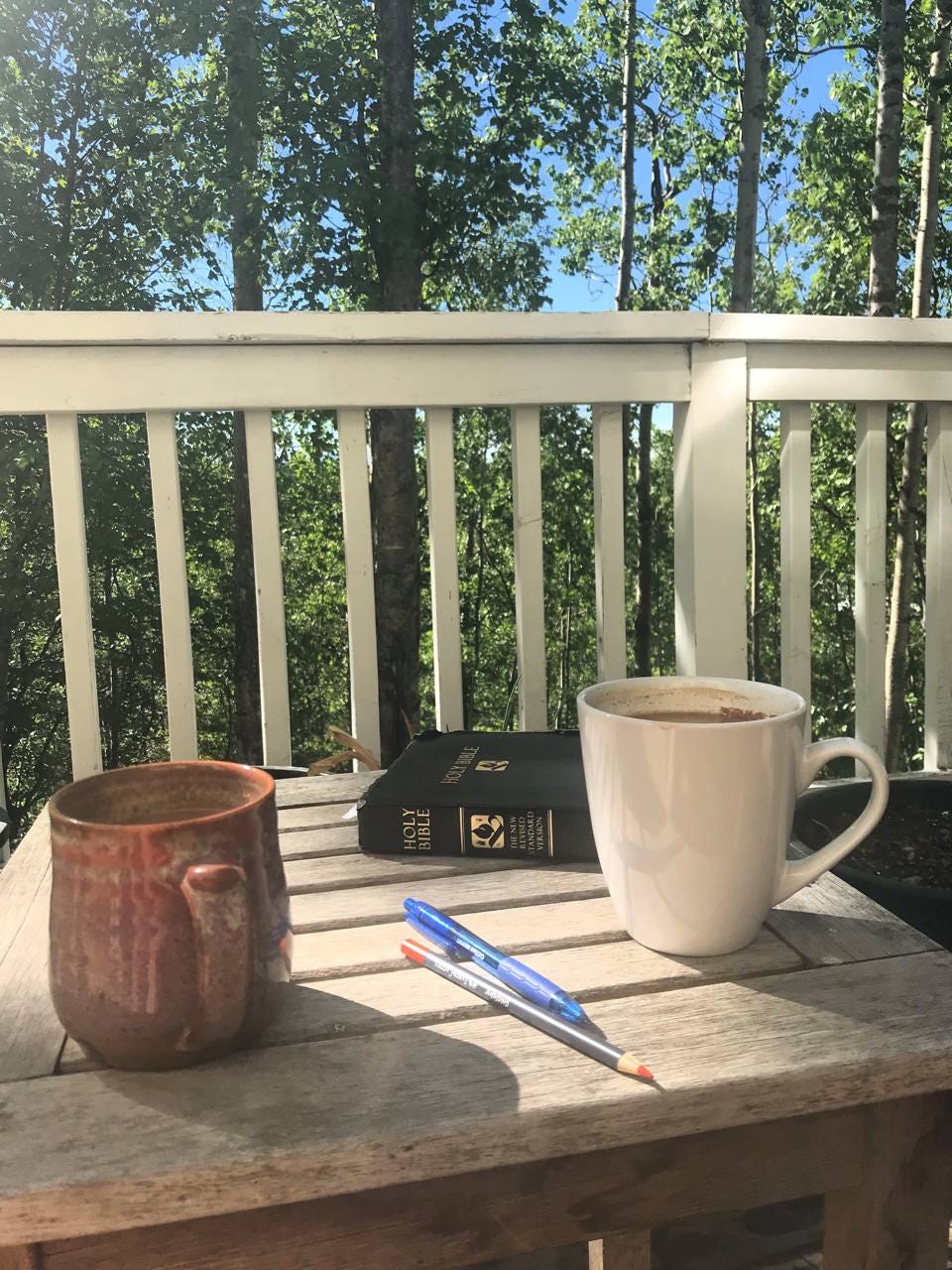
On the blue couch with the Bible and coffee, my eyes go over the verses and sometimes the Lord tells me something that has nothing to do with the chapter at all, but about the day ahead or a situation I’ve been praying about. And this easy; it actually asks less of me than really studying, unraveling Greek or Hebrew, or wondering what a passage says in a different version. Because in these times, He gives answers, not more questions.

Also, this boring stuff sets the stage for the exploits later. I’m no Old Testament scholar, but it was a massive feat to organize this group of millions in their community functions, and it was not glamorous work. I need to see this boring stuff because my own life is riddled with the expensive, complicated mundane, and I need perspective.

What I mean is, it’s easy to be passionate and excited about Big Endeavors. There’s a mission or a battle ahead? Great! Let’s train, prepare, equip, invest, do all the things! Yes, it’s hard, but this is an adventure! It’s ambitious! Gutsy! We’re doing it for a cause!

It’s one thing to raise a bunch of money because you’re adopting or going back to school or launching a business venture or becoming a missionary or doing some other wild exploit. It’s another thing entirely to need roughly the same amount of funds to crown a broken tooth, cover eye appointments and glasses for three people, and replace your home’s heating system which has already been repaired numerous times.

These are not the escapades that inspire us. This the boring maintenance that keeps body and soul – er, house – together. And we need answers here too, not more questions.

So everything we read doesn’t have to be wars and drama and taking the land, just as everything we do at home isn’t always birthday parties and pizza nights. We need routine maintenance, like laundry and making beds. We need the calm to train our attention spans with books and tasks that are less flashy. So these parts in the Old Testament will grow us, if we let them.

My old NRSV talks about ancestral houses and the different services performed by clans, and it is of course not referring to physical houses, but generational giftings and callings. Or, deeper, it’s about the atmosphere and assignments of our families – including our church families.

This stuff seems dry when we read it, but we all have a particular culture within our homes and tribes we run with. Your ancestral house might excel in music and theatrical creativity; maybe everyone knows the hymnal from front to back. Some groups are quiet and reverent, others are loud and hilarious. Some of us have powerful deliverance ministries or community outreaches, but we still aren’t sure how to use the word “liturgy” in a sentence.

In chapter 4, this verse stopped me:

This is what they are charged to carry, as the whole of their service…

– Numbers 4:31a

You and I, individually, are charged to carry particular things as our whole act of service, too. They are specific things, not everything; we are charged to carry whatever the Lord has called us to. Not what He’s called our neighbor or pastor or best friend to.

Still in Numbers 4, in verse 47 it talks about “…everyone qualified to do the work of service and the work of bearing burdens,” and it’s referring to the tent of meeting. But as I’m reading it, the Lord is talking to me about my work and service, and how not wanting to and not being qualified are different things. Because here, too, is the discipline and obedience that bear fruit.

This is where the battles in our hearts start – and if we follow through, it’s where they’re won.

I don’t always want to do the work of thinking hard, or counseling and discipling, or helping my 20-year-old daughter in the bathroom. But those are things I am charged to carry.

On the daily, I tend to feel scattered and spread thin: kids, family, ministry, business, writing, Gaining Ground, Homesteaderly, homeschooling, personal study. What am I focused on? Aren’t we supposed to have a niche? Everyone says so. At least, all the self-promoting experts on the internet do.

But as I’ve been in Numbers, I’ve also been in Proverbs 31 for weeks, rereading, letting it sink into me. I never seem to get enough time in it, so this time around I decided to linger. And as I’ve gone over it again and again (not the whole chapter, just the last 20ish verses), I’ve realized that this woman didn’t fit into tidy, clean boxes, either. She, too, was all over the place: family, business, community, creativity, caring for her household and also for herself.

Huh. The world tells us to focus and “niche down,” but that is not how life works for many of us. Most of us are not charged to carry just one or two simple priorities. When we seek the Kingdom first, our passions run deep and wide. We scatter seeds everywhere.

In the wide broadcast, it seems like it’s taking forever to see fruit come of it.

Look at the plant, Love, He says.

About a year ago I repotted and hung this pothos; it had only two stems and about four leaves. Now it has fourteen.

All I’ve done is water it, and wait.

And this is where we see exponential growth: small steps of obedience, plus time and patience.

Steadiness and grit. Backbone and perseverance. Constancy and equanimity. On their own, they’re just stubbornness. But leveraged in obedience toward our callings, they multiply into something beyond our expectations.

I didn’t have a grid for that, we think.

And He says, That’s why I’m giving you one.

Our small acts are laying down lines, creating a platform that our future exploits are built on.


Subscribe here for free to receive these posts directly to your inbox. If you’d like to support our ministry, you can give here. Thanks!