dealing with the mess

A week ago, a large bag of wooden clothespins showed up on my desk and it’s been squatting there ever since. And it wouldn’t be a big deal except someone opened the bag, which means that over the last several days the contents gradually hemorrhaged everywhere. A variety pack – dozens of clothespins, all different sizes, decorating the surface of my desk.

The clothespins need to go into a big jar, but all of the jars are downstairs in the kitchen, and why they didn’t stop there first to deposit themselves properly is beyond me. Why I can’t remember to take them back downstairs to the kitchen during any of my daily 138 trips up and down the stairs is also beyond me.

dealing with the mess: what we do, what God does, and what He can't do for us

I do love having a clean desk. But aside from moving everything to the floor (my normal method of cleaning it in a hurry) I have yet to figure out how to keep it that way.

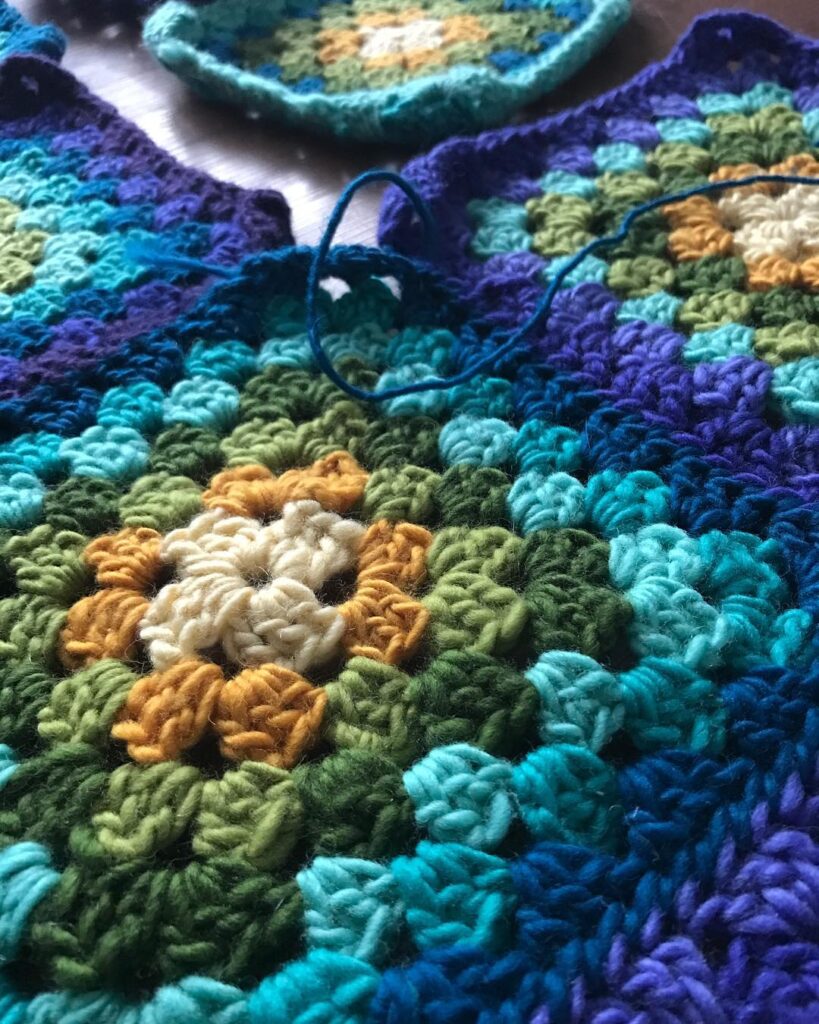
The desk is smothered under stacks of books as I type this: notebooks, school books, research books, books I’m reading. Keeping all these company are pens, sippy cups, and other detritus constantly trafficked in and out of the office, aside from the aforementioned clothespins sprinkled everywhere. Also, there’s a half-emptied basket destined to become yarn storage that I’m planning to move to the bookshelf, which will give me more surface area on the desk. But that will have to wait, because it’s currently storing Knightley, instead.

dealing with the mess: Knightley in a basket

And just to be clear, when I say “stacks of books,” the word stacks should be interpreted loosely. Very loosely. As in, some books truly are placed on top of each other in a (mostly) congruent, vertical direction. But others are…um…just overlapping, sort of like a giant, bloated, bookish version of Jenga.

It’s not just my mess – you heard me mention the sippy cup, right? – but it is my mess to take care of. No one can clean it for me. Even if they wanted to, I have to do it myself. God help them if they try; hell hath no fury like a writer-mama (or wife) who can’t find the stack of books she needs to pull citations from that took her half a day to round up from all over the house in the first place.

Of course, it would help if people would stop spewing their mess in my space. I have my own junk to deal with, but all we sinners share the love, and we have a tendency to give each other more to forgive and clean up. We all add to each other’s messes.

Oh, wait – I was talking about physical messes. Not the other kind, when we are hurting and we hurt others, and the mess goes everywhere, and it’s so much harder to clean up than a hundred scattered clothespins.

May grace and peace be multiplied to you in the knowledge of God and of Jesus our Lord.

– 2 Peter 1:2, ESV

Finn is on the floor by my feet, putting together a puzzle. He knows he can play up here while I’m working as long as he’s quiet. And our versions of quiet are two different things, but normally he’s fine.

And usually Knightley is in here, and normally she’s fine too, except when she walks across the laptop and makes me bless the inventor of the Undo button, so help me.

The mess the kids leave on the floor is usually theirs to clean up. But when the mess bleeds onto the desk, with all my own stuff in various states of organization and disarray, it becomes my job to take care of. Mostly, I take care of them by not allowing them to be made in the first place. Boundaries, rules, whatever you call it – the desk is my space and the kids have mostly learned to respect that.

Prevention is the easiest way to take care of everything, right? If we could just keep the hurtful words, the hard feelings, or the negative habits of others out of our headspace, life would be so much easier. I have my own thoughts to take captive, and that’s a job of its own to deal with. But once those other things penetrate, they’re my problem, too.

Oh, wait, I was talking about physical messes. I keep forgetting.

It would be easier if it none of it ever happened in the first place – the physical or emotional messes – but the world is a bloody battlefield. It would be easier to just not enter the fray, but we can’t prevent everything…and really, would we want to? We’re made to help each other navigate the mess.

But we have to be invited to do so. And if the mess is ours – whether we made it, or we just inherited it and now it’s all over our space – we have to be the one to initiate the cleaning.

I read this verse a few weeks ago and haven’t been able to get it off my mind:

The LORD your God is in your midst, A victorious warrior. He will exult over you with joy, He will be quiet in His love, He will rejoice over you with shouts of joy.

– Zephaniah 3:17, NAS

Most versions of this verse end with “He will rejoice over you with singing” but when I read this version and the phrase “shouts of joy,” the Lord told me something new.

When do parents shout for joy over their children? He asked me.

Well, I thought, parents shout for joy when they see their kids achieve – when they succeed, when they score a goal, when they win something big, when they hit a milestone. We cheered over Kavanagh getting his first tooth, and we’re ready to whoop and holler when he takes his first steps.

But as adults, all of our success, achievement, or milestones are things He does for us, and through us. We know we’re not doing them on our own. So why would He shout for us when He’s the one doing the work?

I don’t, He said. I shout for joy over you when you do something I can’t do for you.

What can’t You do for us? I asked.

I can’t choose surrender and obedience for you, He said.

I can’t choose for you to clean up your mess. I can help you do it, but you have to want it first.

I can’t choose for you to stay steadfast in the battle, still fighting and standing, in spite of everything around you. I can want those things for you, and I can help you through them, but only you can choose to move forward in growth, instead of retreating.

That is what I shout for joy over. 

 For this very reason, make every effort to supplement your faith with virtue, 

and virtue with knowledge, 

and knowledge with self-control,

and self-control with steadfastness,

and steadfastness with godliness, 

and godliness with brotherly affection,

and brotherly affection with love. 

For if these qualities are yours and are increasing, they keep you from being ineffective or unfruitful in the knowledge of our Lord Jesus Christ.

– 2 Peter 1:5-8, ESV

Just as the main battle we fight is less about violent movement and more about steady abiding, the victories He shouts over in our lives are the small-but-huge efforts that come in the quiet:

When we choose truth over rumor, or grace and forgiveness over hard feelings.

When we address our own bad habits, and choose healthier thought patterns.

When we choose to pray and thank God even when things look ugly.

When we tackle the hard-but-necessary conversation when it seems easier to let it slide and pay the consequences later.

When we push forward in doing the good things: Gratitude, repentance, teachability, honor.

When we stop to hug the kid, kiss the spouse, and clean up our mess…even if someone else started it.

He can’t wait to for us to take those first steps, and to cheer us on as we keep moving forward. It’s our obedience, and integrity, and gritty steadfastness that He shouts over.

dealing with the mess: clothespins

_________

This is an excerpt from ABIDE volume 6: Surrender to Win, available here.

the point of the story: how journaling is a healing work

I looked for a pen but there were none on my desk – none, except for the light blue one which is too pale for journaling, and the .005 drawing pen I have a crush on and am afraid to use up. But Vin keeps a bunch of pens in a mug on the shelf in our room, so I went there and found the motherlode of blue pens:

That’s mine, and that one’s mine, and oh yes, that one’s mine, too. How did all of these get here?

the point of the story: how journaling is a healing work

When I finished pilfering it, the mug was still full of green pens – his favorite – and some black ones, but he knows I won’t touch black pens unless the end of the world has arrived, or blue pens no longer exist…which might be the same thing.

Someday my great-great-great grandkids will go through all my journals, and they’ll find a ridiculous number of entries that include complaints about bad pens, missing pens, or favorite pens running out of ink. Some of those entries start like this:

A quick minute with an unfavored pen, waiting for Reagan to finish up on the potty at bedtime. (In terrible, thick black ink.)

Well, this pen might not work. (Ink fading on the upward strokes.)

Some quick thoughts with an ugly pen – my kingdom for some blue ink – before falling asleep. (There is no curse in Elvish, Entish, or the tongues of men for how I feel about black gel pens.)

Aaand we have a wonderful blue-inked pen! I found it hidden in the buffet drawer.

Other journal entries have remarks like these in the middle:

Wow. That was atrocious handwriting. Partly the pen’s fault – the good ball point is over at my desk. (Black ink should never be used on a particularly emotional day.)

And some entries end like this:

See? Handwriting. I really should find a better pen.

I think I despise this pen for journaling.

Aaand I hate this pen.

Journaling for me is like mental housework – twice this month I only wrote a short paragraph before some interruption hit, and then it was almost two weeks before I even touched it again. Once I did, I dove in to grasp at all the emotional and spiritual clutter that had accumulated over those weeks to see what would emerge. Like neglecting laundry for weeks at a time, when I finally dug through the piles and straightened things up, I found treasures I thought were lost a long time ago.

Journaling is good for both normal tidying and also the occasional necessary deep cleaning. Writing is a healing work.

When we started writing full time I thought I’d have more time to journal, but that hasn’t been the case because most days, all my writing time is done at the computer. But other times I end the week with journaling and get to start the next week that way, too, and it’s times like those when I realize the weekend in between sometimes feels no longer than the thin line separating the two entries.

But there’s so much good to be had from sitting down with a pen and lined pages to force our thinking to slow down long enough for our fingers to catch up with. It gives us the time we need to draw deeper things out of ourselves that we can’t always access while just typing – or worse, texting.

If those great-great-great grandkids ever go through my journals, they’ll also find that my published books left a lot of things out. Not every behavior was mentioned in Upside Down, and not everything God told me during that period was divulged in Oh My Soul.

And in the book I’m working on now, not every conflict, attack, and catastrophe that occurred during our adoption process and the first few years afterward is detailed out, partly because it’s not meant to be some dramatic exposé. But mostly it’s to protect the guilty, and the innocent, and the misunderstood…and sometimes those are the same people, but not always.

I wrote a while back about the struggle to tell our story when it overlaps with the stories of others. And now, several months later, I can see that the process of filtering our story has distinct layers. First, pull all the material that might work, then go back through all of that and run it through a finer sieve. Whatever’s left after all the sifting is, so far, what gets to stay. Taking the time to work through that process generates an intuitive sense of what fits and what doesn’t.

The significant stuff that’s left out isn’t eliminated because it had no impact on the story. It’s left out because it’s not the point of the story. And sometimes (often) the things that were meant for harm don’t deserve all the attention the enemy wants them to have.

I couldn’t see it when we were in the middle of it, but now I can look at the progress with a bigger, broader perspective and see the good that came (and is still coming) from awful circumstances, from walking through a season of darkness and brokenness. And part of the good that comes from it is maturity and equanimity to see that those harmful issues, circumstances, and people were never the focus of our story, no matter how much they overshadowed it.

Those hard things were just ingredients, or seasoning, that flavored that time of our lives. Their effect was like bay leaves in soup – they influence flavor, but they’re indigestible. We’re not meant to internalize them. So we take them out before someone chokes on them or ingests too much of their influence.

And as I work through this project, that is one of the other ways that writing is healing me.

If these books…represent the new memoir at its best, it’s because they were written with love. They elevate the pain of the past with forgiveness, arriving at a larger truth about families in various stages of brokenness. There’s no self-pity, no whining, no hunger for revenge…We are not victims, they want us to know. We come from a tribe of fallible people, prisoners of our own destructiveness, and we have endured to tell the story without judgment and to get on with our lives.

– William Zinsser, Inventing the Truth: The Art and Craft of Memoir

We’re only meant to be an open book to God. Even our spouses can’t be expected to handle it all – and if you want to argue this out with me, first tell me how opening fire with all your unfiltered thoughts and criticisms is working out for you.

the point of our story: how journaling is a healing work

This stack is my current required reading for writing memoir, as opposed to the most recent crappy memoir I read – which I won’t call out here, but you can easily find it if you poke around my Goodreads page. And actually, one of these is a wild card, though it’s a highly recommended one. (I have known such wild cards to be terrible, but not often. See above reference to crappy memoir.)

The truth is that memoir writing, like every other kind of writing, comes in both good and bad varieties. That’s the only standard that matters. Whether the authors of certain notorious recent memoirs ought to have revealed as much as they did, breaking powerful taboos and social covenants, isn’t finally the issue. The issue is: Is it a good book or a bad book?

– William Zinsser, Inventing the Truth: The Art and Craft of Memoir

These are the kind of books you shouldn’t read on your day off because you catch yourself putting notes into your phone for Monday, and those notes turn into sentences and the sentences turn into paragraphs, and a few minutes later you give up, grab your pen and notebook, and start working in earnest.

And if you read Vin’s recent post, you know how dangerous that is. Those weekends, you know, are sometimes as thin as the line between two journal entries, and time for rest and Sabbath is important. So I might be at risk of having my books confiscated for the weekend.

Which, come to think of it…might be how I lost all those blue pens, too.

carrying fire: when obedience takes us outside the comfort zone

The Lord gave me this amazing idea, and I was so excited to follow through…until it was time to actually do it.

As responsible people do, I came up with a lot of excuses. I hadn’t showered the night before; my hair was a mess and in no condition for video. And, as writers do, I found the most productive ways to procrastinate. Suddenly, cleaning my desk was of utmost priority. I put away the tape and scissors, filed a few papers, and stacked the books. Considered sweeping the floor, or washing the windows. I mean, it was that bad.

Add all of this to the fact that I have the technical skills of a Chihuahua.

So when the Lord asked me to start praying online every week – which, as I type it, sounds like the easiest thing ever and nothing to be intimidated by – I had no idea what was the best way to go about it.

carrying fire: when obedience takes us outside the comfort zone

When I finally did do it, it was in two parts – first, in hands-free mode, until I ran out of space and had to add the rest in selfie mode after figuring out how to splice and trim the video (gah). Because, like a Chihuahua, I told you.

Until I come, devote yourself to the public reading of Scripture, to exhortation, to teaching. Do not neglect the gift you have, which was given you by prophecy when the council of elders laid their hands on you. Practice these things, immerse yourself in them, so that all may see your progress.

– 1 Timothy 4:13-15, ESV

But the opportunity to pray with and for anyone who wanted to join me on a weekly basis was a no brainer. Until my brain kicked in and started making excuses for me, of course.

Isn’t that the way it is with going forward, though? He calls us outside the comfort zone, but somehow we’d rather put it off or just not bother because we don’t understand how much breakthrough is at stake in going there.

Too risky. Too scary. Too unfamiliar. Too unknown.

I’m confessing to you right off the bat so you know you’re not alone in this. I don’t usually think of myself as a risk taker but when I look back at my life I realize I am one – but little things like praying online can still make me pause and squirm. Sounds stupid, yes?

We ask Him for direction, to light our way, and often the way He does that is by lighting a fire under us. We often respond by extinguishing those fires in any number of ways instead of having the boldness to pick up the fire and carry it.

We are our very own wet blanket, smothering our own growth.

We pooh-pooh it, telling ourselves it was just a silly idea and not Him at all, when in reality these steps of obedience are the key to unlocking answers we’ve been searching for.

Or we put it off. And our delay, like most symptoms of laziness, makes us work harder and longer in the long run.

And sometimes we give up before we start because it won’t be perfect, and we can’t control how people will respond to us. So we sacrifice our breakthrough on the altar of perfectionism and control – which is really just a monument to ourselves and our pride. If that altar were made into an idol, it would look like us.

But we usually need to accelerate our pain to accelerate our progress, so we might as well jump in and start doing it, whatever it is.

Starting that business. Filling out the adoption paperwork. Making that phone call. Researching that ministry opportunity. Writing that book.

Going on that mission. Taking that leap.

Saying yes.

Once the words leave your lips, they no longer belong to you. We have a monopoly only on our own thoughts. The act of speaking is not a conquest, but a surrender. When we open our mouths, we are sharing with the world – and the world inevitably interprets, indeed sometimes shifts and distorts, our original meaning.

– Frank Luntz, Words That Work

We wrestle with the feeling of exposure and tension after being vulnerable and laying it all out there, in teaching, writing, speaking, mentoring, moving — however you are leading others as they watch you follow Jesus.

But it turns out, the best way to go about anything is usually forward.

Going. Doing. Obeying. As opposed to stalling, fretting, and backsliding. Because life has a current to it, and every moment we are either moving further up and further in, or drifting back downstream. There is no neutral.

What answer can human intelligence make to God’s love for the world? What answer, for that matter, can it make to our own love for the world? If a person loved the world – really loved it and forgave its wrongs and so might have his own wrongs forgiven – what would be next?

And so how was a human to pray? I didn’t know, and yet I prayed. I prayed the terrible prayer: “Thy will be done.” Having so prayed, I prayed for strength.

– Wendell Berry, Jayber Crow

There is a cost to disobedience, and it is much higher than just going outside our comfort zone.

He drove out the man, and at the east of the garden of Eden he placed the cherubim and a flaming sword that turned every way to guard the way to the tree of life.

– Genesis 3:24, ESV

When we move in obedience, we go in freedom – bringing light, making progress, carrying His Presence as fire. But when we are forced to move by our own disobedience, we are pushed out in slavery.

The truth is, we move outside the comfort zone either way.

When we say yes, facing our fears and excuses, we’re no longer afraid of what the fire will do to us. We are invincible to burning when we learn to carry it.

____________

This is an excerpt from ABIDE volume 5: Obedience to Move Forward, available here.