Kav is sitting at the counter, staring blankly at his toast.
“The air makes my eyes blink,” he said.
I know, kid. Mornings are hard. The air makes my eyes blink, too.
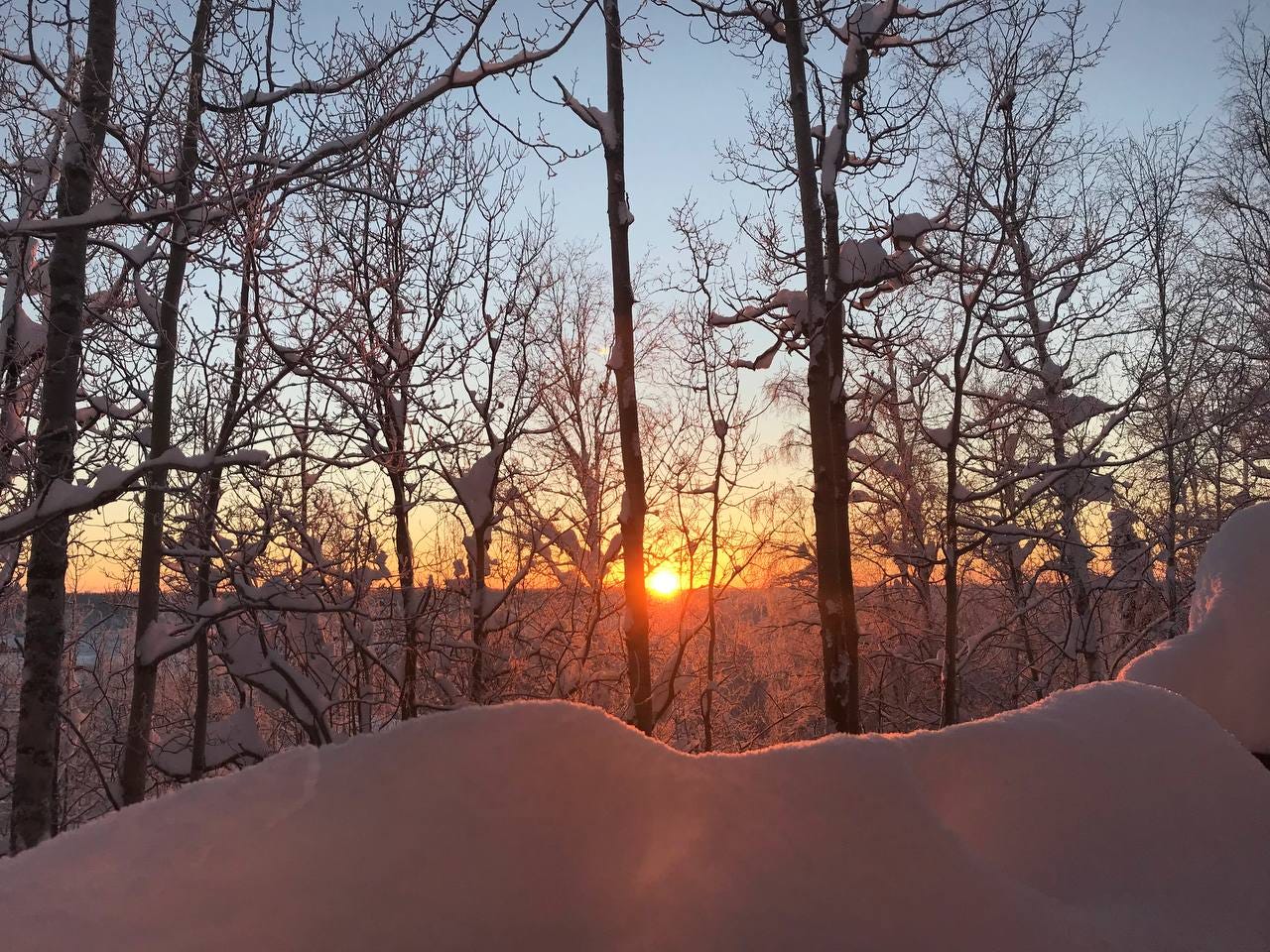
The sun is rising earlier in the mornings now and setting later in the afternoons, and there’s a reckless feeling of freedom and hope that goes along with it after the shortest, darkest days of winter. We still have two months of snow left but we’re on the downhill slope of it and picking up steam.

You know what else is picking up steam? Crazy events around the world. I mean, we thought 2020 was nuts, but every year since seems to have taken it as a challenge to outdo the buffoonery of the one before. Talk about things that are hard and make your eyes blink: What can you do about a government that detonates chemical weapons in the heart of its own farmland?
It’s expected to affect at least 10% of America’s water supply. Fish, livestock, and pets are dying, people are getting sick, and many are afraid they’ve lost their homes forever. The mainstream media isn’t talking about it and has been trying to distract us with aliens instead because they think Americans are stupid (and for once they’re not completely wrong). It’s Look Here, Not There, because otherwise people will notice real things that are happening, like names being released of those who visited Epstein’s pedophile island, the beginning of World War 3, and, oh yeah, how the government has drastically escalated the sabotage of the US food supply.
But you won’t know about most of that if you’re getting your news from “the news,” which is exactly what they’re hoping for. Because, look! Aliens!
Since we do know, though, what can we do? How do we heal the land even while entities are actively trying to destroy it?
We can look at our own soil, and go back to the first things: We can pray. We can get in the Word. And we can get the Word out.
As for that in the good soil, they are those who, hearing the word, hold it fast in an honest and good heart, and bear fruit with patience.
– Luke 8:15
It’s not common anymore, but every once in a while you hear about land that is so fertile you just have to throw seeds at the dirt and abundant, massive crops spring out of it. Giant tomatoes. Huge pumpkins. I’m not talking about the stuff made from junky, synthetic fertilizers; I’m talking about the good soil that has been nurtured and fed through cycles of work and rest. You can practically throw pennies into the dirt and dollars burst out of it.
It’s similar to how there have been seasons that were uniquely favorable for particular vocations or endeavors. You know, those times in history when something was almost a no-fail prospect because business was so good or demand was so high, the connections came together flawlessly and opportunities aligned. Those who raked in the windfall may have taken credit for the massive success, but they really only happened to be placed into it by the grace of God since, in the given circumstances, it would’ve taken a very special kind of idiot to fail.
And this is the time we are living in, for intercessors. And that means you who already know you are intercessors, and also those of you who are tempted to tune me out right now because you don’t think I’m talking about you. But I am.
Other evils there are that may come; for Sauron is himself but a servant or emissary. Yet it is not our part to master all the tides of the world, but to do what is in us for the succour of those years wherein we are set, uprooting the evil in the fields that we know, so that those who live after may have clean earth to till.
– J.R.R. Tolkien, The Return of the King
You know what makes fertile soil? Lots of manure, but it has to be stewarded well. And that’s a good picture of our calling in these days.
Our hearts are to be the fertile soil, where situations drop in and we bear fruit no matter what. And that can feel heavy, like striving, unless we remember that we only bear fruit through abiding – and then we realize it is less about doing and more about being.
We are to be in proximity to the Lord, and not as a passive Yes-of-course-God-is-always-with-me knowledge, but as an intimacy that feels the impact of Someone’s presence. You know how when someone walks in the room and you immediately look over because you felt a shift in the atmosphere? You know how when someone across the room looks at you, and you sense it, and you look back? That’s the kind of proximity we’re talking about. We are abiding with the One who changes the atmosphere. His eye is on us, and we are looking back.
Now that we’ve established that, we can move on to the big question we couldn’t answer before. So, here it is:
How can we pray when events feel too big, too hopeless? How can we heal the land?
One obvious answer is in this verse:
…if my people who are called by my name humble themselves, and pray and seek my face and turn from their wicked ways, then I will hear from heaven and will forgive their sin and heal their land.
— 2 Chronicles 7:14
And that’s a great start. But if we’re honest, it’s maybe a little too familiar to some of us and way too unfamiliar for the rest.
So what else should we know? How can we pray? How did Jesus equip us for such a time as this?
I read the story of Jesus and the Centurion to my kids this week. You probably know it; the Centurion’s servant is sick and he asks Jesus to heal him, so Jesus offers to come to his house. But the Centurion says that’s not necessary because he understands how authority works: You tell someone to do something, and they do it. There’s no question, no wondering if they’re going to obey, it’s as simple as one number following the next. The man was a leader over a hundred soldiers (that’s what a Centurion is) and he knew what he was talking about.
Keep that in mind as we look at one of the wild things Jesus said:
“Truly, truly, I say to you, whoever believes in me will also do the works that I do; and greater works than these will he do, because I am going to the Father. Whatever you ask in my name, this I will do, that the Father may be glorified in the Son. If you ask me anything in my name, I will do it.
– John 14:12-14
Why did He say we would do greater things than He did? I’m not totally sure, but I think at least partly it was because He knew we would be living in days that required greater things. In Biblical times they had corrupt leaders, too, but they didn’t have governments detonating chemical weapons on their own land and poisoning entire water systems. They didn’t have our dependence on electricity and other utilities. They didn’t have the threat of nuclear war.
So let’s look at a few things Jesus did that we may be able to apply to greater things in prayer:
- He cleansed the Temple of the money changers who were misleading the people.
- He paid Peter’s taxes with a coin from a fish’s mouth. Cheeky move.
- He did many things multiple times: raised the dead, fed the multitudes, cast out demons, healed the sick, made the blind see, made the deaf hear, made the lame walk.
- He calmed the seas. And this is interesting because in Matthew this story is shared just ten verses after the story of the Centurion that we just talked about, and He asks, “Why are you afraid, O you of little faith?” Sorta like He was asking, Weren’t you paying attention? You need to start applying this.
And we do, too.
We can pray and direct wind currents, and command contaminants to be gone. We can take authority over the principalities and powers that have corrupted our churches and institutions. We can pray purity into contaminated water. We can pray for eyes to be opened and evil to be exposed. We can pray for the deaf to hear and people to come to know Jesus like never before. We can take authority over our food supply and cancel the works of the enemy who continues to sabotage it.
That same enemy will hiss at you about how foolish this is. His snarling accusations are a cover for the terror he lives in because he knows what happens when God’s people pray with authority. He knows what happens when people know the Word and say “It is written.” He knows what happens when people stop worshiping their own comfort and what other people think about them, and start doing the things God tells them to. He knows he loses ground fast. The fields are white for harvest.
For the foolishness of God is wiser than men, and the weakness of God is stronger than men.
For consider your calling, brothers: not many of you were wise according to worldly standards, not many were powerful, not many were of noble birth. But God chose what is foolish in the world to shame the wise; God chose what is weak in the world to shame the strong; God chose what is low and despised in the world, even things that are not, to bring to nothing things that are, so that no human being might boast in the presence of God.
– 1 Corinthians 1:25-29
Not only did Jesus say we will do greater things than He did, but He emphasized twice right after that that when we ask in His name, He will do it. This isn’t about us being in authority over Jesus; this is about us being a conduit for His authority. He is eager to grant prayer that is aligned with His will. So it only becomes a question of knowing His will, and that goes right back to abiding and being in His word.
So now let’s look again at that scripture about healing the land, because things are starting to come together:
…if my people who are called by my name humble themselves, and pray and seek my face and turn from their wicked ways, then I will hear from heaven and will forgive their sin and heal their land.
— 2 Chronicles 7:14
Alright, we’ll take it one piece at a time: We are called by His name. We are humbling ourselves, unafraid to look foolish to the world. We are learning to pray and seek His face; we are in the Word and living in what it says. And we are turning from our wicked ways…wait, wait, wait.
We’re not that wicked, are we? Let’s put aside the obvious sins for a minute and consider: Have we worshiped our own ease? Have we abdicated responsibility and authority to others (like the government, or even church leaders) that we should’ve been doing ourselves? Have we slacked off in intercession? Have we thought “pray without ceasing” was a well-intentioned but unreasonable suggestion, instead of a clear command?
Ohhh. So maybe we do have some wicked ways to turn from. Maybe there’s more room to move.
The best time to do it was years ago, but the next best time is now.
The good news is it’s a fast repentance; no hoops to jump through, no paperwork to fill out, no waiting in line. Jesus, we’re sorry for worshiping what was comfortable. We’re sorry for waiting to intercede until the pain hit too close to home. We’re sorry for neglecting the harvest.
We’re ready to go back to the first things, so we can do greater things.
There is a move afoot, a reckless feeling of freedom and hope that is picking up steam. The One who shifts the atmosphere and has our eye is eager to teach us how to be better conduits of His authority, shaming the wise, and uprooting the evil in the fields that we know.