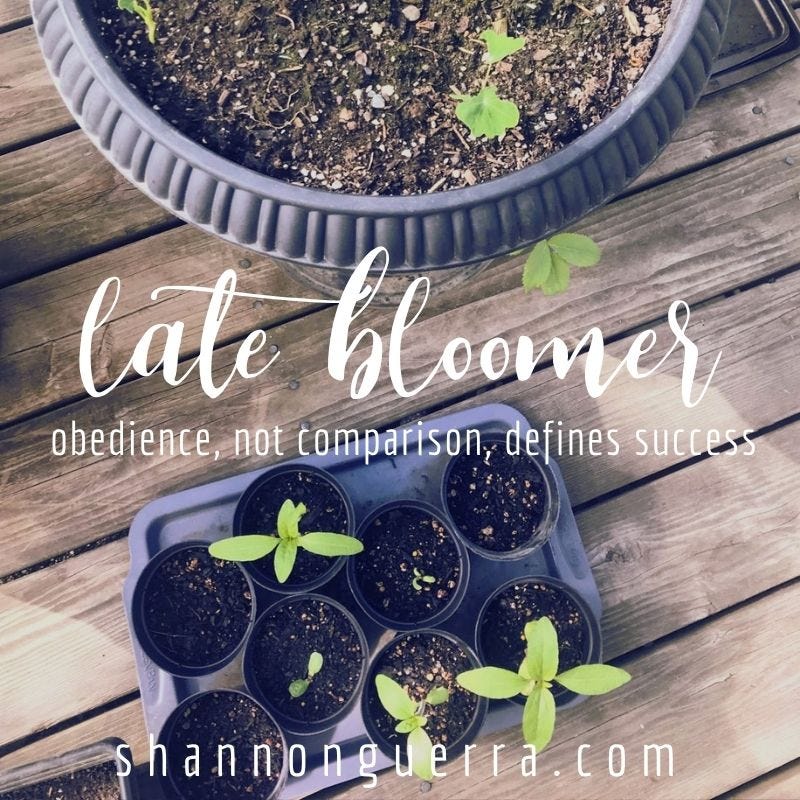
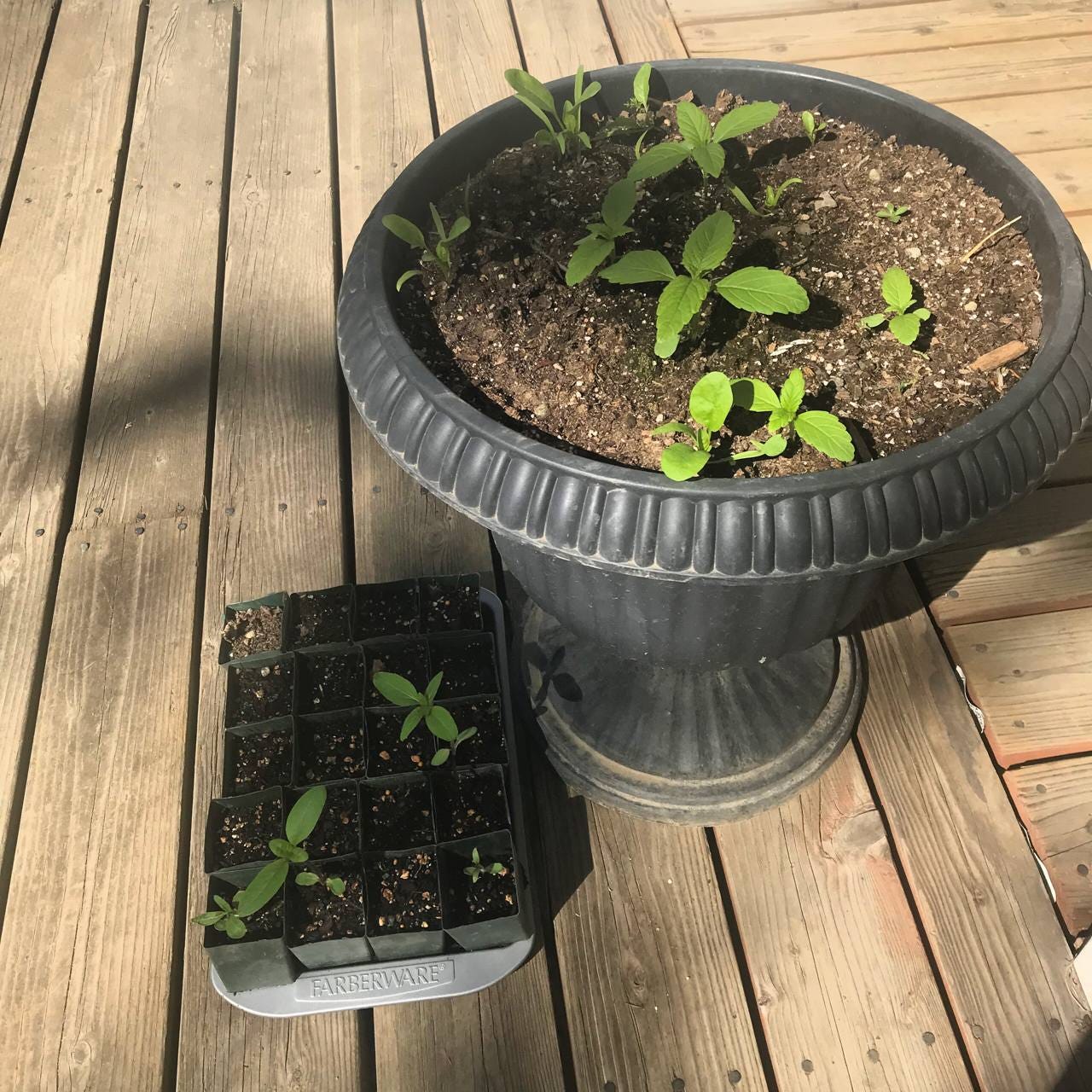
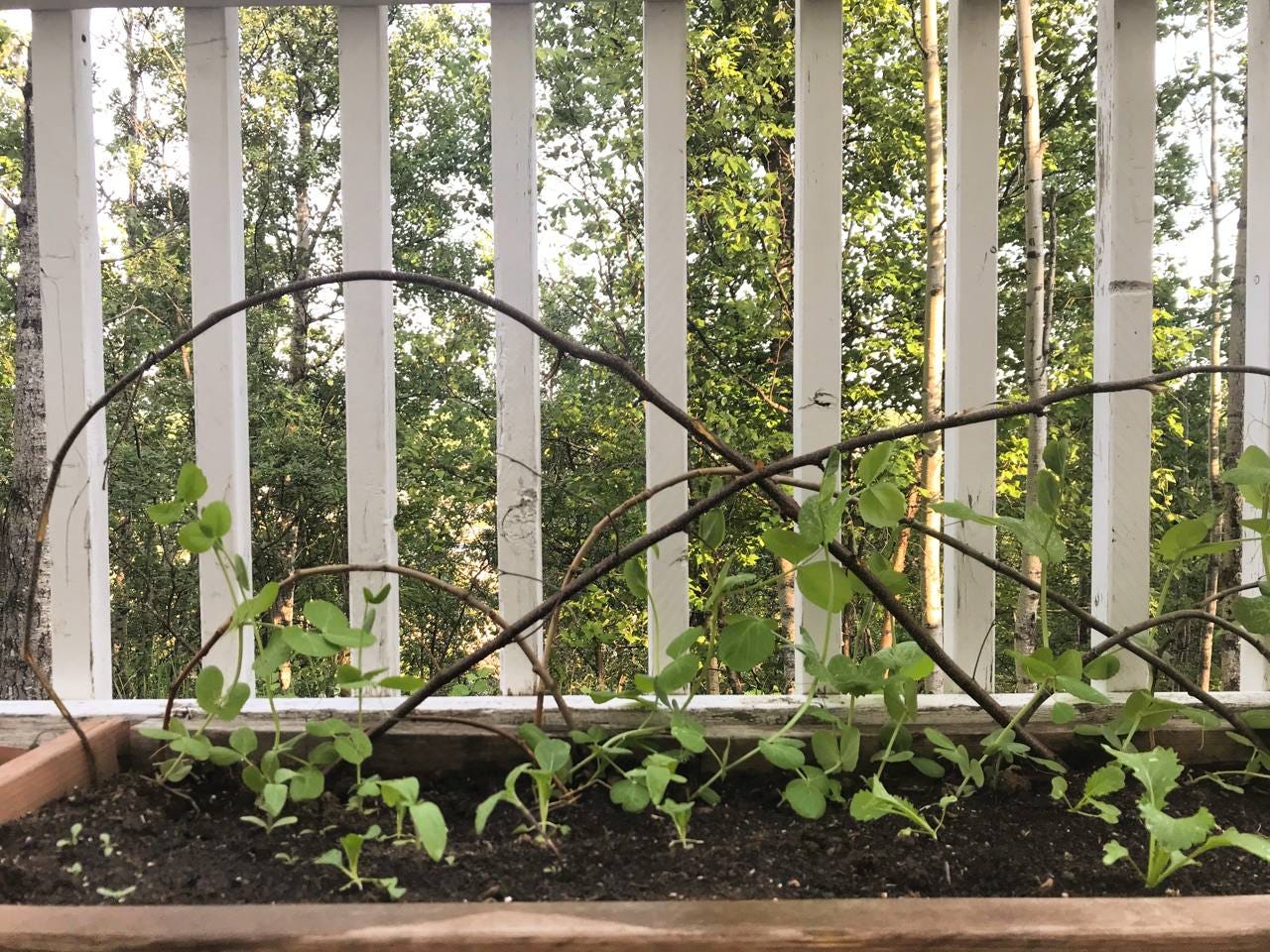
Middle of June.Leaves are full on the trees, the sky is blue, and the deck is covered in pots of dirt with various green things sprouting. Unless you know your plants, most of them aren’t even identifiable yet.
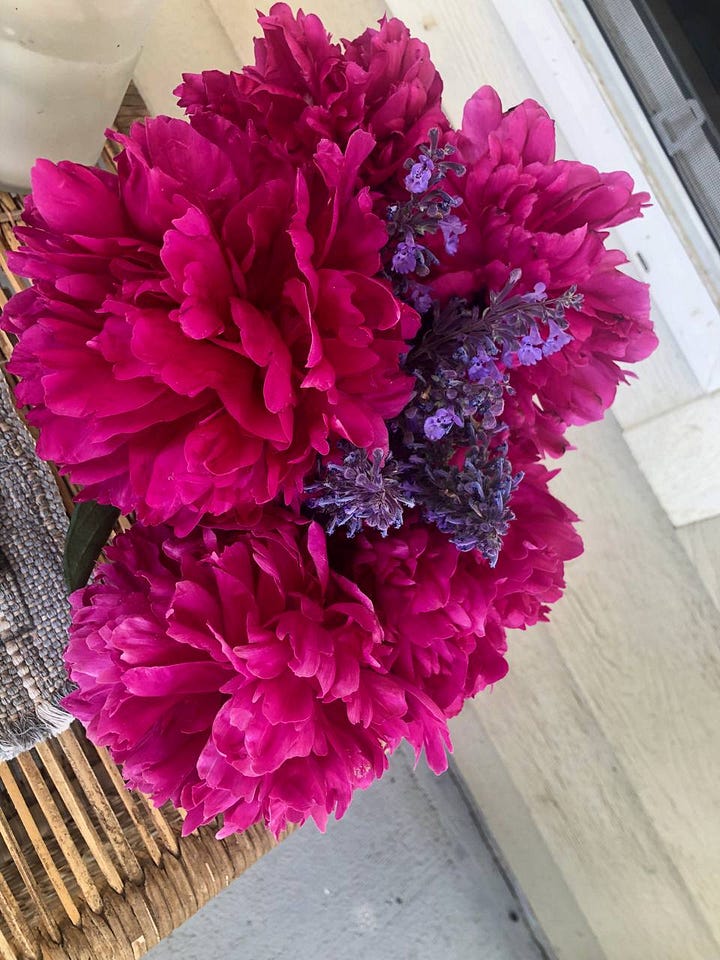
So when my best buddy in the States sent me photos of her glorious peonies in full bloom, it was a sign of things to come. Hers look like this:
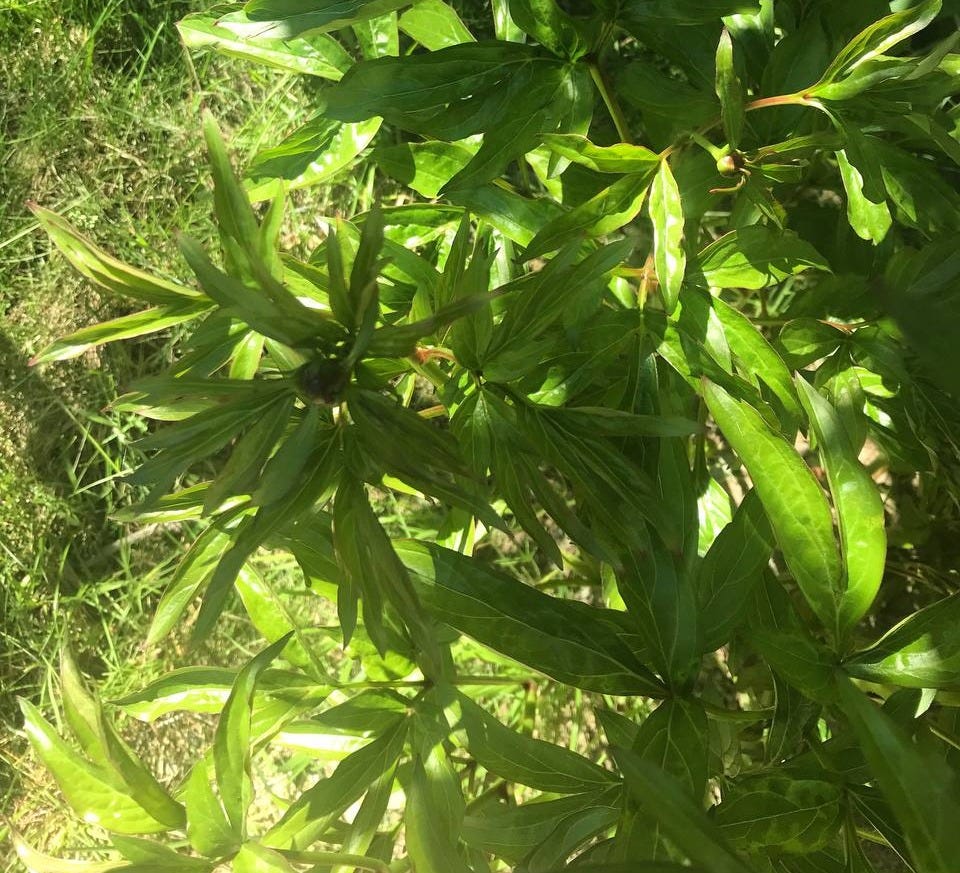
And ours currently look like this:
Do you SEE how gorgeous ours are?
Of course not. You can’t even tell what color they’ll be. (Light pink. Here.)
But it’s not time for them yet, because this is Alaska. Spring lasts for about two weeks, summer gets a late start, and peonies don’t bloom here until July. If you have anything impressive in your garden this early, you probably bought starts from a nursery.
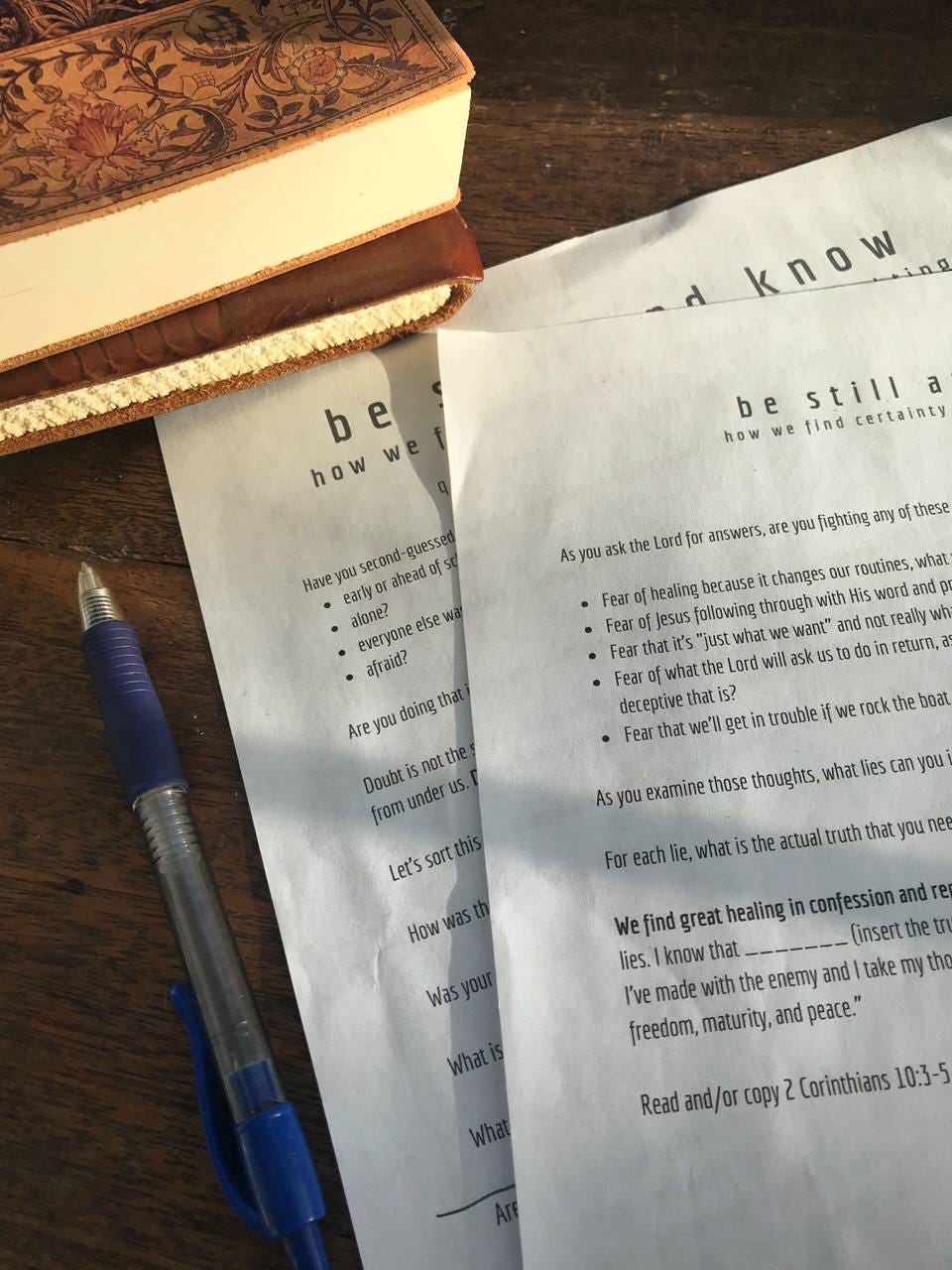
I shared this photo online last week with a scripture verse, and if you’ve read about some odd reactions I’ve gotten to those, let me assure you that at least the comment I got on this one was probably well meaning and wasn’t from a religious weirdo (I don’t think so, at least):
The comment was, “I feel sorry for your houseplant.”
My initial thought was, What houseplant? This is a photo of my desk. But then I looked again, and oh yes, there’s that little snake plant on the floor that has taken forever to grow from cuttings I got from a friend.
It does look sort of pathetic in the photo, but it wasn’t the focus of the post. In reality it looks almost as pathetic has five shoots that have grown up from the dirt, and only two of them show in the picture.
This plant is a slow grower and doesn’t like full sun. So it sits in the corner by my desk and quietly endures judgement and pity from strangers online, listening to Einaudi with me while I write.
But it’s doing its thing; it doesn’t need anyone’s pity.
It doesn’t edit, doesn’t create graphics, doesn’t check email or answer phone calls for me. But it’s not meant to do any of those things. It’s meant to sit there and grow, and there’s no deadline or competition.
It is doing what it’s meant to do, and minding its own business.
Or, can we rephrase that, and say it’s obeying its calling? Because it is.
Out of my distress I called on the Lord; the Lord answered me and set me in a broad place. With the Lord on my side I do not fear. What can mortals do to me? The Lord is on my side to help me; I shall look in triumph on those who hate me. It is better to take refuge in the Lord than to put confidence in mortals.
— Psalm 118:5-8
Lots of things (and people) look funny while they’re growing, and deal with the ignorant judgment from others who only take a quick look and have no idea what the full story is.
For the grace of God has appeared, bringing salvation to all, training us to renounce impiety and worldly passions and in the present age to live lives that are self-controlled, upright, and godly, while we wait for the blessed hope and the manifestation of the glory of our great God and Savior, Jesus Christ.
— Titus 2:11-13
It reminded me of a conversation I had at church last weekend, when someone asked me if I ever wondered about what other people thought of my special needs kids, and why they’re not healed.
And yeah, I have thought that. Vince and I have been in and led prayer ministry for years, and I have no doubt people have looked at us and wondered if we were really qualified to lead or minister or pray for healing because some of our kids’ issues have been super obvious.
But what’s not obvious is where our kids came from, or what they’ve been through, or how far they’ve come. In our local church, only two other people have seen our journey from the beginning.
How many times have we judged others when we had no idea how many hurdles they’ve already overcome?
How many times have we judged ourselves or others for not doing things that we’re not even meant to do? For not looking like everyone else? For not having the same timeline? For having a different starting line and growing season?
He it is who gave himself for us that he might redeem us from all iniquity and purify for himself a people of his own who are zealous for good deeds.
— Titus 2:14
We are not all organic heirloom seeds, planted in perfect loamy soil with a long head start in spring, watered on a scheduled timer.
Some of us are just doing the best we can in the clay and the climate we were planted in. We don’t have as much time, and halfway through the year it still looks like we just started.
But if you are obeying in that, it is enough.
We have this horrible habit of setting expectations and rushing timelines that have nothing to do with what God calls us to.
There are glad songs of victory in the tents of the righteous: “The right hand of the Lord does valiantly.”
— Psalm 118:15
So here, a word for the one who is looking at their progress and wondering why there’s still so little to show for it:
Your early growth doesn’t define your success. Don’t let someone else’s greenhouse beginning diminish your efforts from seed.
It’s not a competition until we try to make it one, and when we do, everyone loses. It’s better to just refuse that game, mind our own business, and obey in our own calling.
Your friend’s Pacific Northwest climate doesn’t diminish your Alaskan rate of growth. So don’t judge your June growth by your August expectations; you’ll know what color you are soon enough.
You are allowed to be the late bloomer. The dark horse. The sleeper whom no one expects, and then wakes with a roar.
I now have a crown. Not the fun fancy kind, but the tooth kind.
It was a two-hour deal, so I set up the next module in a course I’m taking and plugged in my headphones, hoping I could focus on a teaching about Ephesians while I (mostly) ignored what the dentist was doing.
After the first hour, phase one was done, and I removed my headphones as the dentist explained that we needed to wait a bit before finishing. They left me to my own devices until the next round.
My lecture had about twenty minutes left, so I started to put my headphones back in but realized I could no longer feel one side of my face.
Is this thing in, or not? I jabbed the headphone around, feeling nothing. My ear…is this my ear? Eventually I gave up and just used the other side.
It’s so weird though, not feeling your own body.
And later it was worse. As the numbness was wearing off, I felt a faint tingle and then a strong itch on my chin, but scratching it did absolutely nothing. No sensation there whatsoever, except the itch. I knew I couldn’t keep scratching; it didn’t do any good and I couldn’t trust myself not to draw blood.
All the restless, agitated feelings, and no idea what to do about them. This is a picture of life for some of us lately.
In that situation, I did all the things I could think of: essential oils, cold pack, held the mug of hot tea against my chin, prayed in tongues, wriggled my nose and made faces, whatever might distract me from the agony of an itch that couldn’t be scratched.
In other life situations, I have researched and studied, scoured listings and options, and prayed and prayed and prayed. Have had dozens, maybe a hundred conversations about recent events and life changing moves. And I have written thousands and thousands of words, but they’ve just sat in my documents. I could not trust myself to publish without drawing blood.
This is an odd season for us (maybe for you, too) where so many Big Things are happening, and some of them seem to be converging while others make no obvious sense at all. Emotions, thoughts, questions, and prayer flood into a bottleneck that has made it hard to write publicly because I don’t know where to start. Each thread seems so entangled with so many others. And many of them are none of the internet’s business.
(Ahh, the internet: That modern Colosseum where even Christians go to be entertained by the bleeding of their brothers and sisters.)
So I’ve sat at this computer for weeks trying to find a single theme among it all, among multiple documents and about twice as many subjects: Relationships. Community. Maturity. Honesty. Boundaries. Biblical literacy. Preparation. Willingness. Sacrifice.
Sometimes we just need to sit and wait until the numbness wears off. Until the debris settles, until the itch goes away.
Can we discipline ourselves to manage the frustration of not knowing what exactly to do, instead of thoughtlessly drawing blood? Because this is a major part of how we care for the body.
O our God, will you not execute judgment upon [our enemies]? For we are powerless against this great multitude that is coming against us. We do not know what to do, but our eyes are on you.
– 2 Chronicles 20:12
Really, isn’t that good for us? I don’t want human answers, I need God’s perspective. We need Kingdom solutions.
So can we wait and trust, and not default to the insecurity of self-protection mode until we hear His answer? Can we worship Him instead of our own entitlement and comfort?
For by the grace given to me I say to everyone among you not to think of yourself more highly than you ought to think but to think with sober judgment, each according to the measure of faith that God has assigned.
For as in one body we have many members and not all the members have the same function, so we, who are many, are one body in Christ, and individually we are members one of another.
– Romans 12:3-5
Here’s a word that some of us need to hear: God does not speak in knee-jerk responses. He doesn’t speak through trite cuts and condescension.
He did not protect himself at the expense of others. A bruised reed He will not break, and He will not rashly re-victimize the wounded.
When we do these things, we’re not acting like Him. We’re acting like someone who has no feeling for the body.
But Jesus knows how the body feels, because it is His body.
The eye cannot say to the hand, “I have no need of you,” nor again the head to the feet, “I have no need of you.”
If one member suffers, all suffer together with it; if one member is honored, all rejoice together with it.
Now you are the body of Christ and individually members of it.
– 1 Corinthians 12:21, 26-27
How do we care for the body when we know it’s vulnerable, and we’re in danger of drawing blood? Sometimes we are walking razor blades around people who are raw and wounded.
We cannot take someone who has shriveled into the fetal position and pry them open with a crowbar, however much we want to see them open up and live.
We cannot force someone to be who they truly are, to instantly overcome grief, trauma, aging, abuse, or disability. We cannot just tell them to do more and try harder and be like us, because they are not like us.
Or, maybe they are, but we don’t like to admit it. We’d rather think we’re smarter, tougher, stronger, better, more whole, more righteous. But what that really exposes is self-righteousness toward the broken.
We want to feel good about being benevolent, as long as it doesn’t cost us too much.
If we really want to be the Body, though, it will cost us everything. Time. Ease. Misunderstandings. Our sleep schedule. Our preconceived notions. And for sure, our pride.
Can we shift to boundaries for a minute? Because here we have tension and paradox: In one sense, we need to draw close to the hurting, and face all the awkward discomfort of doing so. But also, when the wounded are actively wounding others, we draw a line. Here, and no further.
In the Old Testament, I’ve worked my way to the middle of Joshua. Past the exciting parts, now it’s all about geography, territories, and boundaries.
Like so:
And their south boundary ran from the end of the Dead Sea, from the bay that faces southward; it goes out southward of the ascent of Akrabbim, passes along to Zin, and goes up south of Kadesh-barnea, along by Hezron, up to Addar, makes a turn to Karka…
– Joshua 15:2-3
Did you skim? If you did, you probably missed it. No shame, I’ve read this a couple dozen times and missed it, too.
But here’s what I noticed this time: Boundaries are detailed. They have nuance. Go up here, then follow along that ridge there, and make a turn to Karka…
We don’t just draw arbitrary lines or make categorical swaths of judgment. We don’t treat people according to templates and formulas. We must see people individually to see them rightly. If we don’t see individuals, we’re not looking at all.
When someone hurts us, we walk in love and forgiveness and we persist in keeping our heart for the other person. But we put space between us. Our pastor illustrated this recently in a way I’ll never forget.
“I’m not holding it against you,” he said, taking a step back. Another offense comes, and he repeated, “I’m not holding it against you,” taking another step back. If trust erodes, the space widens. We want the best for that person and we don’t delight in their misery, but there’s a boundary between us, and we can increase or decrease that space as needed.
Until we can see the Holy of Holies in each other and both treat each other with the honor that recognizes the sacred image bearer in each of us, that space will not diminish.
Sometimes people have a hard time acting like themselves because they don’t know – or they forgot – who they are. And if they don’t know themselves, they’re going to have a hard time treating others appropriately, too.
The grandmother with dementia. The young adult with brain injury. The insecure coworker. The grumpy teen who’s unsure of everything and everyone. The friend not acting like themselves lately.
I don’t know what causes it all. Too many things: Scar tissue. Numbness. Hardness. Parts of the body not responding the way they’re supposed to, because they’ve lost feeling in different areas.
Dear Christian, this is where we have to practice tender nuance with our fellow believers.
Boundaries with patience. A soft word that turns away wrath. A sense of humor that laughs without degrading.
We have to choose to see the Holy of Holies in the one who’s not acting like themselves and who they’re meant to be, however they’re behaving or reacting or surviving in this moment, in this season, at this age. We’re not in denial; they are. And it’s imperative that we don’t join them in that denial.
Beloved, did you forget you were made in His image? Worship is still happening day and night in the Temple. I wish you would sing again.
We cannot force it to happen. We have to be willing to wait, listen, abide, and admit our unknowing, while holding to the core of who we are:
By this everyone will know that you are my disciples, if you have love for one another.
— Jesus, in John 13:35
What about the weak, or the wounded, or the difficult? What about the ones who think differently than us, or challenge us? What about the one who can’t remember what season it is, or the one who claps during the wrong part of the church service, or the one who inconveniences our carefully polished image?
Can’t we just love those ones from a distance, and still pat ourselves on the back?
No.
On the contrary, the members of the body that seem to be weaker are indispensable, and those members of the body that we think less honorable we clothe with greater honor, and our less respectable members are treated with greater respect, whereas our more respectable members do not need this.
But God has so arranged the body, giving the greater honor to the inferior member, that there may be no dissension within the body, but the members may have the same care for one another.
— 1 Corinthians 12:22-25
How the body cares for each other is our message. This is who we are.
It may not be a flattering assessment. We need to check to see if we have feeling in all the right places.
Because loving the Body should cost us something, since it cost Him everything to add us to it.
If you’re dealing with a lot of conflict lately, my friend Katie is doing a fabulous series on navigating difficult conversations. I especially loved this post and this post.
Want more on caring for the Body? I have more posts here (or audio), here (or audio), and here (or audio), to start.
It’s fall, so if you come to our house in the next few weeks, I’m warning you, there will be quail in the main bathroom again. But they don’t stare or gawk, and you can pretty much do your business in peace.
Our last hatch of the year was at the end of August and for the first time, we had to help a few of the quail out of their shells. And if you know about hatching chicks of any kind, you know you’re not supposed to do that.
Three of them were stuck, though. They had done most of the work themselves already, but the incubator’s humidity was off and it had been too long; they were going to die anyway. Their shells were just too dry and wouldn’t crack the rest of the way open…so I helped. One at a time, I took their warm eggs from the incubator and held them in my hand. With fear and trembling, I slid the tine of a fork into the widened crack, widened it a little more, and popped them back in the incubator.
They made it, but two out of the three really struggled – and we did, too. Their toes would not straighten out, so we painstakingly splinted them with bandaids. They had splayed legs (common even in otherwise healthy chicks) so we popped them in small jars for teacup therapy. We tried every trick we knew, and learned a few more from the internet.
By day two, one of the chicks was better but it was clear that the other one’s leg had stiffened wrong and it was still walking on curled toes. It seemed happy enough for the time being, even though it struggled to get around like the other chicks who were zipping all over the place.
How do you put something out of its misery when it doesn’t seem miserable yet? Do you wait for the misery to come, or do you keep praying for a miracle? There are much bigger livestock to apply this too, and I’m grateful we only deal with poultry.
The other chick seemed fine until day three, when it somehow got caught under the food dish and twisted itself all up. It could only spin in circles, could not get right side up again, and was obviously miserable. We couldn’t wait long after prayer for a miracle, so off that one went, too.
And here’s what I kept wrestling with that seemed to vocalize so many other struggles: Do we keep praying and trying, or do we give up?
At what point do we know we’ve really given it all we’ve got?
And, are we really giving up at that point, or are we surrendering?
Which brings me to one of our annual meetings for Reagan, our adoptive daughter. She is nineteen, with many special needs, and she can be finished with school, or she can have up to two more years. It gives us some structure for her life, so we’ve taken it a year at a time, and decided to keep going for now.
But that means we also have to decide what to do about math.
Math has always been so hard. Not just in the normal sense because math is hard for some kids, but haaard because she doesn’t have any comprehension of so many concepts. Money, spatial relations, telling time, they all mean nothing to her. Even simple addition and subtraction is a fight, and whatever aspect we don’t do all the time, she forgets.
So the spiral method of learning – when you cycle through various concepts and eventually revisit them to review before moving on – has never really worked for her. By the time the same concept comes around, she has to learn it all over again. And often, she doesn’t want to. So it’s a battle, and after 13 years it feels like one that’s very much not worth fighting anymore.
She has struggled, and we have, too. We’ve tried all the tricks. We keep explaining, we keep praying for a miracle.
And aside from math, she’s happy. She doesn’t care what grade she’s in or that her siblings can zip all over the place around her.
Like I said a minute ago: Do we keep trying, or do we give up? At what point do we know we’ve really given it all we’ve got?
But also: After 13 years, is it really giving up? Or is it surrendering, so we can move on to other things? Because the line between those feels super blurry.
Sitting across from our contact teacher, I finally ask, “Does she have to do math? I mean, it’s been thirteen years. She’s been in first grade workbooks for the last eight or nine of them, and cannot get through them. Can we just be done?”
Exasperation and tears. It feels so much like failure. All this time, and we could not get her farther than this.
But on the other side of the desk, our teacher nods.
“Yeah, you can be done.” More tears. Because as much as it feels like failure and finality, it also feels like relief.
What is the difference between surrender and giving up? I’m still sorting this out, but I think a big part of it has to do with control. I don’t mean controlling others, or even self control, but how much control we actually have over an outcome. Because sometimes (often) we take an unhealthy amount of responsibility onto ourselves for those outcomes.
We influence, yes, but we don’t cause other people (and certain situations) to change. We pray, we love, we act…but people make their own choices, they decide their own character. And when we’re working harder than they are for a better outcome, that’s a good time to surrender it.
Many sincere, dedicated believers struggle with tremendous confusion about when it is biblically appropriate to set limits.
– Cloud and Townsend, Boundaries
We invest affection, love, time, prayer, creativity, and effort into these situations. And when it all comes to nothing – or at least, seems like nothing, in the long run – it all feels wasted.
For the ignored friend, the parent of the prodigal, or the spouse who is neglected, abandoned, or abused – at what point do we quit trying so hard, quit striving for the change that someone else can only choose for themselves? We never stop praying, but when do we stop reaching out, trying so hard, waiting for the other person to mature and grow?
Powerful people do not try to control other people. They know it doesn’t work, and that it’s not their job. Their job is to control themselves….A powerful person’s choice to love will stand, no matter what the other person does or says.
– Danny Silk, Keep Your Love On
We can’t just wait for them to change. Sometimes we use waiting as an excuse to not make changes of our own, but we have to be responsible for the changes we should make, and responsive to the things the Lord is telling us to do.
With fear and trembling, sometimes we hold these situations like dry, not-quite-hatched eggs, and we carefully try to help them open. And sometimes it works. But also, sometimes it doesn’t. After we have obeyed, the outcome isn’t up to us.
Hear me, friend: God does not hold us hostage for miracles. He does not need us to strive for them.
And on the other end of things, He does not depend on our steadfast maintenance of the status quo to buy Him time, either.
Circumstances are one thing, but relationships are even stickier. What do we do when someone we love repeatedly shows how little they care, or they seem to thrive in creating chaos, or they indulge their immaturity by hurting you in passive aggressive ways? It’s hard to just move on and go about the daily tasks of life, to put on the mask and pretend things are fine, because that’s what this other person is doing and you know how wrong it is.
Some relationships we just have to let go of. Many friendships are for certain seasons and then they fade away. But certain relationships – like family members, or people you have some kind of ongoing work, ministry, or community partnership with – don’t just fade away. Somehow in these situations, we have to figure out how to love steadfastly, in the way that covers the multitude of sins, because of their proximity.
This kind of love brings us to endurance. We can’t change the other person, and we often can’t change our circumstances or proximity. So we do have to stick it out, and that can feel a lot like failure, giving up, and lowering our standards. This is so far beneath what I wanted this situation to look like. Ugh.
So we pull out all the tricks we know for this, too. We pray. We forgive. We set boundaries. And sometimes we wonder why we have to settle for so much less than what God surely intended for this situation.
It is hard to forgive and even want to keep trying when they use that proximity to make a show of how much more they care for others than you, and they make sure you see it. It is hard to overlook, to keep showing grace, to keep your cool inside your own boundaries. And boundaries, for the record, are limits placed out of love and protection. They are not a cloak for rudeness couched in a desire to avoid responsibility.
As we surrender the outcomes that are out of our control, are we really settling for less? Or is God training us for more?
Because His character hasn’t changed. His will for us and the other person has not changed.
Are we really lowering our standards? Or are we moving on so we can fight other battles – the ones we have a hand in winning?
One of the battles we continue to fight with (and for) Reagan is communication. She is verbal but most people can’t understand her because she slurs, blends words, skips words, and generally speaks in that toddler-like manner that only parents and siblings can decode.
So here’s where we stand our ground: Even when I understand what she’s saying, if it’s not clear, I usually have her repeat it correctly.
“Slow down and say each word so I can understand you,” I often tell her. There will come a day when she needs someone else to understand her, and if we let her get away with garble, she will regress further.
I sat next to her during worship at one of our community-wide gatherings a couple weeks ago, and prayed for the millionth time for healing in her. And because it has been a million times (but who’s counting) I also prayed for healing in my own heart over the hope deferred, the things I cannot change, the things I don’t know how to change, the loss of what seems like things should have been.
Hope deferred makes the heart sick, but a desire fulfilled is a tree of life.
– Proverbs 13:12
I have wondered how sick my heart is, how skewed my perspective is from living so close for so long and not seeing certain answers. I have fought the battle of faith against futility, seen the shimmer of horizon through closed eyes in prayer, and knew it wasn’t a vision, but tears.
Rejoice in the Lord always; again I will say, Rejoice.
Let your gentleness be known to everyone. The Lord is near.
– Philippians 4:4-5
The fight is not about what I can change in her, but in what I am letting God change in me.
It is not about lowering my standards or expectations, but about seeing rightly the battles that I can and need to be fighting.
It is about seeing how other desires are fulfilled, and focusing on the tree of life.
Do not be anxious about anything, but in everything by prayer and supplication with thanksgiving let your requests be made known to God.
And the peace of God, which surpasses all understanding, will guard your hearts and your minds in Christ Jesus.
Finally, brothers and sisters, whatever is true, whatever is honorable, whatever is just, whatever is pure, whatever is pleasing, whatever is commendable, if there is any excellence and if there is anything worthy of praise, think about these things.
– Philippians 4:6-8
The leaves are falling outside and the season is going fast, racing toward the long winter. And we grieve over the loss of time, the speed of time, the lost opportunity of what could and should have been. In the storm and shadow of these deep struggles, our efforts can feel like such dim lights in such darkness. Our small influence, our private lives, our humble gifts, what can they do amid the raking waves in the present, violent tumult?
In that moment during worship as I looked down and watched my tears hit the hardwood floor, I knew with certainty that next to me Reagan was just giddy over the volume of the music. Delighted in the moment, flapping her hands, utterly apathetic about how I was even at that moment fighting for her.
Jesus, receive the reward of your suffering. We sang it that night, and we live it every day as we give it all we’ve got, and then surrender.