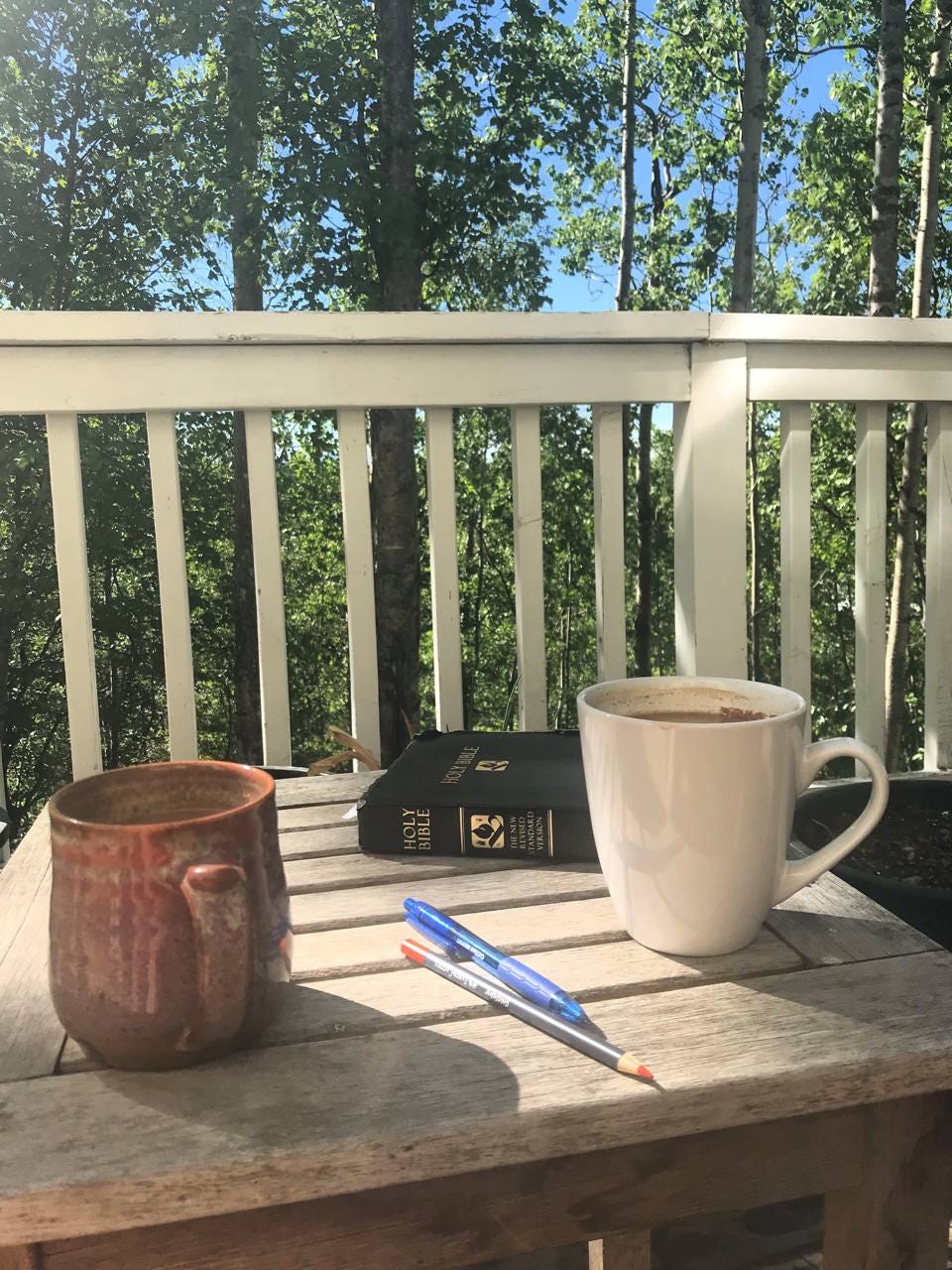
posture: how we hold our charge

I have more words here than I need. The number at the bottom of the screen says 3748 and counting as I type this. Don’t panic, most of them won’t end up in this post.

But all the words have to go in the document so I can see what I’m dealing with, and to decide what to give you. Floating up in my head is the worst place for all the words because they just buzz around and stress me out until they’re pinned to the page or screen, safely confined, ready for examination.

That’s when I can see what all the noise has been about, and when patterns start to emerge.

Ohh, this theme. And that one keeps cropping up, too. I think I see what You’re doing.

posture: how we hold our charge ||Shannon Guerra @ Copperlight Wood

For the last few weeks, one of the main themes has been posture: how we are positioned to hold what we are charged to carry. Are we ready to receive, or to give? Are we attending, is our eye on the ball (hint: the ball is Jesus), or are we perpetually blindsided, looking the wrong way, focusing on the wrong things?

Or, also – and this is just as important – are we hearing the accusations of the enemy tell us we’re in the wrong place, at the wrong time, looking at the wrong things, when we’re actually right on target but he’s trying to distract and dissuade us before the moment arrives? Maybe we are holding our charge, but confusion comes in to waylay us.

Or maybe, more literally, we are to hold our charge – as in, don’t move yet, play it cool, keep watch rather than rushing ahead.

We can get this wrong any number of ways, and the enemy doesn’t care which ruse we fall for.

Sooo, we abide.

As I type this, we’re cleaning up after a four-day windstorm across the Valley. Not the kind where you move all your lawn furniture to a safe location, but the kind where the wind finds that safe location and then moves everything for you all over again as an extra service, generally leaving pieces upside down, or across the yard, and takes one of the table legs with it.

We knew the storm was coming, so we prepared: Stored fresh water, protected the coops, moved the lawn furniture (but I already told you how that went). We prepped some easy cold meals in case the power went out. And we kept the teapot and the crock pot filled and running.

What was supposed to be two days of wind extended to four, and I noticed some things. These observations were greatly made possible by the fact that we, unlike most of the Valley, never lost power, so I was at leisure to notice what I’m going to tell you, rather than dealing with the house getting cold or my phone battery draining or the toilets desperately needing flushed or how certain kids desperately needed to bathe.

Anyway, here: A windstorm at night is different from a windstorm during the day. And this, too, has to do with our posture and attention, and how we hold our charge.

In daylight, you can see the whipping of trees in response to the roaring gusts of wind, and you can look out the window when you hear a crash to see what fell.

You know what you’re dealing with, and what you’ll have to fix. And you know if that repair needs to be immediate, or if it can wait until the storm passes.

So that’s about six hours of the day for us in Southcentral Alaska.

During the other eighteen hours, the gusts come blindly. All is just noise amid the constant background of undulating wind. The volume rises and falls but you don’t see movement; you only hear it.

Relative calm settles briefly as the wind races to other neighborhoods, and then without warning it returns with frenzy, feeling its way across the angles of rooftops and through the fingers of tree limbs. Kitchen vents clap suddenly. Stove and vent pipes whistle across multiple notes in panicked harmony. Wood frames creak moodily, sometimes in timid hesitation and others in angry protest.

Unknown objects scud heavily across the ground. Probably, hopefully, they’re just large branches. More than once, something crashes. You vaguely guess the direction, and wonder what you’ll find in the morning.

I’m not only talking about windstorms, of course.

Some of us have been learning to posture ourselves in darkness so we can handle the noise we cannot see.


I don’t know if you’d call it the “mystic rites of our ancestral houses,” but each family has its own culture and traditions, some more ancient or life-giving than others.

In our house, it means Looney Tunes on birthday mornings, books and pajamas on Saturdays, and speed cleaning whenever there’s the slightest threat of a power outage, because a ) a little motivation goes a long way, and b) we want clean dishes and laundry for as long as possible, and also C) no one wants to go the ER during a windstorm because they slipped on a small Nerf gun that was left in a dark hallway.

Saturdays, though, are the one day of the week we don’t go anywhere, even when we don’t have hurricane force winds.

“You’re not allowed to have fun on Saturdays?” a younger extroverted friend asked me (she reads here, too – love you, darling). I explained that as an introvert with eight kids, two churches, and a dozen projects simultaneously, not going anywhere is fun. The bestest fun, the mostest fun. I’d do it all week and twice on Sundays if I could.

But we can’t, so we stick with Saturdays.

During the week we’re all over the place, and Saturdays are the lull for gathering ourselves back together. I often feel scattered and spread thin, investing in several directions and wondering if seeds are growing or if fruit will ever come. In some places, I can hear the noise but not see movement. Sometimes I wonder if I’m lacking vision and focus, and other times I wonder if my vision is just too big (Or, deep and wide, she thought) and needs time to flesh out.

For sure though, a big part of it is persisting in long, patient obedience even as the enemy hisses that doing the same thing over and over again while expecting a different result is the definition of insanity. But we know his schemes.

And also, there’s that pothos, bursting with more leaves every week.

We position our family with firm boundaries around Saturdays, and birthdays, and bedtimes, nurturing an atmosphere of peace so we can withstand the storm.

So I think we’re really talking about endurance in the midst of the overwhelm. We have to be postured to carry the charge if we are to endure.

…we also boast in our afflictions, knowing that affliction produces endurance, and endurance produces character, and character produces hope, and hope does not put us to shame, because God’s love has been poured into our hearts through the Holy Spirit that has been given to us.

– Romans 5:3b-5

It is just time, and patience, and obedience. It is like prayer, or like writing: We keep coming back again and again, hitting that same topic over and over, asking for words, seeking wisdom and perspective. If we give ourselves to it long enough, we see something happen. Eventually we make huge strides when we’re postured to do so for long enough.

Therefore, since we are surrounded by so great a cloud of witnesses, let us also lay aside every weight and the sin that clings so closely, and let us run with perseverance the race that is set before us, looking to Jesus, the pioneer and perfecter of faith, who for the sake of the joy that was set before him endured the cross, disregarding its shame, and has taken his seat at the right hand of the throne of God.

Consider him who endured such hostility against himself from sinners, so that you may not grow weary in your souls or lose heart.

– Hebrews 12:1-4

It is the steady work of untangling knots, mending what’s broken and torn, doing the hard repair instead of the costly replacement. Yes, it takes so much time. But if we don’t use that time to fix this, we’re going to spend other time – and often, a lot more of it – on bigger, more expensive repairs later on.

So we choose our hard, and our vision directs that choice. Do we see worth, or waste? What do we carry, and what do we shrug off as extraneous?

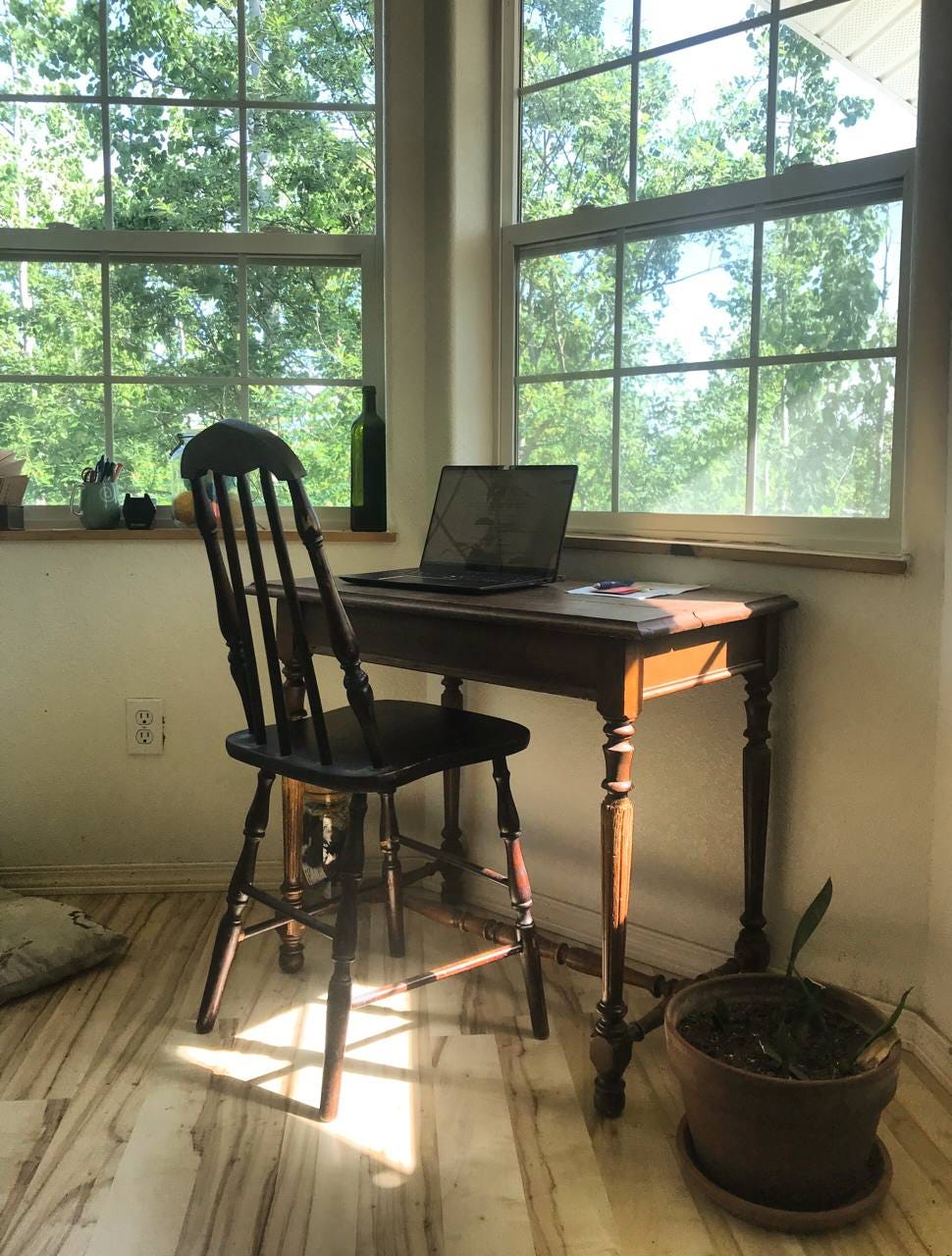
This has been our work for years in our own family and marriage. And at the desk, it is still the work, only the knots look more like paragraphs that don’t flow perfectly together or thoughts that don’t fit on the same string. The untangling here looks more like rearranging, rewriting, deleting, and sitting and staring in prayer, asking for revelation. It looks like phone calls and meetings and deep conversations, asking questions and reframing statements, connecting dots and finding patterns, listening and waiting.

We do not have answers for all these knots. Sometimes the yarn has to be cut. But more often, with enough gentle persistence, you can work a knot blindly and still manage to get it untangled. Because it’s not always about seeing the answers, but persisting in giving the thread it’s proper space after it’s been pulled too tight.

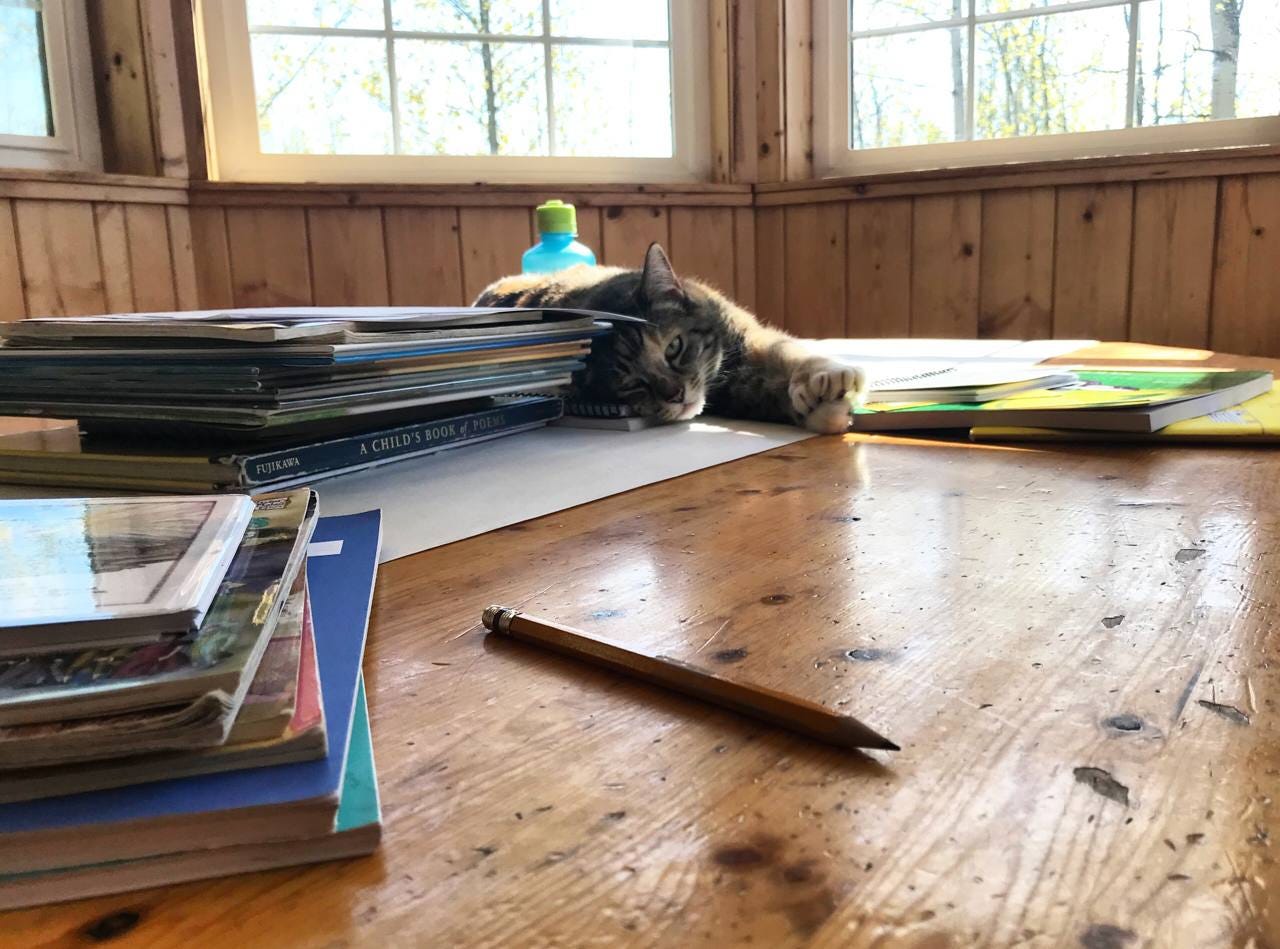
None of us like being pulled too tight. Yesterday afternoon I was already running late, already feeling stressed, already lost an hour of time in other tasks and hadn’t even opened the document to write yet. The phone started dinging notifications and this was the moment Bingley chose to jump on the desk and knock a book to the floor and start his loud meow that sounds less like it comes from a domestic cat and more like it comes from something that lives in the jungle with paws the size of small frisbees.

Hold on, I have a meme for this.

This is the noise, the tangling, the wind gusting that threatens to bowl me over.

But God’s been speaking to me about posture, so I’m learning to brace myself to withstand the things out of my control.

Like this little document, now ballooning to 4935 words – far too many, but don’t fret, less than half will stay in this post.

It has taken forever to pull together and I wanted to publish it two weeks ago. This Monday came and I was determined to finish it. Tuesday came and I thought it was finally almost done. Wednesday came and I realized it still needed work because there was still so much more to say, but I had already spent so much time on it that the words were swimming everywhere, so familiar I couldn’t even really see them anymore.

We clocked out early to get to class, and at the red light I wondered if I could tap out some sentences on my phone to make up a little time. Because this is me, and maybe you: I like to check off boxes, finish the projects, do all the things, and if I get a green light, I want to put the pedal to the floor. Not sit at red lights in the passenger seat, feeling late to everything.

In that moment, I heard the Lord. Let it sit, He said. Sleep on it, Love. Work smarter, not harder. Give it time to cure, and temper, and you – you hold your charge, rather than draining your battery.

In class, before starting discussion or anything else, instrumental worship music played and we just sat, soaking, for…I don’t know how long. Thoughts tried to crowd in: How is Reagan handling her class? Is she testing like she did last week? I hope the boys are calm. I hoped this and that and a million things I can’t type here.

But the music kept playing, and the Lord is teaching us to hold our charge. There was no awkward silence to break, nothing to do but to be with Him.


We (and by “we” I mostly mean me, but I’m trying to include you here) tend to resist stillness and default to restlessness. But restlessness is not a posture; it’s noisy filler.

For years, I took a notebook with me to church partly because of this. Every week, at the top of the page, I wrote the date, the name of whoever was speaking, the sermon notes, verse references, and my thoughts. I did it religiously, in all senses of the word.

Then I got tired of religion and restlessness, and I also got jaded with church, and with writing down the glib soundbites of entertaining presentations instead hearing revelation from solid teaching and preaching. Long after we made a better switch, I still left my notebook at home. I mostly stopped taking notes, and if I really wanted to get something down, I’d tap it into my phone.

And if you know me, you know there’s something off about that. I’m a writer. Also, I don’t use my phone for birthdays, calendaring, planning, finances, reminders, or anything else…I use paper. This is why my office looks like a tornado ripped through a library, and why I probably forgot your birthday, too.

But then we started a new class a few months ago and I thought it would be a good idea to bring my old notebook, especially since I was not going to drop an extra $15 to purchase the class workbook. I’d just take notes, instead. Hello, old friend.

It is remarkable what happens when we position ourselves differently, to hear and respond more acutely. The first Sunday I took my notebook to church, the Lord said, Put the pen in your hand so you’re ready to write the revelation down. And then, notes and notes and notes.

The words have to be put on the paper. The pen has to be held, ready. We have to posture to receive, and steward, and bear the calling we’re charged with.

It reminded me of other wisdom I’ve read many times:

Your fingers would remember their old strength better, if they grasped a sword-hilt.

– J.R.R. Tolkien, The Two Towers

Friend, what is your sword hilt? What do you need to be picking up again, holding onto, and letting go of?

Because our fruit is born from faithfulness. It is not born from having all the answers or getting all the experience (though this is how those come, too) and it is definitely not about finishing everything according to our own timelines.

Fruit comes from abiding, living, persisting, and maintaining a stance of holy stubbornness that expects a good outcome.

Abide in me as I abide in you. Just as the branch cannot bear fruit by itself unless it abides in the vine, neither can you unless you abide in me.

My Father is glorified by this, that you bear much fruit and become my disciples.

– John 5:4, 8

If we can soak in stillness, we can handle the overwhelm, the noise, and the dark chaos that we can’t see out there.

The post is almost done. The word count says 5244 but only 2750 or so are in this piece; still, so many more than I intended.

Once finished – we’re so close now – most of the paragraphs will still be unused. They’ll get pushed to the bottom of the document, ready to start the whole process all over again.

That’s for next week, though.


P.S. We have a ministry update for you here. Got questions, want more info and details? Let us know what you want to hear about. Our Give page is here – thank you so much for your support as we share wholeness and hope, deep and wide.

sing harmony: how we find our place amid change

When you go to the library, your book selections will reveal a bit of who you are…but only a bit.

When Vin and I went last week (sans kids, because it was our anniversary and we’re nerds), I got one book on quilting and another on leadership. Vin got books on history and true crime. And we both got a book to share (he gets credit for finding it, though) about toxic teachings in church culture that aren’t actually Biblical.

It’s not a full picture of either of us, but it’s a glimpse of this season. Also, it’s influenced by what the library offered: They had only two books by Dickens, three copies of Jane Austen, and zero (!) books by Wodehouse.

But I know what I like, regardless of whether or not the library carries it.

sing harmony: how we find our place amid change || Shannon Guerra @Copperlight Wood

So in this sense, the place I’m in doesn’t really define (or reveal) who I am at the core of things. What this temporary space offers doesn’t define (or change) what I actually like.

At the core of things, I love British lit, and already own most of those books. I’m currently in a quilting phase but I am a yarn junkie at heart. I love the Church, and am usually much more focused on teaching what is true rather than debunking what is not.

So a snapshot can reflect parts of us but it doesn’t really show our full identity. In spite of the change of location and what is offered at the library, I still am who I am.

And this is true of our changing relationships and seasons in life, too.

Some seasons (and relationships) in our lives are like a library that only holds books on true crime or psychology. Other seasons (and relationships) are like libraries full of parenting books, picture books, and hacks on removing crayon masterpieces from walls. They’re snapshots that shift and influence us, but they skew the focus on certain directions that do not define us forever.

We age, and our circumstances change. Our abilities grow and diminish, and sometimes we do not know how to respond to those changes. The temporary space we’re in is so different, we’re not sure what our role is in it anymore.

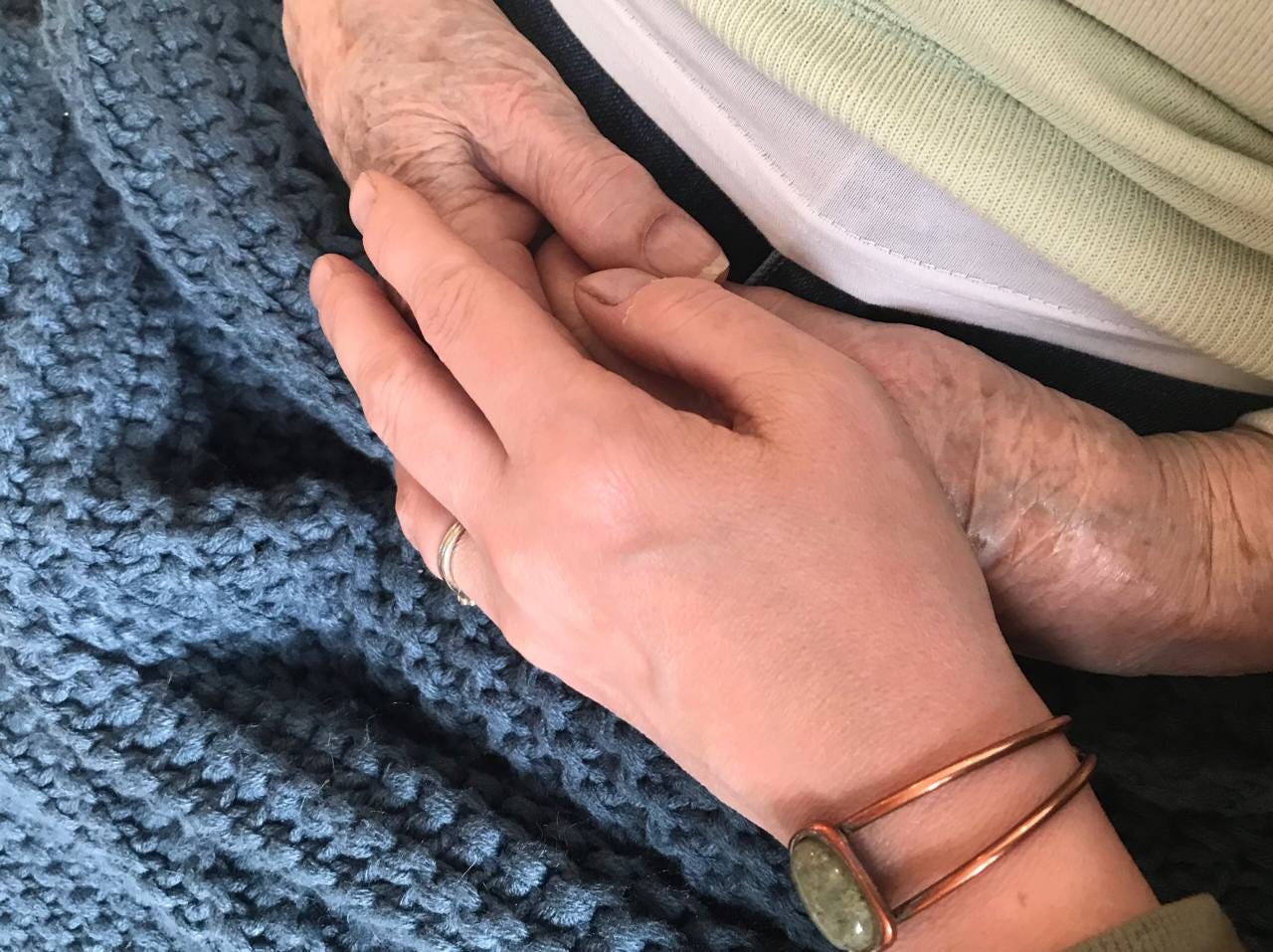
My grandma is almost 94 and recently, her already not-so-great hearing is so much worse. Added to the loss of vision and memory over the last several years, much of her life has totally changed. She’s had to adjust, and so have those of us who love her.

We used to talk often, used to call back and forth. She was curious about our present, and she told me about her past. I told her about our days and asked her about hers. Now, though, there’s so much less to our conversations because this is the season we’re in.

A few months ago I had some questions about my birth (which she attended) and she couldn’t remember any details. Maybe six months earlier, she would have. And maybe next month, she will again. But for now there’s a gap in places she used to be able to fill with light, and lines, and color.

Nowadays I’m the only one who initiates our phone calls, and I don’t do it often enough. It’s hard to have a heartfelt conversation while yelling into the phone so the other person can hear you, yes? But I call her because I know at the core, she is still there, and she needs to know she’s loved and remembered. And also, I call because I need her voice, and she needs to remember mine even though the last few times she hasn’t recognized it and I’ve had to tell her it was me.

During our most recent chat she said she’s feeling well, no problems, that she has no reason to complain. Then she lowered her voice and said, “That doesn’t mean that I don’t, though” – and there she is, the woman I know, the sassy grandma who is never in trouble but likes people to think she could cause some if she wanted to.

She asks if anything is new here and I tell her I’ve been trying to learn Greek, but it takes a few tries before she understands. Then she asks if I’ll teach her a few words next time I come over, and I might, though currently the most creative thing I can say is “I need a ticket” (and by that, I mean one to the opera or something, not one for speeding, thanks). She asks how we’ve been staying busy these days but she can’t understand what I’m saying no matter how many times I repeat it. So she moves on to wisdom and advice.

“Stop and rest, that’ll give you more years. I used to go-go-go all the time, and now I go…go…and…go…”

She pauses, and then asks, “Do you have plans for the summer?” Hopefully this is a blip; she knows her birthday in early November is coming in a couple weeks.

But I don’t know how to answer. I’m having a hard time finding books I can read on these shelves; this is a song I don’t know how to sing.

These relationships change for all sorts of reasons: age, estrangement, boundaries, busyness, distance. We don’t always know how to relate in the new seasons. I don’t know where everything is anymore; so many things I love seem to be missing. The song has changed and I can’t just go along because I still don’t know this tune yet.

“Do you read at all?” Grandma asks. “Do you have time to read?” And this is a face full of cold water. Don’t you even know me anymore? I wonder. I know she knows. Knew. She was a reader, too, before macular degeneration became part of our vocabulary. What does she remember of me, of us, of our family? Deep down, hopefully everything. But on the surface, on the phone, very little.

It is just a season. It is not who she is, or who I am. Who she is, is the woman who led me to Jesus, who took me to church, who taught me that the Bible doesn’t always actually say the things we think it does.

She led worship when I was growing up. She taught all of the kids how to sing Jesus Loves Me and so many other songs. When I went to school in Anchorage, she and my dad would drive an hour to come to my choir concerts even though I never had solos and only sang harmony.

Do you know that the little girl in messy blond braids who you used to take to church every other weekend now teaches others about Jesus? Did you know that the seeds you planted over forty years ago bloomed into her full-time mission?

I can’t tell her that, yelling into the phone, her not hearing me.

But who taught me to sing Deep and Wide? She did.

There are so many songs we don’t know how to sing. Kids grow up and move out, and the tune changes. They learn new songs we’ve never heard and don’t know the lyrics to. They also learn songs they think we’re clueless about, even though we’ve been singing them for decades.

But in spite of changes, can we still remember who we are, and who they are? Regardless of how people treat us, or how they change, or how we change, or the ways the walls are different around us, can we still remember our core – who we are, who they are, Who we have surrendered to? Do we remember that we are the temple, and our hearts are the sacred place where worship is always occurring?

Because if we know that, then the temporary place we’re in doesn’t define (or redefine) us. When we know how music works, we don’t have to know the tune, or even the lyrics. We can sing harmony, instead.

I waited patiently for the Lord; he inclined to me and heard my cry.
He drew me up from the desolate pit, out of the miry bog,
and set my feet upon a rock, making my steps secure.

He put a new song in my mouth, a song of praise to our God.
Many will see and fear and put their trust in the Lord.

Happy are those who make the Lord their trust.

– Psalm 40:1-4a

That person who distanced themselves and makes condescending judgments from their newly purchased high horse…can you see through their posturing? Can you recognize the voice that’s a touch louder than normal, and remember that it’s because they’re trying to convince themselves and others of things they don’t quite yet fully believe, and pray them toward integrity?

That one who needs healing, protection, wisdom, and maturity…can we love them through these changes, see past the braggadocio, and pray them through this season so they come out with fewer regrets on the other side of it?

That person who seems closed off and unreachable…can you see the heart that’s really there, the one that’s wounded and wary? The one that bottles up and then explodes because they still haven’t learned to recognize feelings and release pressure in healthy moderation? We can refuse to be cowed by the spiky exterior because the spikes aren’t about us, and we can press deeper than the shallow small talk, and risk baring a wound of our own that they might relate to.

What about that loved one who is singing away with everyone in their new crowd, seemingly reveling in how they’ve left you out? They’ve run hot and cold, and their song keeps changing mid-verse. You keep stumbling in, not sure what to do next. Should I hug them? Or will they bristle? Will they resent it if I don’t? I don’t know the words to this new song, they passed out the lyrics before I got here.

These are only glimpses of who they are. This temporary space they’re in does not define them, or us. We know who we are, whether or not we like the books on the shelves or the tune that others are singing.

sing harmony: how we find our place amid change || Shannon Guerra @Copperlight Wood
(In Galway with Grandma, March 2003)

And if you know music, you know what a rest is. You know that at certain times there’s an interval of silence when you’re not supposed to sing or play. Stopping and resting will give you more years, Grandma said.

So sometimes we need to stop for a while. You don’t have to share your song with someone who can’t stop criticizing your choice of music. We cannot have duets with people whose proximity is so corrosive you have to put a stop to it, but we can keep praying for their physical and emotional healing.

Beloved, do you know that we contend daily for your spiritual freedom, that you would encounter God and know His mighty love in every area of your life? Just because we stopped singing with someone doesn’t mean we lost our songs. They’re still there in the middle of you and me, wanting the best even for those who only seem to notice the worst.

But thanks be to God, who in Christ always leads us in triumphal procession and through us spreads in every place the fragrance that comes from knowing him.

For we are the aroma of Christ to God among those who are being saved and among those who are perishing: to the one group a fragrance from death to death, to the other a fragrance from life to life. Who is qualified for these things? For we are not peddlers of God’s word like so many, but as persons of sincerity, as persons sent from God, we are speaking in Christ before God.

– 2 Corinthians 2:14-17

We know that the Lord does not change His tune. He doesn’t run hot and cold in affection and indifference, and pull the rug out from under us. We’re not His best friend one day, His punching bag the next, and then snubbed the following week.

He always wants our presence. He is always leading us in triumph, in wisdom, in joy, regardless of the people we’re around, the circumstances we’re dealing with, or the temporary spaces we’re in. This is how the music works.


But I trusted in your steadfast love;
my heart shall rejoice in your salvation.
I will sing to the Lord
because he has dealt bountifully with me.

– Psalm 13:5-6


P.S. New resources! Looking for a new study for your small group, life group, or personal use? I’ve got a page of free downloads for you.

Print them, share them, meet with a few friends at the coffee shop or in your living room, and move deeper into wholeness, maturity, and your relationship with Jesus. You can also find them under the “resources” tab on our website, and there’s no sign up necessary; just click.

Also — got a favorite post you’d like to be expanded into a study, so you can go deeper on that topic? Message me and let me know.

trying too hard: the difference between giving up & surrender

It’s fall, so if you come to our house in the next few weeks, I’m warning you, there will be quail in the main bathroom again. But they don’t stare or gawk, and you can pretty much do your business in peace.

Our last hatch of the year was at the end of August and for the first time, we had to help a few of the quail out of their shells. And if you know about hatching chicks of any kind, you know you’re not supposed to do that.

trying too hard: the difference between giving up & surrender | Shannon Guerra at Copperlight Wood

Three of them were stuck, though. They had done most of the work themselves already, but the incubator’s humidity was off and it had been too long; they were going to die anyway. Their shells were just too dry and wouldn’t crack the rest of the way open…so I helped. One at a time, I took their warm eggs from the incubator and held them in my hand. With fear and trembling, I slid the tine of a fork into the widened crack, widened it a little more, and popped them back in the incubator.

They made it, but two out of the three really struggled – and we did, too. Their toes would not straighten out, so we painstakingly splinted them with bandaids. They had splayed legs (common even in otherwise healthy chicks) so we popped them in small jars for teacup therapy. We tried every trick we knew, and learned a few more from the internet.

By day two, one of the chicks was better but it was clear that the other one’s leg had stiffened wrong and it was still walking on curled toes. It seemed happy enough for the time being, even though it struggled to get around like the other chicks who were zipping all over the place.

How do you put something out of its misery when it doesn’t seem miserable yet? Do you wait for the misery to come, or do you keep praying for a miracle? There are much bigger livestock to apply this too, and I’m grateful we only deal with poultry.

The other chick seemed fine until day three, when it somehow got caught under the food dish and twisted itself all up. It could only spin in circles, could not get right side up again, and was obviously miserable. We couldn’t wait long after prayer for a miracle, so off that one went, too.

And here’s what I kept wrestling with that seemed to vocalize so many other struggles: Do we keep praying and trying, or do we give up?

At what point do we know we’ve really given it all we’ve got?

And, are we really giving up at that point, or are we surrendering?

Which brings me to one of our annual meetings for Reagan, our adoptive daughter. She is nineteen, with many special needs, and she can be finished with school, or she can have up to two more years. It gives us some structure for her life, so we’ve taken it a year at a time, and decided to keep going for now.

But that means we also have to decide what to do about math.

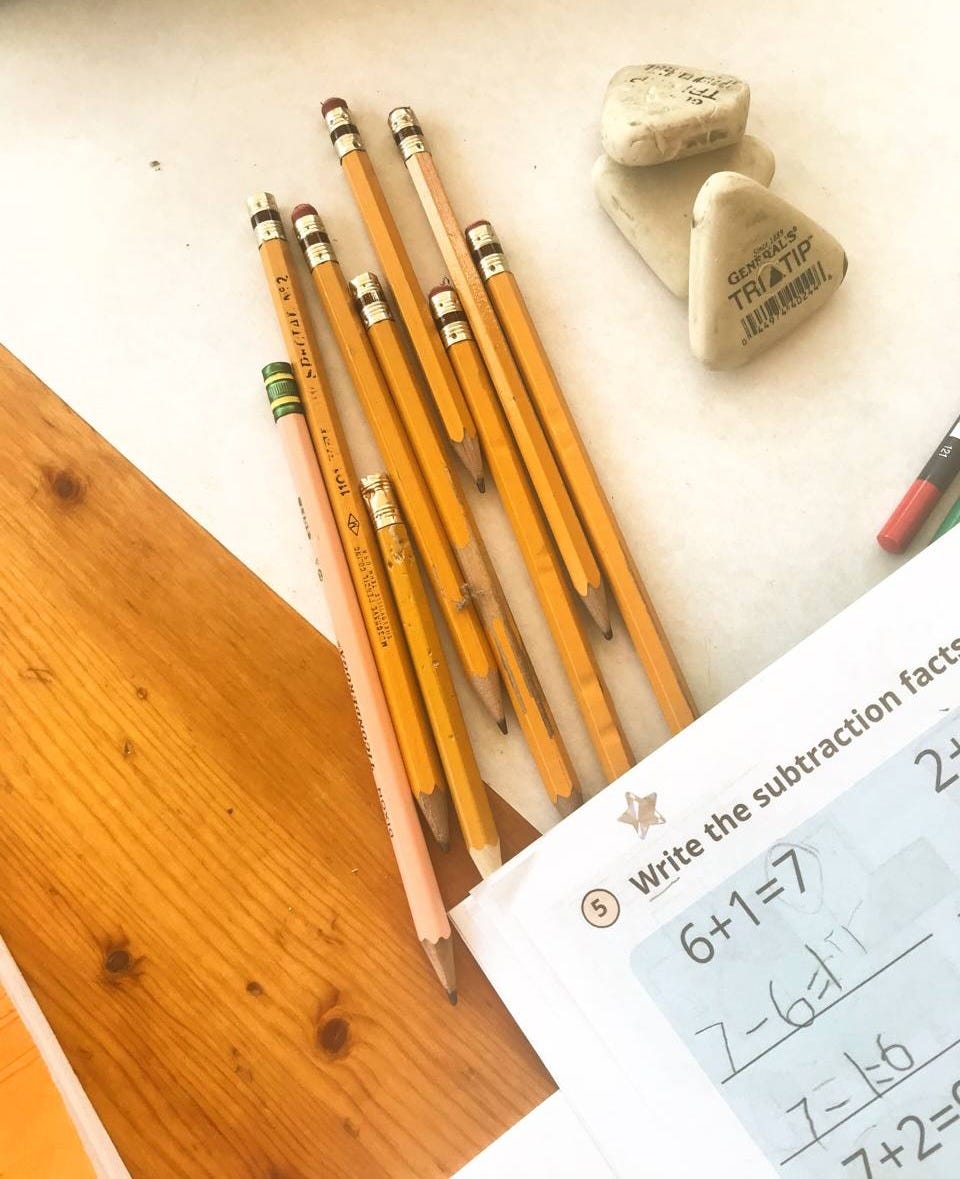
Math has always been so hard. Not just in the normal sense because math is hard for some kids, but haaard because she doesn’t have any comprehension of so many concepts. Money, spatial relations, telling time, they all mean nothing to her. Even simple addition and subtraction is a fight, and whatever aspect we don’t do all the time, she forgets.

So the spiral method of learning – when you cycle through various concepts and eventually revisit them to review before moving on – has never really worked for her. By the time the same concept comes around, she has to learn it all over again. And often, she doesn’t want to. So it’s a battle, and after 13 years it feels like one that’s very much not worth fighting anymore.

She has struggled, and we have, too. We’ve tried all the tricks. We keep explaining, we keep praying for a miracle.

And aside from math, she’s happy. She doesn’t care what grade she’s in or that her siblings can zip all over the place around her.

Like I said a minute ago: Do we keep trying, or do we give up? At what point do we know we’ve really given it all we’ve got?

But also: After 13 years, is it really giving up? Or is it surrendering, so we can move on to other things? Because the line between those feels super blurry.

Sitting across from our contact teacher, I finally ask, “Does she have to do math? I mean, it’s been thirteen years. She’s been in first grade workbooks for the last eight or nine of them, and cannot get through them. Can we just be done?”

Exasperation and tears. It feels so much like failure. All this time, and we could not get her farther than this.

But on the other side of the desk, our teacher nods.

“Yeah, you can be done.” More tears. Because as much as it feels like failure and finality, it also feels like relief.


What is the difference between surrender and giving up? I’m still sorting this out, but I think a big part of it has to do with control. I don’t mean controlling others, or even self control, but how much control we actually have over an outcome. Because sometimes (often) we take an unhealthy amount of responsibility onto ourselves for those outcomes.

We influence, yes, but we don’t cause other people (and certain situations) to change. We pray, we love, we act…but people make their own choices, they decide their own character. And when we’re working harder than they are for a better outcome, that’s a good time to surrender it.

Many sincere, dedicated believers struggle with tremendous confusion about when it is biblically appropriate to set limits.

– Cloud and Townsend, Boundaries

We invest affection, love, time, prayer, creativity, and effort into these situations. And when it all comes to nothing – or at least, seems like nothing, in the long run – it all feels wasted.

For the ignored friend, the parent of the prodigal, or the spouse who is neglected, abandoned, or abused – at what point do we quit trying so hard, quit striving for the change that someone else can only choose for themselves? We never stop praying, but when do we stop reaching out, trying so hard, waiting for the other person to mature and grow?

Powerful people do not try to control other people. They know it doesn’t work, and that it’s not their job. Their job is to control themselves….A powerful person’s choice to love will stand, no matter what the other person does or says.

– Danny Silk, Keep Your Love On

We can’t just wait for them to change. Sometimes we use waiting as an excuse to not make changes of our own, but we have to be responsible for the changes we should make, and responsive to the things the Lord is telling us to do.

With fear and trembling, sometimes we hold these situations like dry, not-quite-hatched eggs, and we carefully try to help them open. And sometimes it works. But also, sometimes it doesn’t. After we have obeyed, the outcome isn’t up to us.

Hear me, friend: God does not hold us hostage for miracles. He does not need us to strive for them.

And on the other end of things, He does not depend on our steadfast maintenance of the status quo to buy Him time, either.


Circumstances are one thing, but relationships are even stickier. What do we do when someone we love repeatedly shows how little they care, or they seem to thrive in creating chaos, or they indulge their immaturity by hurting you in passive aggressive ways? It’s hard to just move on and go about the daily tasks of life, to put on the mask and pretend things are fine, because that’s what this other person is doing and you know how wrong it is.

Some relationships we just have to let go of. Many friendships are for certain seasons and then they fade away. But certain relationships – like family members, or people you have some kind of ongoing work, ministry, or community partnership with – don’t just fade away. Somehow in these situations, we have to figure out how to love steadfastly, in the way that covers the multitude of sins, because of their proximity.

This kind of love brings us to endurance. We can’t change the other person, and we often can’t change our circumstances or proximity. So we do have to stick it out, and that can feel a lot like failure, giving up, and lowering our standards. This is so far beneath what I wanted this situation to look like. Ugh.

So we pull out all the tricks we know for this, too. We pray. We forgive. We set boundaries. And sometimes we wonder why we have to settle for so much less than what God surely intended for this situation.

It is hard to forgive and even want to keep trying when they use that proximity to make a show of how much more they care for others than you, and they make sure you see it. It is hard to overlook, to keep showing grace, to keep your cool inside your own boundaries. And boundaries, for the record, are limits placed out of love and protection. They are not a cloak for rudeness couched in a desire to avoid responsibility.

As we surrender the outcomes that are out of our control, are we really settling for less? Or is God training us for more?

Because His character hasn’t changed. His will for us and the other person has not changed.

Are we really lowering our standards? Or are we moving on so we can fight other battles – the ones we have a hand in winning?


One of the battles we continue to fight with (and for) Reagan is communication. She is verbal but most people can’t understand her because she slurs, blends words, skips words, and generally speaks in that toddler-like manner that only parents and siblings can decode.

So here’s where we stand our ground: Even when I understand what she’s saying, if it’s not clear, I usually have her repeat it correctly.

“Slow down and say each word so I can understand you,” I often tell her. There will come a day when she needs someone else to understand her, and if we let her get away with garble, she will regress further.

I sat next to her during worship at one of our community-wide gatherings a couple weeks ago, and prayed for the millionth time for healing in her. And because it has been a million times (but who’s counting) I also prayed for healing in my own heart over the hope deferred, the things I cannot change, the things I don’t know how to change, the loss of what seems like things should have been.

Hope deferred makes the heart sick, but a desire fulfilled is a tree of life.

– Proverbs 13:12

I have wondered how sick my heart is, how skewed my perspective is from living so close for so long and not seeing certain answers. I have fought the battle of faith against futility, seen the shimmer of horizon through closed eyes in prayer, and knew it wasn’t a vision, but tears.

Rejoice in the Lord always; again I will say, Rejoice.

Let your gentleness be known to everyone. The Lord is near.

– Philippians 4:4-5

The fight is not about what I can change in her, but in what I am letting God change in me.

It is not about lowering my standards or expectations, but about seeing rightly the battles that I can and need to be fighting.

It is about seeing how other desires are fulfilled, and focusing on the tree of life.

Do not be anxious about anything, but in everything by prayer and supplication with thanksgiving let your requests be made known to God.

And the peace of God, which surpasses all understanding, will guard your hearts and your minds in Christ Jesus.

Finally, brothers and sisters, whatever is true, whatever is honorable, whatever is just, whatever is pure, whatever is pleasing, whatever is commendable, if there is any excellence and if there is anything worthy of praise, think about these things.

– Philippians 4:6-8

The leaves are falling outside and the season is going fast, racing toward the long winter. And we grieve over the loss of time, the speed of time, the lost opportunity of what could and should have been. In the storm and shadow of these deep struggles, our efforts can feel like such dim lights in such darkness. Our small influence, our private lives, our humble gifts, what can they do amid the raking waves in the present, violent tumult?

In that moment during worship as I looked down and watched my tears hit the hardwood floor, I knew with certainty that next to me Reagan was just giddy over the volume of the music. Delighted in the moment, flapping her hands, utterly apathetic about how I was even at that moment fighting for her.

Jesus, receive the reward of your suffering. We sang it that night, and we live it every day as we give it all we’ve got, and then surrender.